ComEd Smart Thermostat Virtual Power Plant Plan Approved in the U.S., Expected to Save 250 Megawatts
en.Wedoany.com Reported - Illinois regulators have approved a smart thermostat program led by utility company ComEd, which could become one of the largest virtual power plants in the U.S. relying on advanced thermostats. The program is scheduled to begin operations in May 2027. By remotely adjusting thermostats in participating homes by 1 to 4 degrees, the project reduces regional electricity demand during heatwaves, with an effect equivalent to the output of several power plants.
The program adopts a "bring your own device" model, where companies selling thermostats—including ecobee, Google Nest, Honeywell Home, and Sensi—compete on price and technology, allowing customers to choose their preferred products. These thermostats can operate as part of a virtual power plant (VPP) within the network, with external controllers adjusting home temperatures when the grid requires additional power. The registration compensation is $30 per household per year, plus additional payments based on energy savings, totaling approximately $60 annually for most households. Customers receive notifications before any adjustments and can manually override settings via a mobile app to maintain their desired temperature.
Regarding the project's potential impact, testimony in the Illinois Commerce Commission docket shows that filings from clean energy organizations estimate there may be over one million smart thermostats in the ComEd service area, accounting for about one-third of the utility's households. Utilizing these thermostats could save approximately 250 megawatts of electricity. Tamara Dzubay, Senior Director of Energy at Toronto-based smart thermostat manufacturer ecobee, one of the program's designers, stated that when customers can opt out and the process is transparent, no backlash has occurred. Will Baker, Market Development Director at Renew Home, the software company managing the thermostat network, believes that this customized approach, offering customers multiple choices in thermostat selection and participation methods, will attract more participants. If enrollment is high enough, the region could achieve greater energy savings with smaller temperature changes.
Meanwhile, a report released by the think tank Energy Innovation predicts that by 2030, a grid buildout relying more on solar, batteries, and low-emission technologies could reduce costs by approximately 17% compared to a plan dependent on fossil fuel power plants. Brendan Pierpont, co-author of the report and Electricity Director at Energy Innovation, noted that fossil fuel prices are more volatile, leaving system planners with less certainty about costs over the coming decades.
In other energy transition developments: Duke Energy has become the latest company to accept federal funding to abandon offshore wind leases, giving up a lease for up to 1.6 gigawatts of offshore wind in the Carolina Long Bay area and seeking partial reimbursement of the $155 million it paid in 2022; global investment firm KKR has acquired EDF Power Solutions' North American power assets—including solar, wind, and battery storage projects—for $4.2 billion; due to U.S. government restrictions on vehicle technology linked to China, electric vehicle company Polestar will be prohibited from selling new models in the U.S. starting with the 2027 model year, though the company stated it will continue servicing existing vehicles through its current 32 centers.
Related Products


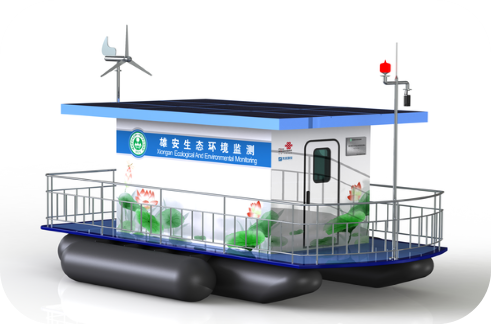
Floating Boat Water Quality Automatic Monitoring System
Hebei Sailhero Environmental Protection High-tech Co., Ltd.
G.652.D Wavelength-extended Non-dispersion Shifted Single-mode Optical Fiber
HONGAN GROUP CO., LTD.
Single-Phase Automatic Voltage Regulator(AVR)
Shaanxi Sefon Electrical Equipment Co.,Ltd.
220kV Composite Outdoor Cable Terminal
Shenyang Guolian Cable Accessories Manufacture Co., Ltd.
Hydrogen Production Technology: Hydrogen Purification by Pressure Swing Adsorption
Chengdu Yizhi Technology Co., Ltd.
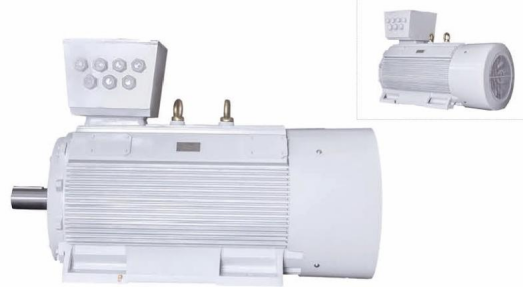
YE3 Series Low Voltage High Power Three-Phase Asynchronous Motor
Shandong Lijiu Electrical Machinery Co., Ltd.