Brazil's Senangus Breed Approved, Targeting Premium Beef Market
en.Wedoany.com Reported - The newly approved Senangus breed in Brazilian bovine genetics, designed to combine tropical adaptability, production performance, and carcass quality, has entered production systems. The breed was approved by the Ministry of Agriculture, represented by the Brazilian Association of Senepol Cattle Breeders (Associação Brasileira dos Criadores de Bovinos Senepol, ABCB Senepol). Rancher Diogo Bianchi from Luiziana, Paraná, implemented a pioneering project betting on the crossbreeding of Senepol and Angus as a strategy to add value to beef production.
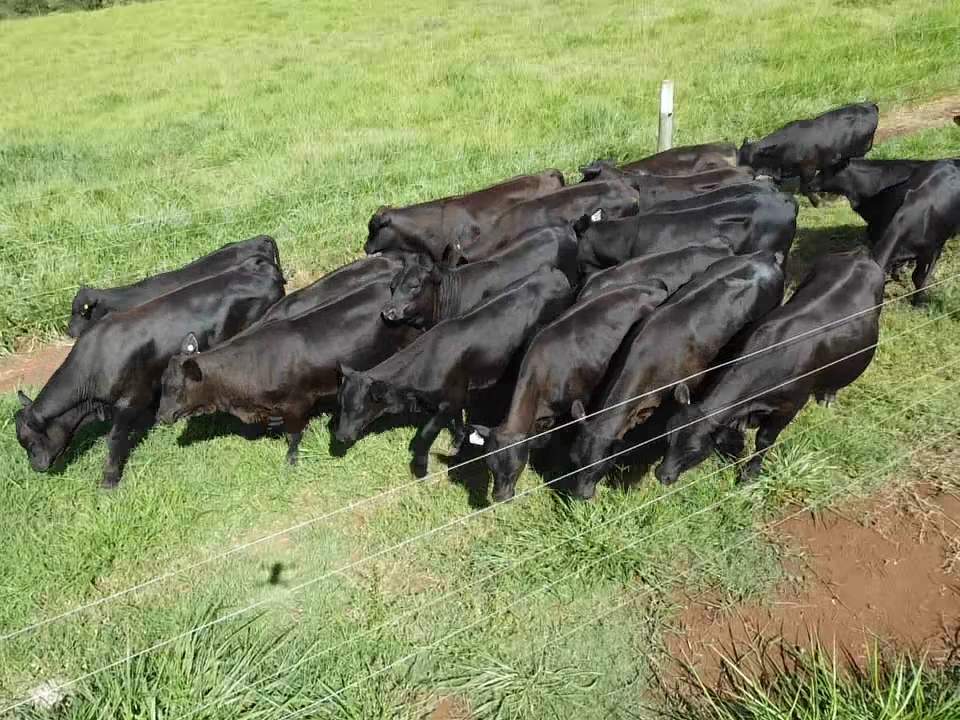
This strategy combines complementary traits. Senepol contributes robustness, maternal ability, and tropical adaptability, while Angus adds precocity, carcass yield, and high marbling—attributes valued in the premium beef market. Bianchi stated that this combination meets the current demands of Brazilian beef cattle farming, with each breed offering distinct characteristics that, when combined, produce a modern, efficient crossbred animal with the potential to deliver high-quality beef and adaptability.
The project began in 2019 when the rancher performed the first artificial insemination on Senepol cows. The results encouraged continued work, particularly as animals raised entirely on pasture performed well and adapted easily to extensive systems. Bianchi noted that robustness was the most striking trait when evaluating the first batches, as these animals followed Nellore herds, climbed hills, and maintained high productivity.
Project progress was also driven by the application of reproductive biotechnologies. In 2024, 125 Senangus embryos were transferred, producing a generation of offspring that outperformed Nellore at the weaning stage. These calves averaged 292 kg at 6.5 months of age, raised entirely on pasture. Bianchi emphasized that Senangus weighed 1.5 arrobas (@, approximately 22.68 kg) more than Nellore at this stage.
Another distinguishing feature of this strategy is genetic flexibility. The project employs two main lines: one predominantly Angus and the other with a higher proportion of Senepol, enabling adaptation to different biomes and production systems. Bulls with a higher Senepol ratio are primarily used to cover Nellore cows in regions with more challenging climatic conditions, while cows will form the basis for breed selection. The project also plans to apply the genetics in beef-on-dairy systems, expanding its potential use in dairy herds. Bianchi explained that they are creating a solution that meets the needs of both beef cattle farmers and dairy farmers seeking to add value to their production.
The plan adopts a model based on partnerships and assisted reproduction to accelerate genetic dissemination. Bianchi has set a goal of reaching a base herd of 200 Senangus cows within ten years, producing 100 to 120 bulls annually, thereby consolidating the breed as a competitive alternative for different production systems and the increasingly important premium beef market.
Related Products


Industrial and Commercial Point-Type Gas Detector
Jinan Benan Technology Development Co., Ltd.
714CD Series C-Band Weather Radar
Chengdu Zhongdian Jinjiang Information Industry Co., Ltd.
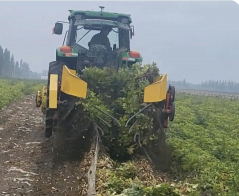
4HS-8 High-efficiency Peanut Inverted-laying Harvester
Hebei Yongfa Hongtian Agricultural Machinery Manufacturing Co., Ltd.