Brazilian Arroba Prices May Recover in H2 2026, Most Optimistic Forecast Reaches R$400
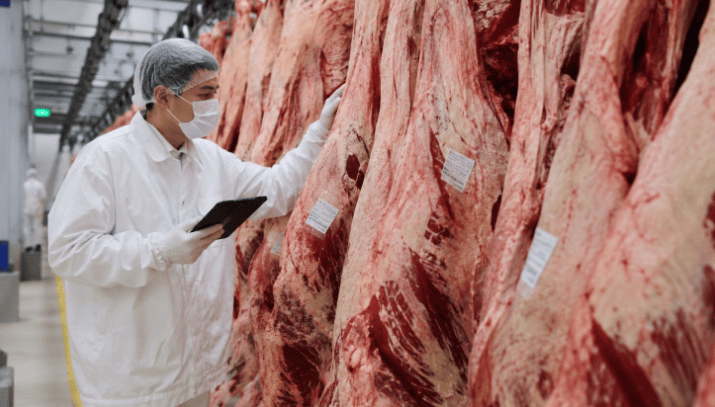
en.Wedoany.com Reported - After pressure on the price of the fat cattle arroba in Brazil at the end of July, major market consulting firms have once again confirmed that the second half of 2026 remains the window for a recovery in arroba prices. Although forecasts for the magnitude of price increases diverge, the combination of tighter supply, stronger exports, and gradually improving domestic consumption is widely expected to drive a new round of increases in the coming months.

The recent pressure in the spot market stems from short-term factors, most notably the near-exhaustion of China's 2026 import quota for Brazilian beef. The slowdown in purchasing by this largest destination country has made slaughterhouses more cautious in negotiations. At the same time, drought has damaged pasture quality in several producing regions, forcing some feedlots to maintain cattle turnover, leading ranchers to sell early even in the face of unattractive prices. This movement coincides with many producers preferring to control supply, thereby intensifying pressure on the spot market.
Despite these developments, the futures market continues to send a different signal. Contracts traded on B3 have maintained a premium over the spot market, indicating that investors and supply chain participants continue to bet on arroba appreciation for the remainder of the year, reinforcing the view that the current pressure is temporary. For producers able to time their cattle sales strategically, the structural fundamentals remain favorable.
The prevailing assessment among analysts is that the second half of the year will be characterized by reduced supply of finished cattle and rising demand, especially in the fourth quarter. The most optimistic scenario comes from Felipe Fabbri, coordinator of the market intelligence team at Scot Consultoria. According to his analysis, the combination of tight supply, the resumption of Chinese purchases under the new 2027 export quota, strong demand from the United States, and increased income liquidity in the Brazilian economy could push the arroba above this year's record high, moving toward R$400 in a highly favorable scenario. He believes that if the industry can maintain profit margins to better reward producers without harming consumption, and exports continue to heat up, this level will no longer be a distant hypothesis.
Another positive factor is the economic calendar for the second half of the year. Historically, the fourth quarter concentrates more temporary employment, the 13th salary payment, and increased protein consumption during the year-end holiday season. In 2026, this is compounded by expectations of increased international consumption driven by the North American World Cup, which could boost beef demand.
Safras & Mercado analyst Fernando Iglesias acknowledges the positive outlook for the arroba but considers the R$400 mark a fairly optimistic forecast. He states that this price level depends on additional factors, such as a more pronounced depreciation of the real against the dollar and a domestic market that is hotter than it is today. He also emphasizes that any change in China's import policy remains one of the main risks for the Brazilian market. Even so, he maintains a positive outlook for the second half of the year, based primarily on reduced supply of slaughter-ready cattle and sustained high export levels.
Agrifatto shares the same view. The consulting firm observes that the market is currently in a tug-of-war between ranchers and slaughterhouses: producers resist large-volume sales and sell batches gradually, while the industry tries to use still-weak domestic demand to push prices down. Despite the more challenging short-term negotiation environment, the firm notes that futures contracts continue to price in arroba appreciation, reinforcing market participants' confidence in a price recovery in the second half of the year.
Despite divergences over the ceiling the arroba may reach by year-end, major consulting firms converge on one point: the pressure observed at the end of July tends to be temporary. The expectation is that reduced supply of finished cattle, strong export performance, and seasonal consumption growth in the fourth quarter will support a new round of increases in the spot market. For ranchers, the recommendation is to closely monitor futures contract movements and evaluate sales strategies capable of capturing potential price recovery—whether by holding cattle as long as possible or using B3 hedging tools. If the consulting firms' forecast scenarios are confirmed, the second half of the year may mark the beginning of a new cycle of appreciation for the fat cattle arroba, benefiting those producers able to manage supply at a time when fundamentals are considered more favorable than in recent weeks.
Related Products


4HS-8 High-efficiency Peanut Inverted-laying Harvester
Hebei Yongfa Hongtian Agricultural Machinery Manufacturing Co., Ltd.
Industrial and Commercial Point-Type Gas Detector
Jinan Benan Technology Development Co., Ltd.



714CD Series C-Band Weather Radar
Chengdu Zhongdian Jinjiang Information Industry Co., Ltd.