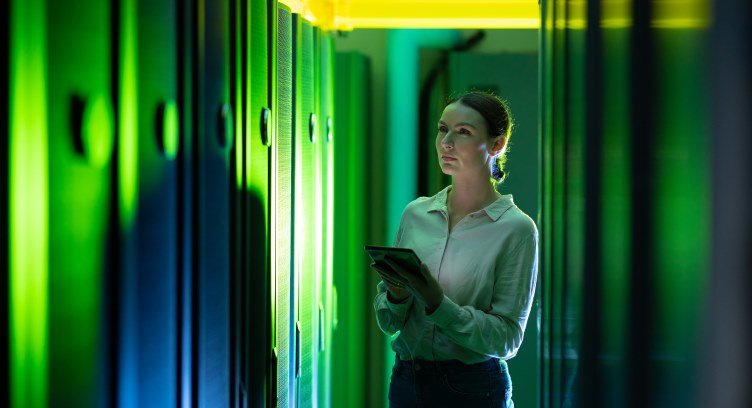
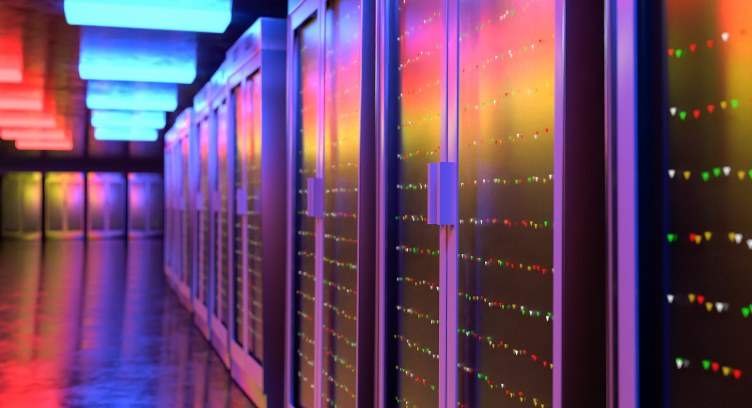
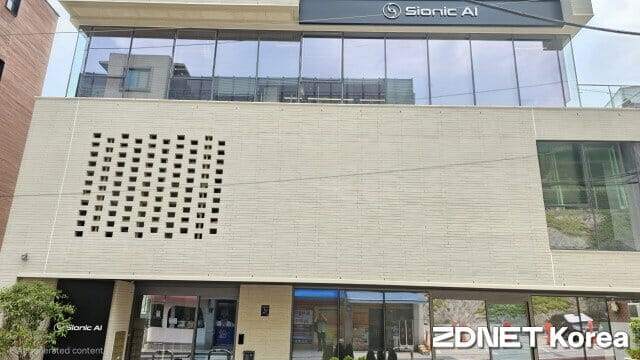
en.Wedoany.com Reported - Sionic AI, a South Korean AI startup, has built an in-house data center in its office building in Seoul's Gangnam district. Equipped with 10 racks featuring NVIDIA B300 GPUs, the facility uses a high-temperature hot aisle containment (HAC) air-cooling structure, with construction costs lower than one year of external leasing fees.
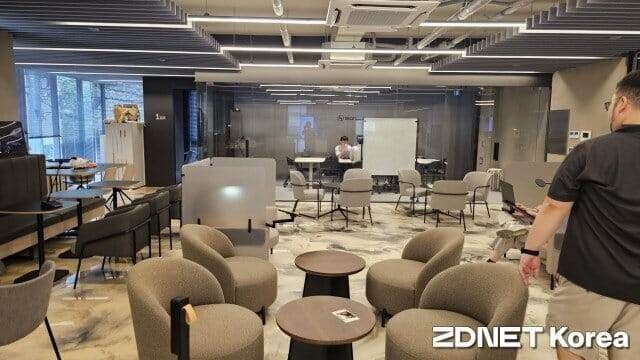
Located in a seven-story building with one basement level, the data center is part of an integrated AI center converted from a regular office by Sionic AI, combining its own data center and office space.
In an interview, Sionic AI CEO Go Seok-hyeon stated that the team chose to build its own data center due to a long-term partnership with NVIDIA. He mentioned that since his time at Naver, he has co-developed core infrastructure code with NVIDIA and collaborated deeply within the global AI ecosystem, thus receiving high-level support.
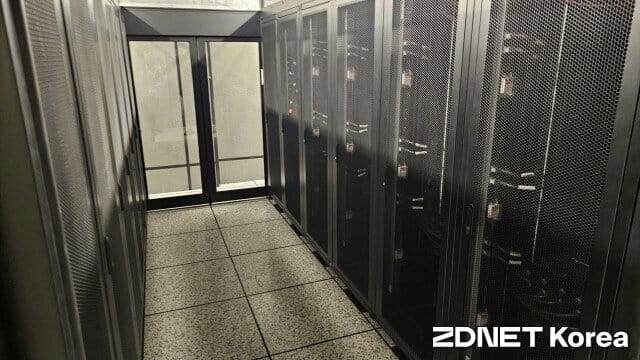
Inside the data center, a high-temperature hot aisle containment (HAC) structure isolates hot air generated by servers from cold air, using sealed aisles to extract hot air upward. This compact and efficient design manages approximately 0.3 megawatts (MW) of power load within the small office building.
CEO Go Seok-hyeon, who majored in architecture in college and whose professor researched data centers, directly participated in the spatial layout design. He noted that the construction cost of the in-house data center is lower than one year of leasing an external data center, with an investment payback period exceeding one year.
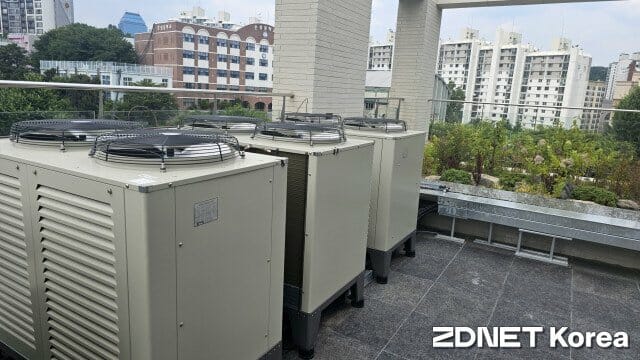
The building's structural design considers infrastructure efficiency and employee movement routes. Large cooling equipment is installed on the roof to dissipate server heat. Below the roof is the data center room, directly beneath which is a small meeting room, and one floor down is the employee office and rest area. Go explained that data center vibrations could affect work, so the area directly below is designated as a meeting room to separate work zones.
The first floor houses a meeting room and small bar for client reception, while the basement features a large stage and lecture hall for all-hands meetings, external training, AI seminars, and external broadcasts.
Founded in 2023 by Go Seok-hyeon, Sionic AI was established by the co-founder of Company AI, which was acquired by Naver. He previously served as the head of Naver Clova's SW platform and participated in the development of HyperCLOVA. Since its inception, the company has chosen to build models, infrastructure, and solutions from scratch, positioning itself as an "AI full-stack" company.
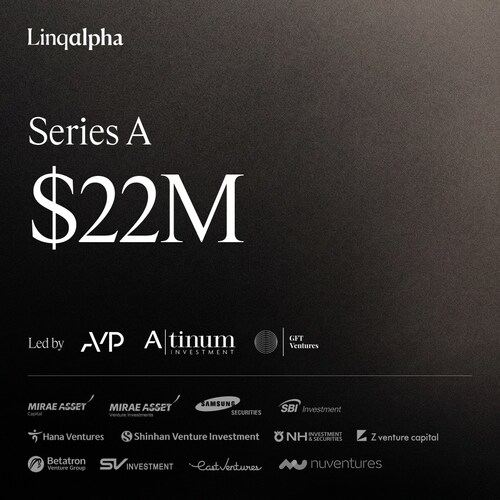
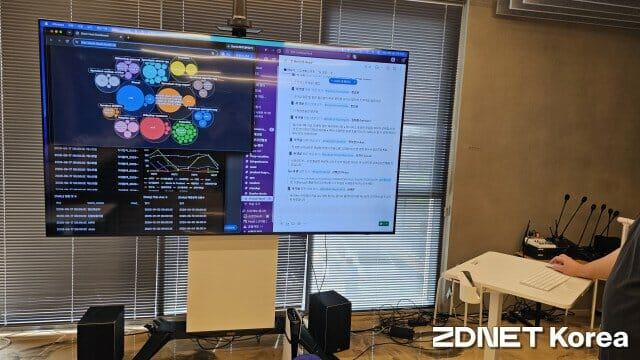
The company provides agent development and RAG-based solutions for finance, manufacturing, public, and defense sectors. Its core product is an AI agent supporting loan review, contract review, and facility information queries. In December last year, Sionic AI received 25 billion KRW in Series A funding from Naver Cloud, IBK Industrial Bank, Atinum Investment, Samsung Venture Investment, and others, bringing total investment to over 30 billion KRW.
The in-house data center is an extension of the company's full-stack strategy, aiming to provide clients with AI systems that operate in closed networks without relying on external clouds, particularly suitable for defense and security operations.
Future business expansion focuses on manufacturing and defense. In manufacturing, Sionic AI collaborates with industrial complexes in Gyeongnam and Gyeongbuk on physical AI projects, using cameras, gloves, and other motion-capture devices to collect human action data and train systems, with plans to formally proceed in partnership with the Ministry of Trade, Industry and Energy. In defense, the company works with Ajou University, the Joint Chiefs of Staff, and Korea University on AI projects, applying simulation-based learning to real-world operations.
CEO Go Seok-hyeon stated that since it is impractical to operate tanks or aircraft daily, learning through simulation and applying it to actual battlefields, supplemented by data collection, is more efficient. The company plans to begin global expansion starting from Japan, integrating AI into manufacturing, defense, finance, and other industries.