en.Wedoany.com Reported - On July 2, local time, Amazon used a United Launch Alliance rocket to send 29 Leo satellites into orbit as part of its low Earth orbit satellite internet project. Chris Weber, Vice President of Business and Products at Amazon's Leo division, stated that with over 390 satellites already deployed, the company has completed enough launches to initiate preliminary internet services this year.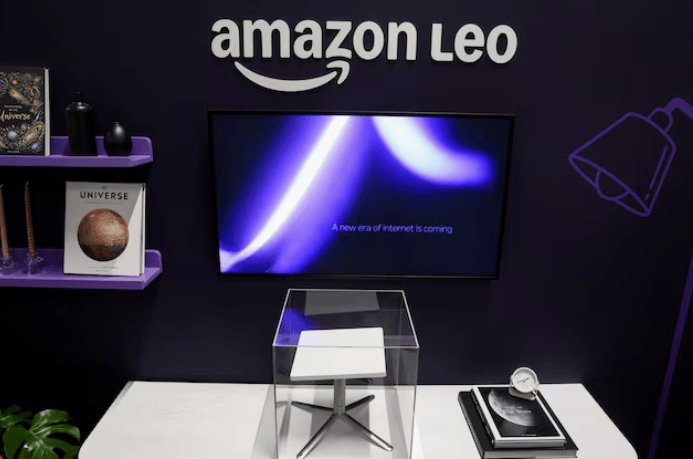
Originally named Project Kuiper, Amazon Leo aims to provide broadband internet connectivity through a low Earth orbit satellite constellation. Following this launch, the Amazon Leo constellation has approached nearly 400 satellites, still far from its final planned count of over 3,000 satellites, but it has already established a foundation for launching continuous services in certain latitudinal regions. Low Earth orbit satellite internet relies on the coordinated operation of numerous satellites, ground stations, user terminals, and network scheduling systems. The more satellites there are, the more stable the coverage continuity, link switching capabilities, and capacity distribution become. For remote areas, aviation and maritime operations, emergency communications, energy mining sites, field operations, and cross-regional enterprise networks, such systems can provide connectivity supplements where terrestrial fiber and cellular networks are insufficient. After Amazon launches its initial services this year, early coverage range and stability will still be affected by constellation density, and subsequent launch missions will continue to expand coverage areas and service scale.
The construction of satellite internet will also drive demand in the communications equipment chain. Each expansion in launch scale corresponds to coordinated investments in satellite manufacturing, phased array antennas, onboard communication payloads, laser links, ground gateways, user terminals, network management platforms, and operations and maintenance systems. For Amazon Leo to compete with established constellations like Starlink, it must consider not only satellite count but also terminal costs, bandwidth performance, network latency, service areas, enterprise customer solutions, and launch cadence.
The commercialization challenge of low Earth orbit communication constellations lies in continuous deployment and ongoing operations. After satellites enter orbit, they must undergo orbital formation, link testing, ground station access, user terminal adaptation, and service quality verification. Amazon has arranged for multiple launch service providers to participate in the Leo constellation deployment, including United Launch Alliance, Blue Origin, Arianespace, and SpaceX. As preliminary internet services commence, the project will transition from the launch and construction phase to a parallel progression of "launch, networking, trial commercialization, and capacity expansion," with subsequent coverage capabilities continuing to improve as satellite density and ground network infrastructure grow.