Hamilton, Ontario Wholly-Owned City Company Signs Non-Disclosure Agreement for AI Data Center
en.Wedoany.com Reported - A company wholly owned by the City of Hamilton, Ontario, Canada, has signed a non-disclosure agreement with a firm specializing in AI data center asset management. Hamilton City Councillor Brad Clark first publicly acknowledged the agreement's existence at last week's annual general meeting of Hamilton Enterprises Holding Corporation, which is entirely owned by the city and operates in the energy and telecommunications sectors. Clark asked whether the company had signed an NDA with Slate Asset Management regarding the development of an AI data center on a former steel manufacturing industrial site.
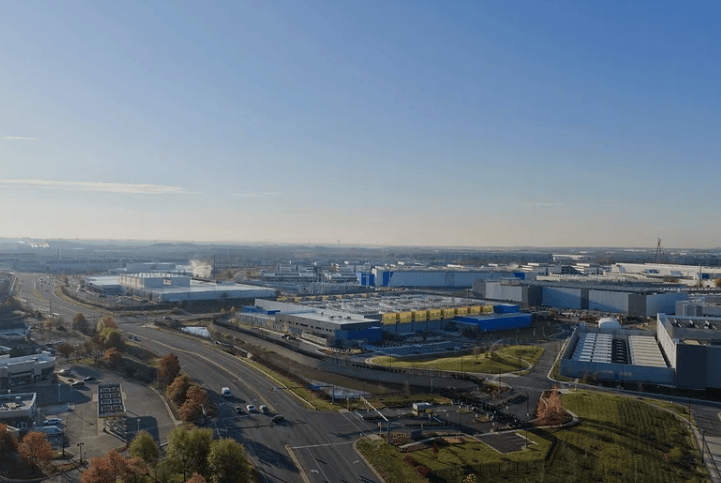
Slate Asset Management aims to build Canada's first "publicly owned artificial intelligence factory" on the former steelmaking site, which would host data from Canadian universities. According to The Globe and Mail, Hamilton is also planning two other data centers: one from Slate, labeled at 400 megawatts, and another from a solar panel manufacturer and McMaster University. Jeff Cowan, President and CEO of Hamilton Enterprises Holding Corporation, stated at the shareholder meeting that signing an NDA is "standard business practice." Clark told Canada’s National Observer that the city, as the company's sole shareholder, lacks insight into the agreement's details.
This practice faces more criticism in the United States, where data center development far exceeds that in Canada. Although municipal authorities have relatively limited control over data center approvals, NDAs reduce transparency for projects that could transform communities. Many communities are concerned about the impact of large AI data centers on water resources, land, and electricity prices. Microsoft has stated it will no longer sign NDAs with local governments and will terminate existing agreements as part of its "Community-First AI Infrastructure Plan," confirming this commitment applies to Canada as well. Anne Pasek, an associate professor at Trent University researching data centers and climate politics, said that while NDAs have been used in the industry for years, they often have negative effects, "omitting key details from public debate." Noting Microsoft's move, she believes "ending this practice is both morally and strategically constructive."
The AI boom is driving demand for larger "hyperscale" data centers that will dwarf Ontario's nearly 100 existing facilities. The province has expressed interest in developing up to 6,500 megawatts of new data center capacity, roughly 30% of Ontario's current peak electricity load, and expects data centers to account for 13% of new electricity demand by 2035. Clark said the lack of transparency regarding the NDA's existence troubles him. However, he is not opposed to data centers; he was the only councillor to vote against a motion for a one-year moratorium on new data centers, which aimed to give the city time to review the industry's impact. Clark believes data centers are "much cleaner than the former steel company that occupied the site," but added, "We are really kept in the dark. Period."
Slate's proposal has sparked strong community opposition, with hundreds of people speaking out against its plan to subdivide the Stelco land. City council voted down the proposal, but according to CBC, Slate will appeal the decision. A Hamilton city spokesperson said earlier this month that the city has had "early-stage discussions" with Slate regarding the site, including "a potential data center," but no formal application has been submitted. Councillor Craig Cassar emphasized in a phone interview that there is no formal working agreement between Hamilton Enterprises Holding Corporation and Slate, viewing the NDA as a "normal business process." Lucia Iannantuono, a board member of Environment Hamilton, noted that Hamilton Enterprises Holding Corporation focuses on achieving the city's net-zero goals and "decarbonizing Hamilton through these distributed energy networks by capturing waste heat." She does not fault the company for signing the NDA but believes it creates "a culture of silence that discourages companies from sharing, proactively disclosing, or even making public information available."
Related Products





Multi-function Marine Monitoring Low-altitude Detection Radar Sea-air Boundary Ocean Dynamic Environment Measurement
Chengdu Dixin Technology Co., Ltd.
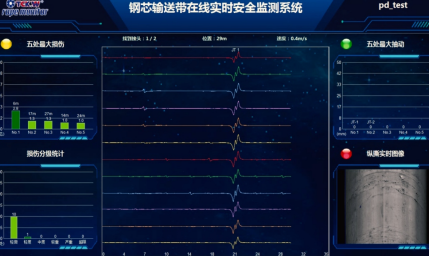
Conveyor Belt Intelligent Monitoring System
LUO YANG WIRE ROPE INSPECTION TECHNOLOGY CO., LTD.
Industrial and Commercial Point-Type Gas Detector
Jinan Benan Technology Development Co., Ltd.
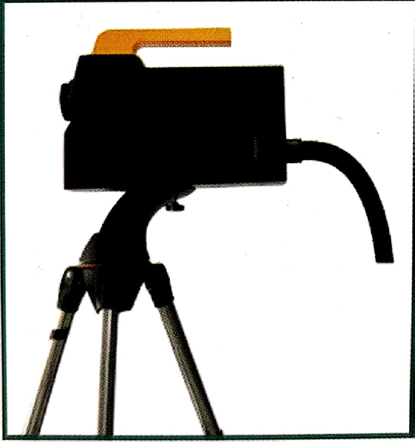
Automatic Aiming Laser Remote Obstacle Removal Robot
Pinggao Group Weihai High-Voltage Apparatus Co., Ltd.

MUX Series Communication Interface Device for Security and Stability Control System
Nanjing NR Electric Co., Ltd.