Kavach 4.0 System Deployed on 207 km Section of North Central Railway in India
en.Wedoany.com Reported - The Kavach 4.0 Automatic Train Protection System, developed by KERNEX Microsystems, has been successfully deployed for commercial operations on the 207 km Tundla–Panki Dham section of India's North Central Railway, enabling trains to operate safely at speeds up to 130 km/h.
This milestone increases the total length of the North Central Railway network equipped with Kavach 4.0 to 652 km, of which 572 km was implemented by KERNEX. KERNEX has successfully demonstrated that its Kavach 4.0 solution can support train operations at speeds up to 160 km/h on a 175 km implementation section, indicating its technical readiness for India's future high-speed railway modernization plans. The newly operational section is located on the strategically important Delhi–Howrah railway corridor, one of India's busiest railway lines. The deployment of this system enhances train protection capabilities while contributing to Indian Railways' goals of improving operational safety and line capacity.
Prior to commercial deployment, the Kavach system underwent successful operational trials using the 12033 Kanpur Shatabdi Express and the 15484 Sikkim Mahananda Express, both equipped with KERNEX-manufactured onboard equipment. A key achievement of the project was the seamless integration of the indigenous Kavach system with Hitachi electronic interlocking systems via protocol converters, with smooth interfacing between the Station Train Collision Avoidance System (S-TCAS) and the Level Crossing Train Collision Avoidance System (LC-TCAS), without any operational issues.
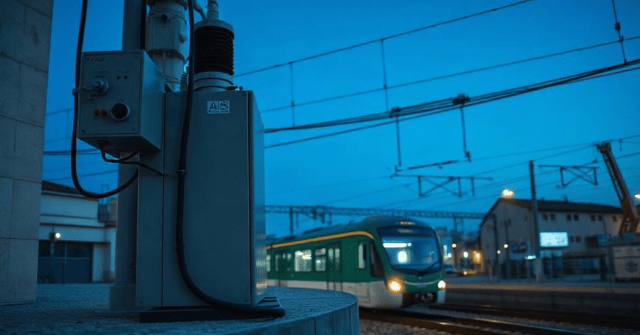
This deployment established comprehensive infrastructure across the 207 km section, including Kavach equipment at 39 stations, 22 S-TCAS stations and 17 LC-TCAS stations in operation, 10 WAP-7 electric locomotives equipped with onboard Kavach systems, installation of over 4,600 RFID tags, construction of 17 communication towers approximately 40 meters high, laying of 48-core optical fiber cables, and construction of 30 dedicated Kavach equipment rooms.
Before deployment, the system underwent independent safety assessment (ISA) tests conducted by the Research Designs and Standards Organisation (RDSO), North Central Railway, and Italy's Italcertifier. Verification items included over 10,000 km of BIU-free trials, over 190 Signal Passing at Danger (SPAD) prevention and siding speed control tests, head-on collision prevention tests, rear-end collision prevention tests, and performance verification with various locomotive and rolling stock combinations. The system was tested on Vande Bharat Express, Shatabdi Express, Shramshakti Express, WAP-7 locomotives, WAP-5 locomotives, single units, and various LHB coach formations, confirming compatibility across different operational scenarios.
The implementation was completed under the leadership of North Central Railway General Manager Naresh Pal Singh and Chief Signal and Telecom Engineer D.K. Sinha, executed by the Tundla Project Department, with coordination support from the Prayagraj Division and North Central Railway Headquarters. This project also serves the goal of "Mission Raftar" to increase train speeds, demonstrating the maturity of indigenous Indian railway technology.

Related Products

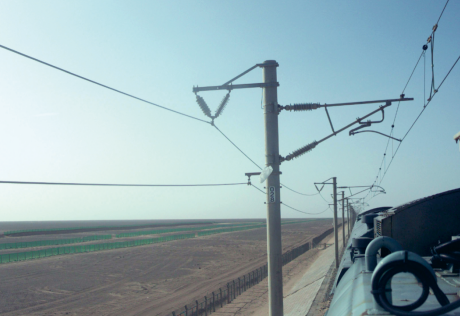
Pantograph-Catenary Comprehensive Detection Device (1C)
CHENGDU TANGYUAN ELECTRIC CO., LTD.
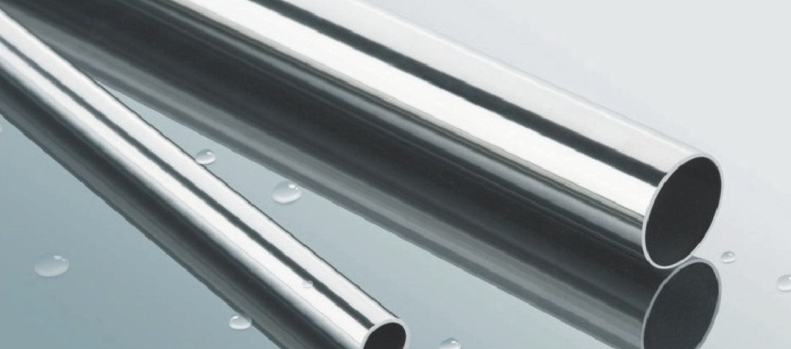
ERW Welded Pipe (Black Pipe and Hot-dip Galvanized Steel Pipe)
Handan Zhengda Steel Pipe Co., Ltd.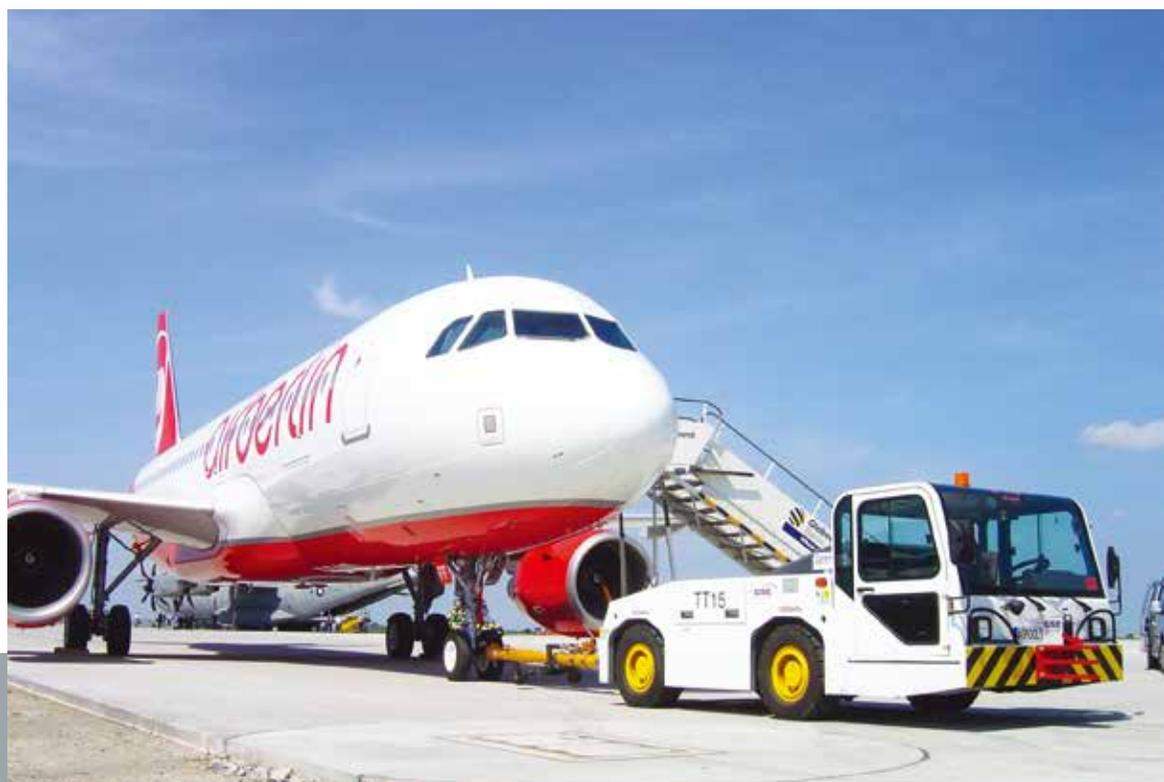
WGQY Series Aircraft Tow Tractor-WGQY15, WGQY27
Weihai Guangtai Airport Equipment Co., Ltd.
Wheel and Track Technology Business
Beijing Research & Design Institute of Rubber Industry Co., Ltd.
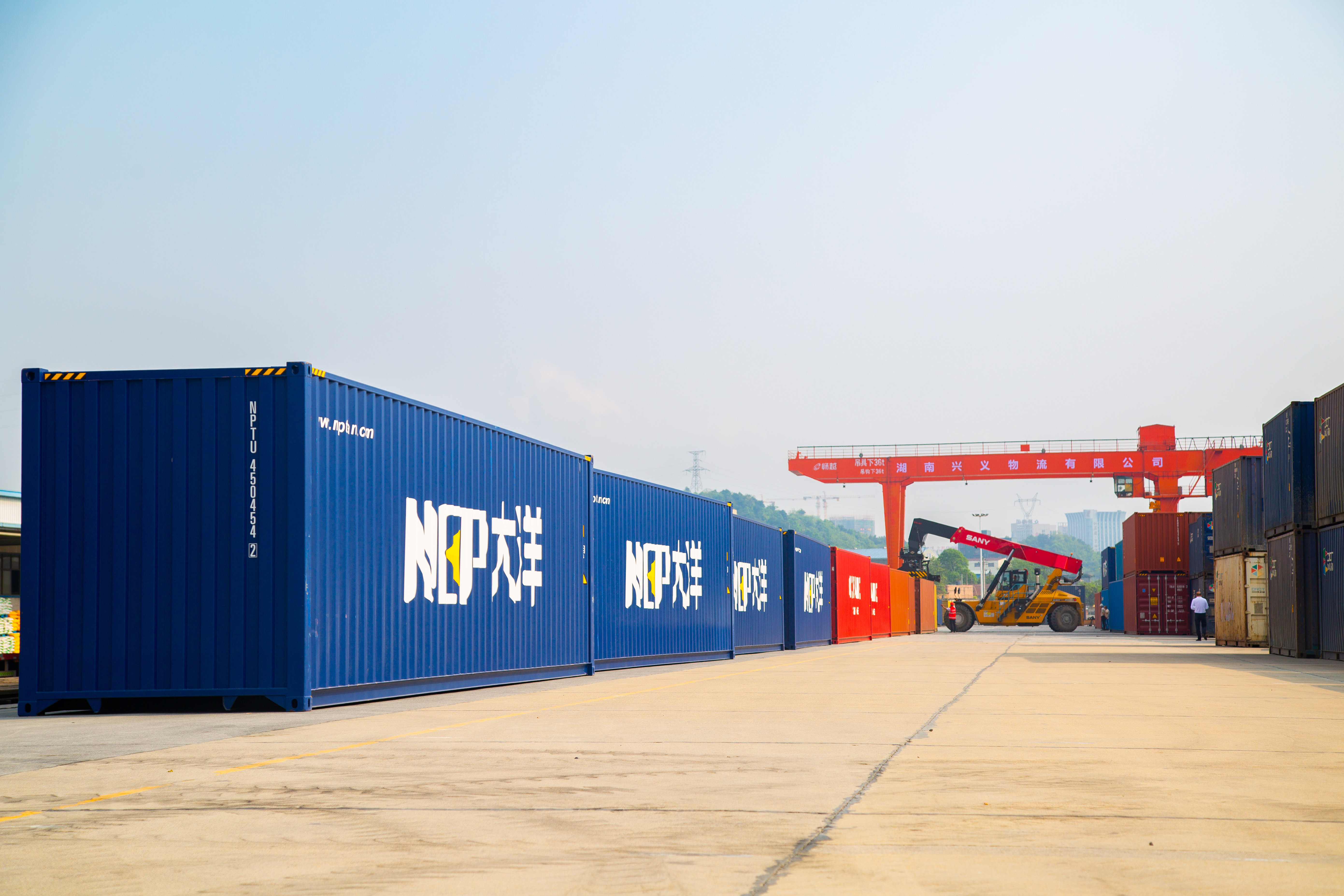
China - Alashankou/Khorgos - Europe Full Range Transportation (Mala/Hamburg/Duisburg/Budapest, etc.)
Shenzhen Neptune Logistics Co., Ltd.
3m intelligent buoy combining navigation safety and real-time marine monitoring integrated navigation and marine monitoring system for real-time maritime data
Chengdu Dixin Technology Co., Ltd.
Industrial and Commercial Point-Type Gas Detector
Jinan Benan Technology Development Co., Ltd.