Beijing Releases "Beijing Digital Economy Development Report (2025–2026)", AI Core Industry Scale Reaches Approximately 450 Billion Yuan in 2025
en.Wedoany.com Reported - On July 4, the blue paper "Beijing Digital Economy Development Report (2025–2026)" was released at the achievements release conference of the 2026 Global Digital Economy Conference. The report shows that in 2025, Beijing's digital economy added value exceeded 2.4 trillion yuan, a year-on-year increase of 8.7%, accounting for 46.4% of GDP.
This blue paper was compiled by the Beijing Academy of Social Sciences and released at the conference by Lu Ya, a member of the Party Leadership Group and Vice President of the Beijing Academy of Social Sciences. The report systematically reviews new trends and changes in the development of Beijing's digital economy, covering key areas such as artificial intelligence, data elements, computing infrastructure, digital governance, and opening up. In the evaluation of the Global Digital Economy Benchmark City Index, Beijing ranked second with a development index value of 0.770, continuing to be in the first tier of global digital economy cities.
Artificial intelligence has become the most attention-grabbing growth sector in the report. Lu Ya introduced that in 2025, the scale of Beijing's AI core industry is approximately 450 billion yuan, gathering over 2,500 related enterprises; as of April 2026, Beijing had registered 225 large models. The development and industry application of large models are accelerating simultaneously, with related capabilities entering scenarios such as industrial upgrading, technological innovation, and public services.
The circulation of data elements is also given significant importance. The report mentions that breakthroughs have been made in the construction of Beijing's "One Zone, Three Centers," with on-exchange trading volume at the Beijing International Big Data Exchange increasing by 150% year-on-year. Trusted data spaces are deepening circulation in key areas such as healthcare and audio-visual. For Beijing's digital economy, data resources are no longer just internal assets of governments and enterprises; how to achieve compliant circulation, trusted use, and value transformation is becoming a key link in the new round of digital industry competition.
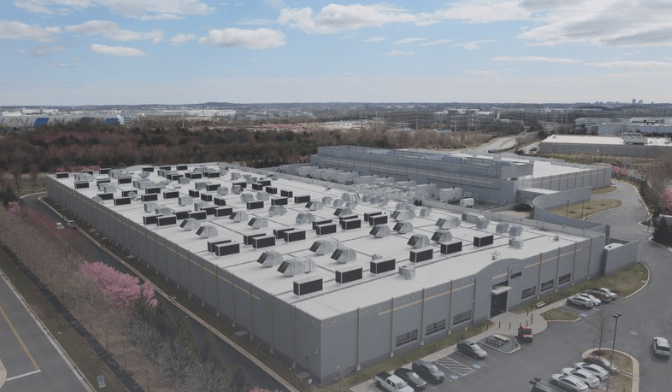
The construction of computing infrastructure also sends a clear signal. The report shows that Beijing's "Galaxy Computing Corridor" project has been launched, with the city's total computing power exceeding 60,000 P. As the number of registered large models increases and AI application scenarios expand, the demand for computing power will continue to extend towards high-density data centers, low-latency networks, intelligent scheduling, green power supply, liquid cooling systems, and security operations. Enterprises involved in servers, optical modules, switching equipment, power support, energy storage systems, cooling equipment, and industrial software may find new project entry points in the upgrade of Beijing's digital infrastructure.
Another set of data from this report is also noteworthy: in 2025, the added value of Beijing's core digital economy industries increased by 10.4% year-on-year, accounting for 29.3% of GDP. Haidian and Changping districts have taken the lead in initiating the creation of municipal-level future industry pilot zones, with forward-looking layouts in directions such as general artificial intelligence, embodied intelligence, 6G, commercial aerospace, and quantum technology.
For enterprises in the industrial chain, the core change in Beijing's digital economy growth is the formation of a tighter combination of technology, data, computing power, and application scenarios. The expansion of the AI core industry scale drives demand for model services, industry software, intelligent terminals, and digital solutions; the deepening of data element reform drives the construction of data security, trusted circulation, privacy computing, and industry platforms; the increase in total computing power will in turn drive demand for data centers, power equipment, network communications, and green energy support. Beijing's digital economy has entered a phase of systematic construction, and subsequent opportunities will increasingly appear at the intersections between AI application implementation, computing infrastructure expansion, and data circulation scenarios.
Related Products


GYTA Type Non-Self-Supporting Aerial/Duct Optical Cable
TONGDING INTERCONNECTION INFORMATION CO., LTD.

MUX Series Communication Interface Device for Security and Stability Control System
Nanjing NR Electric Co., Ltd.


TWP16 P-Band Tropospheric Wind Profile Radar
China Huayun Meteorological Technology Group Co., Ltd.
Comprehensive Mining Automation Control System
Beijing Tianma Intelligent Control Technology Co., Ltd.
20 Inch 1600*900 Full HD 60Hz TFT LED Monitor with VGA and DP Interfaces for Desktop Computers-Business Use
Guangzhou Zanying Optoelectronics Technology Co., Ltd.
Flat Portable Satellite Terminal 0.35m Aperture Manual Portable Terminal
China Starwin Science & Technology Co., Ltd.