Capgemini Acquires WNS for $3.3 Billion as Global AI M&A Wave Continues
en.Wedoany.com Reported - The global AI M&A wave is intensifying, with Capgemini acquiring WNS for $3.3 billion, joining a cohort of buyers focused on AI workflows, service automation, and data-centric delivery.

This acquisition is directly linked to the pressures facing Indian IT companies. According to data from the New Indian Express, the industry deployed approximately $5.5 billion through 19 acquisitions in fiscal year 2026, prioritizing the purchase of AI talent, intellectual property, and platforms over in-house development. This strategy requires acquirers to rapidly integrate assets and adapt to new delivery models.
Other AI-driven deals are equally active. ServiceNow's $2.85 billion acquisition of Moveworks indicates that buyers are pursuing assets closely tied to enterprise workflows and decision automation. Gartner analysts predict that by 2027, investment in generative AI within IT services and business operations will accelerate, with automation poised to reshape cost structures and delivery methods.
From January to May 2026, deal value in the technology, media, and telecommunications sectors rose 48% year-over-year to $472 billion, with transactions exceeding $5 billion accounting for nearly half. This suggests that large enterprises are securing access to the AI stack through foundation model partnerships, computing, and data infrastructure investments. Companies are increasingly turning to minority equity investments, joint ventures, and long-term agreements.
The operating environment is complex. India's IT and back-office services industry (approximately $300 billion) faces direct pressure from AI-driven automation. Labor-intensive workflows are being reassessed, creating both risks and opportunities for companies like Tata Consultancy Services (TCS) and Infosys. Together, they hold over $20.6 billion in cash reserves, enabling M&A strategies, but integration discipline will determine acquisition success.
McKinsey research highlights that service companies implementing AI at scale must redesign customer engagement models and workforce structures, changes that require continuous testing. Organizations are referencing the NIST AI Risk Management Framework and ISO/IEC 42001 standards to guide model risk, vendor transparency, and operational management.
Indian companies are actively diversifying their targets. A UnearthInsight report shows that acquisition spending in 2024 is expected to range between $6.5 billion and $7 billion, up from $5 billion the previous year. Cloud, enterprise platforms, and AI dominate the target list. Speed is critical in integration and monetization, especially in markets where global competitors like Capgemini are active.
The sustainability of the M&A pace is under scrutiny. CNCF analysts note that cloud and open-source ecosystems are evolving faster than buyers can track, and capabilities that are scarce today may become standardized in a few years. However, the willingness to gain market share remains high, particularly in the data-rich services layer.
Not all organizations are pursuing large-scale acquisitions. The market is leaning toward strategic alliances and long-term agreements to access AI models or computing resources. Investment rationale points to securing options within the AI stack rather than betting on a single tool.
Capgemini's acquisition of WNS underscores a shift in the industry. Large enterprises are actively restructuring delivery architectures and competitive boundaries. Indian IT companies face both internal and external pressures, and the window for operational restructuring has opened. Cash reserves and strategic diversification provide room for maneuver, but execution will determine the returns from transformation.
Related Products

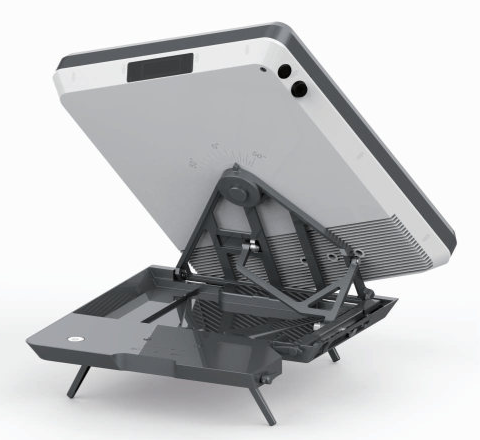
Flat Portable Satellite Terminal 0.35m Aperture Manual Portable Terminal
China Starwin Science & Technology Co., Ltd.
Conveyor Belt Intelligent Monitoring System
LUO YANG WIRE ROPE INSPECTION TECHNOLOGY CO., LTD.
20 Inch 1600*900 Full HD 60Hz TFT LED Monitor with VGA and DP Interfaces for Desktop Computers-Business Use
Guangzhou Zanying Optoelectronics Technology Co., Ltd.
Comprehensive Mining Automation Control System
Beijing Tianma Intelligent Control Technology Co., Ltd.
G.652.D Wavelength-extended Non-dispersion Shifted Single-mode Optical Fiber
HONGAN GROUP CO., LTD.

MUX Series Communication Interface Device for Security and Stability Control System
Nanjing NR Electric Co., Ltd.