Vietnam's ICTU Launches National-School-Enterprise Cooperation Ecosystem
en.Wedoany.com Reported - On July 4, the University of Information and Communication Technology (ICTU), under Thai Nguyen University, launched the "National-School-Enterprise Cooperation Ecosystem" aimed at promoting training, scientific research, innovation, digital transformation, and cultural development in higher education. This initiative is a concrete implementation step of the Politburo's Resolutions No. 57-NQ/TW, No. 71-NQ/TW, and No. 80-NQ/TW, involving breakthroughs in science, technology, innovation, digital transformation, education and training, and cultural development.
According to an ICTU representative, the school is no longer limited to signing memorandums of understanding or short-term internship programs but has chosen to build a continuously operating ecosystem where management agencies, enterprises, teachers, scientists, and students jointly participate in training, research, product development, and technology transfer.
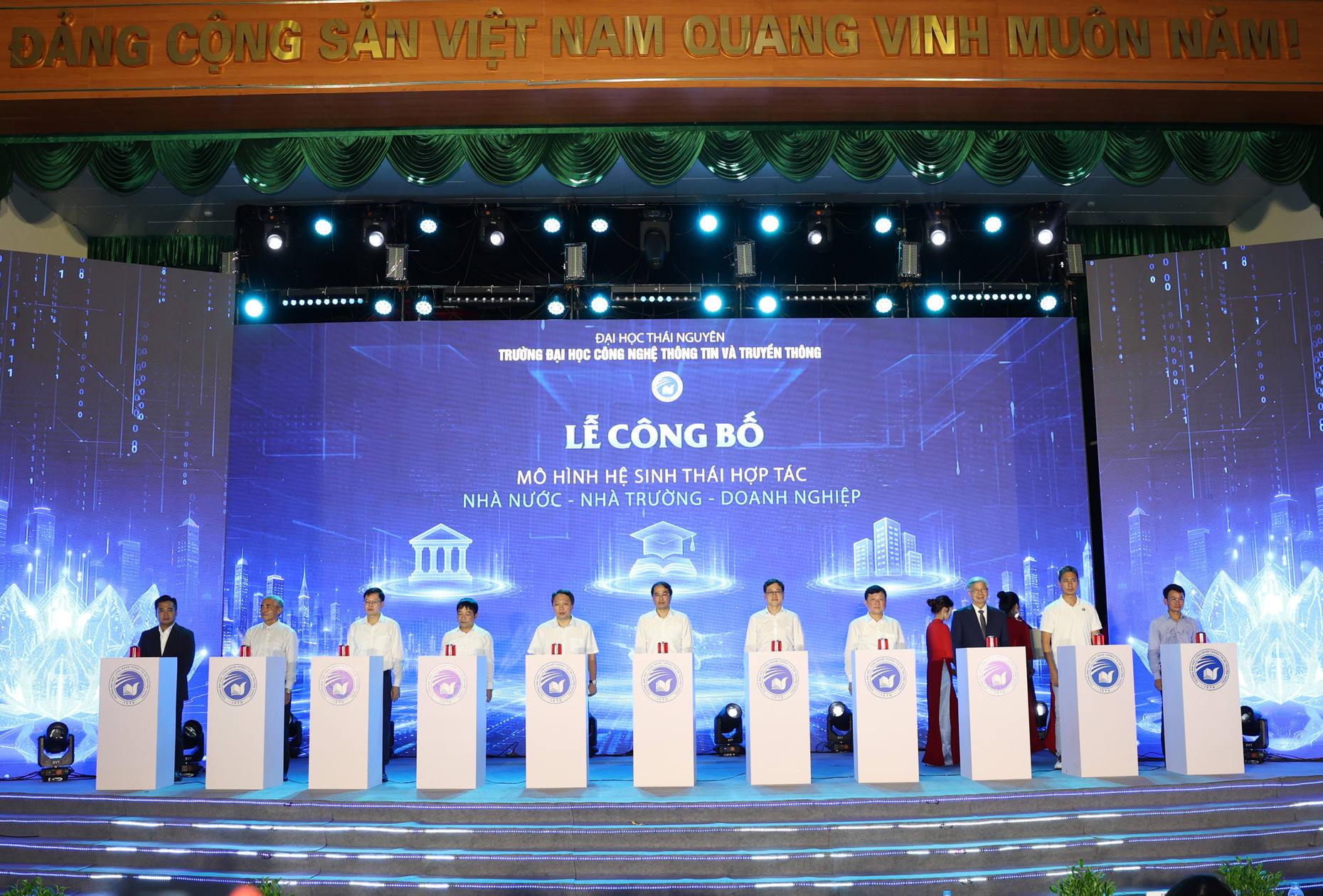
Associate Professor Dr. Phùng Trung Nghĩa, Rector of ICTU, stated in his opening speech that Thai Nguyen is undergoing profound changes, becoming a destination for many large corporations and enterprises, bringing development opportunities to the locality and region. He believes the key lies in how to transform these opportunities into learning, research, innovation, and entrepreneurship opportunities for students during their time at school. ICTU decided to act immediately by building this ecosystem to bring enterprises onto campus and real-world problems into the classroom. Phùng Trung Nghĩa pointed out that this idea is the result of the school's gradual accumulation of capacity, establishment of cooperative relationships, and preparation of teams and infrastructure over many years. With the Party's major guidelines, the school's determination, and increasingly close cooperation with the business community, he believes the time is ripe to turn this vision into reality. A prominent feature of this model is the shift from a "signing cooperation" mindset to "joint operation." Here, the state plays a role in policy guidance and connection; the school organizes training and research; and enterprises directly participate in training, research, product development, recruitment, and technology transfer. One key aspect is the nearly 2,500 square meter enterprise cooperation space on campus, where companies can set up R&D offices, organize training, internships, recruitment, and conduct collaborative research with faculty and students. Currently, about 80% of this space has been registered for use by enterprises. The ecosystem has attracted participation from companies in digital technology, high-tech manufacturing, digital finance, and cultural industries, including Samsung Việt Nam, Viettel Software, VinFast, Foxconn, and MISA. ICTU stated that this approach helps bring real-world problems from enterprises into the university environment, while the school's research ideas and human resources have the opportunity to transform into products, services, and solutions that contribute to socio-economic development.
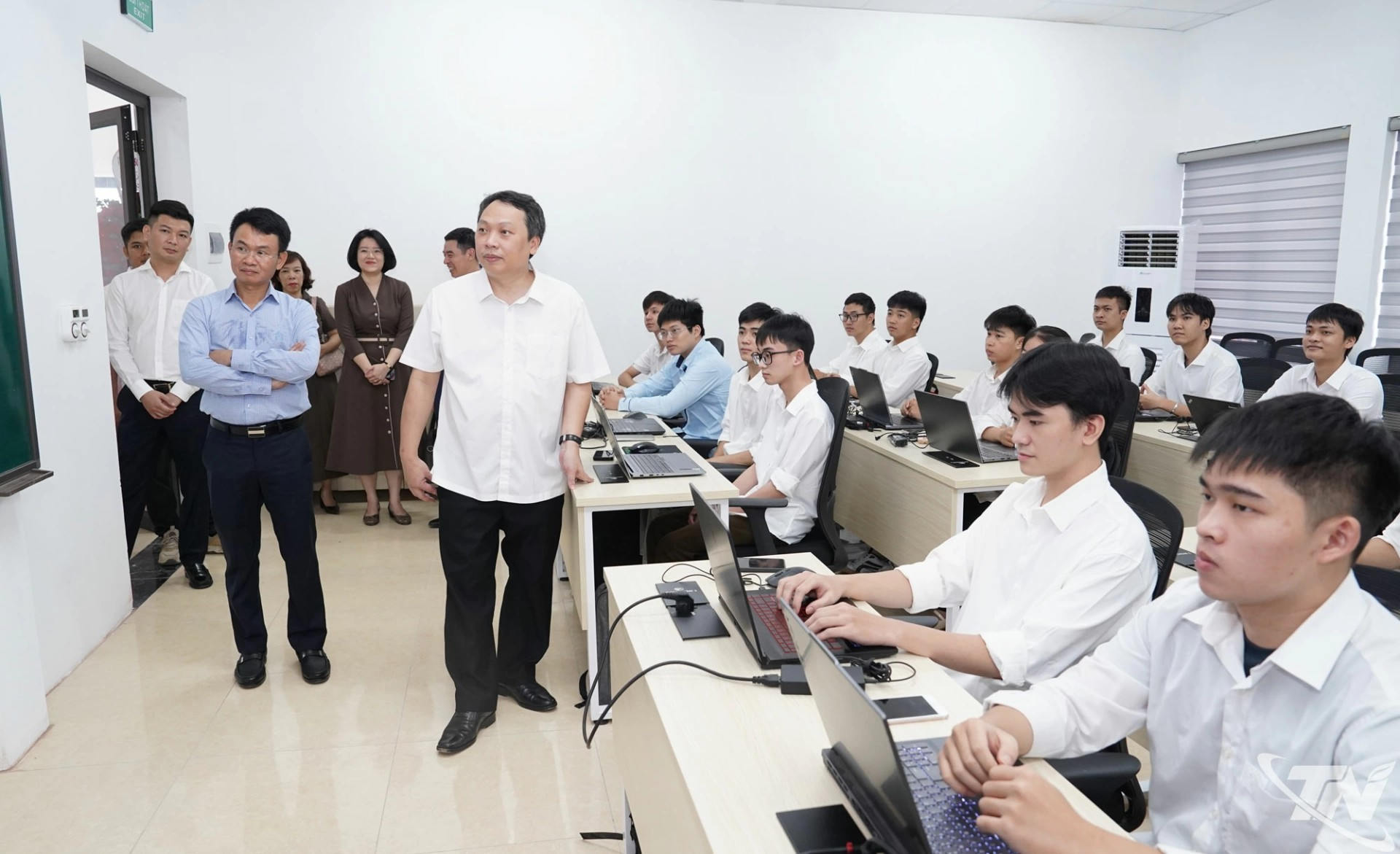
Mr. Nguyễn Huy Dũng, Deputy Minister of Culture, Sports and Tourism and former Chairman of Thai Nguyen Province, emphasized the effectiveness of the "tripartite" cooperation model (National-School-Enterprise) during the event and proposed adding an international cooperation factor to form a "tripartite +1" model. He believes that basic sciences, technical sciences, and applied sciences still require significant effort to catch up with international averages, making the selection of international strategic partners for cooperation crucial.
This cooperation ecosystem aims to reform training methods according to the actual needs of the labor market. Students begin engaging with enterprises from their first year, participating in real-world projects. ICTU has already implemented cooperative training programs with multiple enterprises. The Samsung Innovation Campus has provided training in Artificial Intelligence (AI), Big Data, the Internet of Things (IoT), and semiconductor technology to 394 students. Foxconn has coordinated training, internships, and selection for approximately 200 students as reserve staff. Viettel Software has launched internship and corporate projects for about 200 students, with 32 currently participating in actual software development projects. The school also collaborates with VinFast, Luxshare ICT, CodeGym, and a network of over 340 enterprises on curriculum development, internship guidance, applied research, and recruitment activities. Technology products developed by faculty and students, such as the intelligent training system iBLS, the Intelligent Business Network (IBN) platform, the AI chatbot ICTUBot, and the virtual reality system E-Car Factory, have been put into use. Colonel Bùi Trình, Director of Viettel Software, stated that this model helps students get early exposure to technology and the work environment. Viettel has set up a laboratory on campus, and many students have been recruited by Viettel after their internships.
Related Products


20 Inch 1600*900 Full HD 60Hz TFT LED Monitor with VGA and DP Interfaces for Desktop Computers-Business Use
Guangzhou Zanying Optoelectronics Technology Co., Ltd.
Industrial and Commercial Point-Type Gas Detector
Jinan Benan Technology Development Co., Ltd.


Flat Portable Satellite Terminal 0.35m Aperture Manual Portable Terminal
China Starwin Science & Technology Co., Ltd.

TWP16 P-Band Tropospheric Wind Profile Radar
China Huayun Meteorological Technology Group Co., Ltd.

Automatic Aiming Laser Remote Obstacle Removal Robot
Pinggao Group Weihai High-Voltage Apparatus Co., Ltd.
GYTA Type Non-Self-Supporting Aerial/Duct Optical Cable
TONGDING INTERCONNECTION INFORMATION CO., LTD.