Australia's NextDC Launches 612MW S7 Data Center, OpenAI to Become Customer
en.Wedoany.com Reported - Australian data center developer NextDC has unveiled plans for the S7 data center in Eastern Creek, Sydney. According to planning documents from the New South Wales government, the project involves the construction and operation of a data center with an operational capacity of 612MW. Currently classified as a state-significant development, the project is in the environmental impact statement preparation phase.
This is not an ordinary expansion. S7 is located in Eastern Creek, western Sydney, a key logistics and industrial area. NextDC acquired the relevant land in October 2024 for approximately AUD 353 million, with the company estimating at the time that the campus's full-load capacity would be around 550MW. The latest plan updates this capacity to 612MW, indicating that the project's scale has further increased following the rising demand for AI infrastructure.
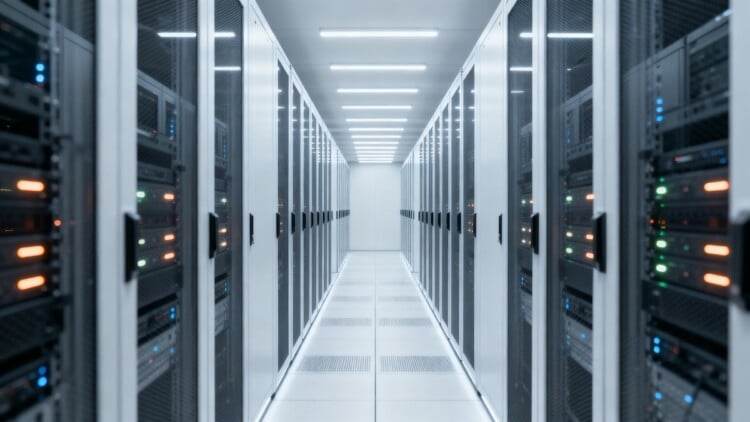
Planning diagrams show that the proposed campus will consist of three land parcels, with nine data center buildings distributed across them, along with an on-site substation. Information disclosed on the New South Wales planning portal also includes backup diesel generators, diesel storage, site works, and parking facilities. For a 612MW-level data center, power access, backup power, cooling systems, and network connectivity will directly determine the pace of subsequent construction.
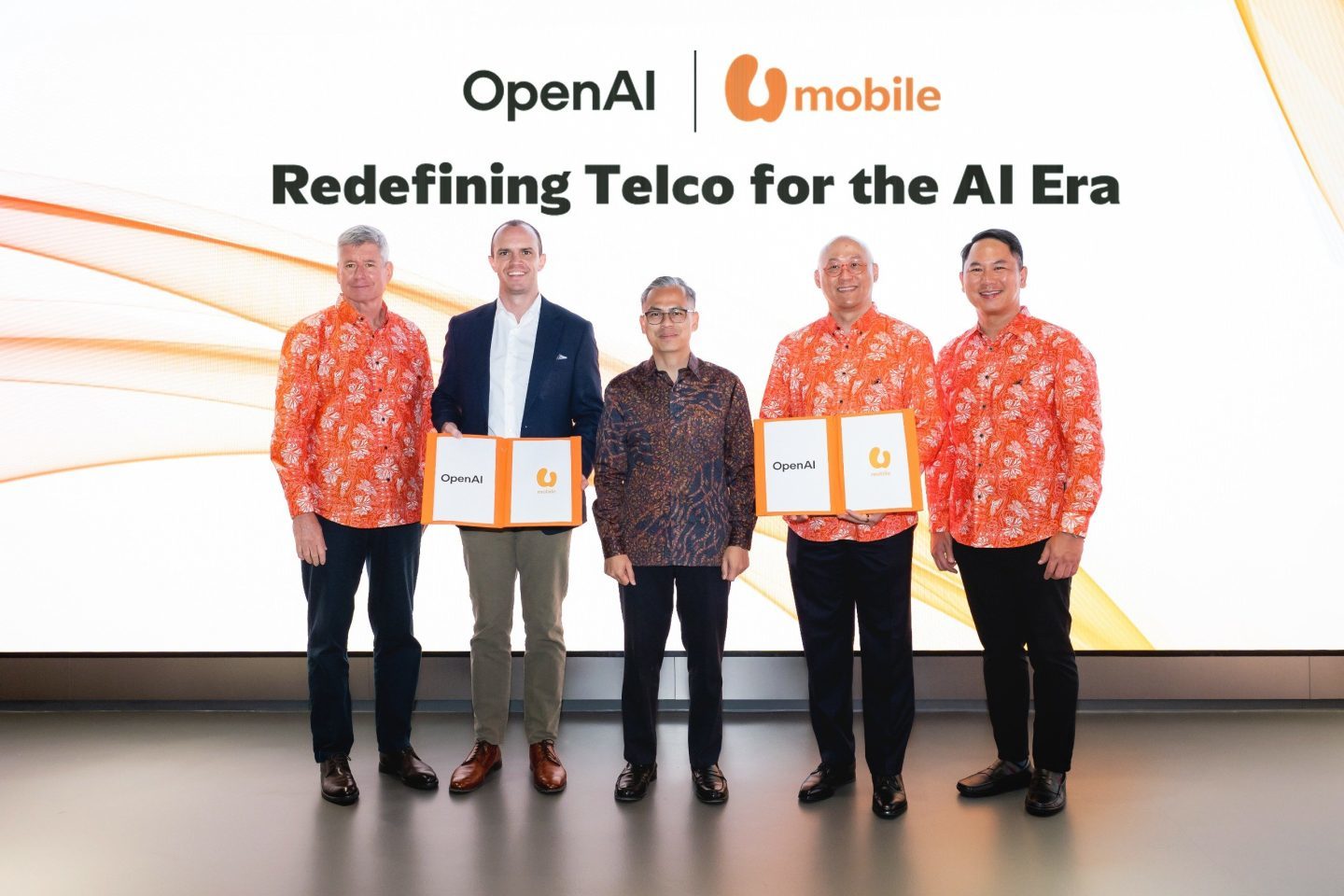
OpenAI has already appeared on the customer list for this campus. In December 2025, OpenAI signed a memorandum of understanding with NextDC, with both parties planning to collaborate on the planning, development, and operation of a next-generation hyperscale AI campus and large-scale GPU supercluster at NextDC's S7 site in Eastern Creek, Sydney. NextDC disclosed that the first phase of S7 will target high-density liquid-cooled GPU clusters and adopt a closed-loop high-density liquid cooling design. Subject to obtaining necessary approvals, the first phase is expected to be delivered in the second half of 2027.
The Australian data center market is being repriced by AI demand. NextDC currently operates or develops a total of six data centers in Sydney, with a combined capacity of nearly 500MW. Once S7 moves forward, it will further expand the company's infrastructure footprint in western Sydney. Eastern Creek is not only attracting NextDC; Goodman Group is also advancing another 500MW data center campus in the same area, with a potential investment of up to AUD 5 billion. The concentration of multiple gigawatt-level and hundreds-of-megawatt-level projects has made western Sydney one of the most competitive regions for AI data centers in Australia.
The project still needs to pass the approval process. The 612MW capacity, on-site substation, backup diesel generators, and large-scale cooling systems will all raise assessment issues related to grid access, energy consumption, emissions, water usage, traffic, and noise. Its classification as a state-significant development highlights its economic and infrastructure importance, but it also means a stricter approval process, with the final construction timeline still dependent on environmental assessments and regulatory approvals.
For equipment and engineering companies, S7 signals a clear procurement chain: substations, power equipment, diesel generator sets, UPS, high-voltage switchgear, transformers, busways, liquid cooling systems, chillers, server cabinets, fiber optic networks, security systems, fire protection systems, and data center operations platforms may all enter the demand window as the project progresses. An AI campus is not a single server room construction but a comprehensive project supported by power, communications, cooling, civil engineering, and computing hardware.
If S7 is realized as planned, Sydney's Eastern Creek will not just be an ordinary data center cluster but will further transform into an infrastructure node for AI computing power. OpenAI's involvement also elevates this campus from a regional data center project to a key example of Australia's pursuit of sovereign AI infrastructure.
Related Products


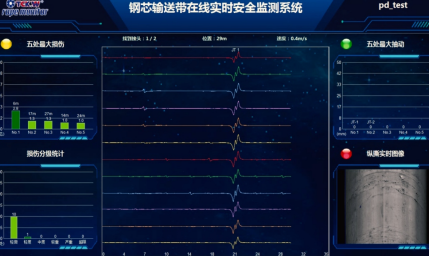
Conveyor Belt Intelligent Monitoring System
LUO YANG WIRE ROPE INSPECTION TECHNOLOGY CO., LTD.
Industrial and Commercial Point-Type Gas Detector
Jinan Benan Technology Development Co., Ltd.
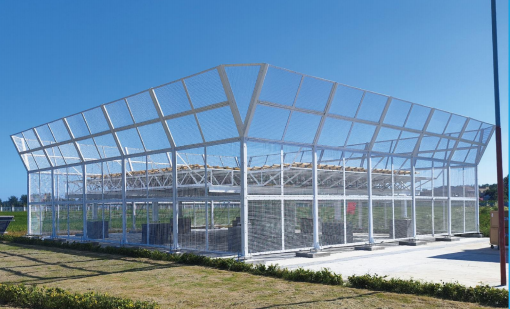
TWP16 P-Band Tropospheric Wind Profile Radar
China Huayun Meteorological Technology Group Co., Ltd.
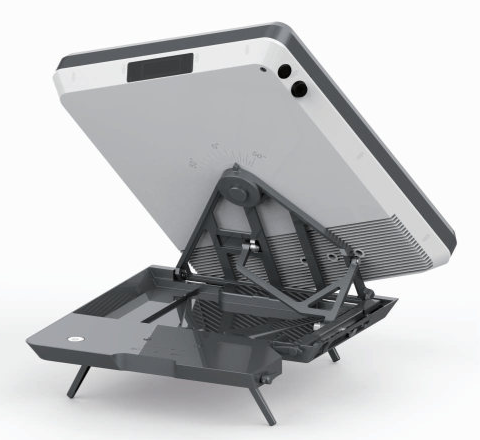
Flat Portable Satellite Terminal 0.35m Aperture Manual Portable Terminal
China Starwin Science & Technology Co., Ltd.

Mine Explosion-proof and Intrinsically Safe Industrial Ethernet Ring Network (10 Gigabit/Gigabit)
Chongqing Mas Sci&Tech Co., Ltd.