China's Moore Threads Completes Adaptation of Meituan's LongCat-2.0
en.Wedoany.com Reported - On July 6, Meituan officially open-sourced its next-generation trillion-parameter large model, LongCat-2.0. On the same day, Moore Threads completed a rapid adaptation of the model based on its all-in-one AI training and inference full-function GPU computing card, the MTT S5000, and the MUSA software stack. The adaptation covered the entire chain, including model loading, inference engine startup, key operator optimization, deployment verification, and accuracy validation, enabling LongCat-2.0 to run stably and efficiently on the MTT S5000, providing developers and enterprise customers with a more convenient model deployment path.
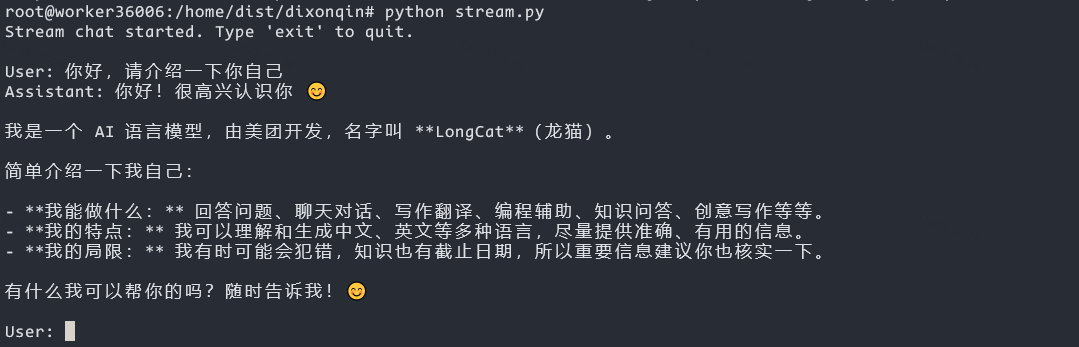
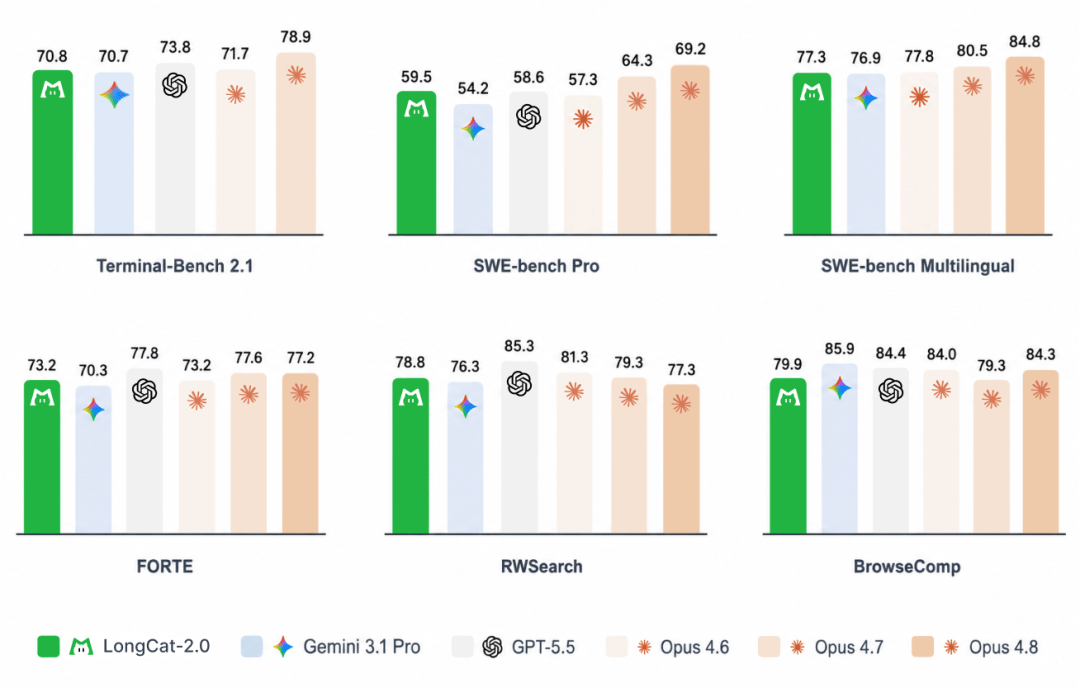
LongCat-2.0 is Meituan's self-developed next-generation trillion-parameter MoE large model, with a total parameter count of 1.6T and an average activated parameter count of approximately 48B, with a dynamic range between 33B and 56B. Designed specifically for Agentic Coding scenarios, the model natively supports an ultra-long context of 1M and employs a self-developed sparse attention mechanism (LSA), a ScMoE cross-layer shortcut connection architecture, and a zero-computation expert dynamic activation mechanism to achieve efficient resource utilization and multi-task collaboration. Comprehensive evaluation results show that LongCat-2.0 performs excellently in Code and General Agent scenarios, making it one of the most popular core agent large models in the global developer community.
Moore Threads' technical team, leveraging the high-performance SGLang-MUSA inference engine and the MUSA software ecosystem, completed full-chain adaptation from framework compatibility to performance optimization, focusing on the model structure and inference characteristics of LongCat-2.0.
In terms of hardware support, the MTT S5000 features hardware-level native FP8 acceleration capability, providing high computing power, large-capacity memory, and high bandwidth on a single card, offering stable support for long-context input, KV Cache read/write, and high-concurrency inference. Combined with the collaborative optimization of the SGLang-MUSA inference engine and the MUSA software stack, LongCat-2.0 can more fully unleash its inference performance on the MTT S5000, improving online service response efficiency and system throughput.
Moore Threads adopted a standardized engineering approach, forming a process that includes model structure parsing, weight loading, inference framework compatibility, operator validation, and deployment testing, enabling LongCat-2.0 to quickly complete inference validation on the MTT S5000. This approach helps lower the barrier for migrating and deploying cutting-edge models on China's computing platforms.
Focusing on scenarios such as AI Coding, Agent workflows, enterprise knowledge base Q&A, and long document analysis, Moore Threads conducted deployment-level validation of the LongCat-2.0 inference chain. Through collaborative optimization at the framework, operator, and scheduling levels, the MTT S5000 can provide inference infrastructure that balances performance, stability, and scalability.
The achievement of Day-0 support for the LongCat-2.0 model represents a practice of deep collaboration between China's large models and China's chips. Moore Threads stated that it will continue to rely on the ecological compatibility of the MUSA software stack to adapt to cutting-edge model capabilities, accelerating the innovative deployment of large model applications using China's full-function GPU infrastructure.
Related Products


Multi-function Marine Monitoring Low-altitude Detection Radar Sea-air Boundary Ocean Dynamic Environment Measurement
Chengdu Dixin Technology Co., Ltd.
Flat Portable Satellite Terminal 0.35m Aperture Manual Portable Terminal
China Starwin Science & Technology Co., Ltd.

GYTA Type Non-Self-Supporting Aerial/Duct Optical Cable
TONGDING INTERCONNECTION INFORMATION CO., LTD.
Conveyor Belt Intelligent Monitoring System
LUO YANG WIRE ROPE INSPECTION TECHNOLOGY CO., LTD.

G.652.D Wavelength-extended Non-dispersion Shifted Single-mode Optical Fiber
HONGAN GROUP CO., LTD.
Automatic Aiming Laser Remote Obstacle Removal Robot
Pinggao Group Weihai High-Voltage Apparatus Co., Ltd.