Tattile Deploys 33 Mobile Traffic Data Collection Stations in Spain
en.Wedoany.com Reported - Following a successful pilot, Tattile has begun deploying 33 mobile Electronic Traffic Data (ETD) collection stations for an unnamed Spanish customer. Developed specifically for cross-network deployment, these stations provide advanced traffic analysis while ensuring rapid installation and fully autonomous operation.
The solution integrates an advanced Automatic Number Plate Recognition (ANPR) system, utilizing Tattile's Vega53 cameras to handle vehicle identification and traffic flow analysis. The Vega53 combines high-resolution imaging, ANPR, integrated infrared illumination, and embedded AI video analytics in a single device, enabling vehicle detection, classification, speed estimation, license plate recognition, and traffic incident detection through a unified platform without the need for multiple roadside sensors.
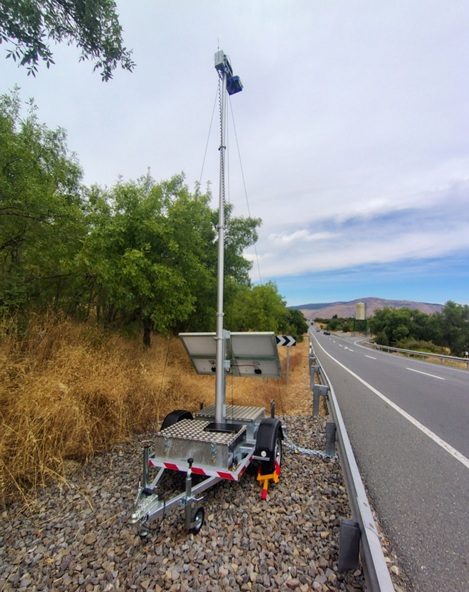
The camera-based architecture allows stations to be installed within minutes, requiring no road surface intervention, civil engineering, or lane closures. Tattile states that this feature makes it particularly suitable for temporary traffic surveys, mobility studies, network assessments, and short-term monitoring activities. In this project, the monitoring units are required to operate autonomously for several days under real-world conditions.
Mounted on mobile data collection stations powered by battery and solar systems, the Vega53 ensures high detection accuracy during both daytime and nighttime operations, as well as under varying weather and lighting conditions. This deployment demonstrates a practical and scalable alternative to traditional traffic data collection technologies, covering multi-lane traffic monitoring, vehicle counting and classification, ANPR-based traffic analysis, hazardous goods vehicle identification, real-time traffic incident detection, and insights into traffic flow and road usage.
Tattile notes that as traffic monitoring evolves from fixed roadside sensors to software-defined and data-driven platforms, intelligent cameras are becoming a key component of modern mobility infrastructure. The successful application in the Spanish project demonstrates that AI-driven traffic monitoring technology can support the modernization of road infrastructure while reducing installation costs and operational disruptions.
Related Products
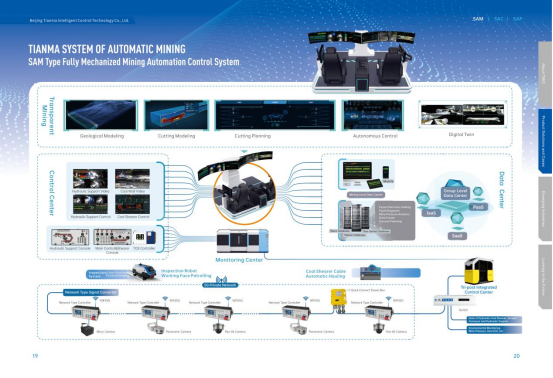

Comprehensive Mining Automation Control System
Beijing Tianma Intelligent Control Technology Co., Ltd.

Industrial and Commercial Point-Type Gas Detector
Jinan Benan Technology Development Co., Ltd.
TWP16 P-Band Tropospheric Wind Profile Radar
China Huayun Meteorological Technology Group Co., Ltd.
MUX Series Communication Interface Device for Security and Stability Control System
Nanjing NR Electric Co., Ltd.
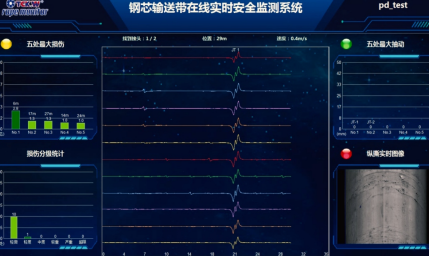
Conveyor Belt Intelligent Monitoring System
LUO YANG WIRE ROPE INSPECTION TECHNOLOGY CO., LTD.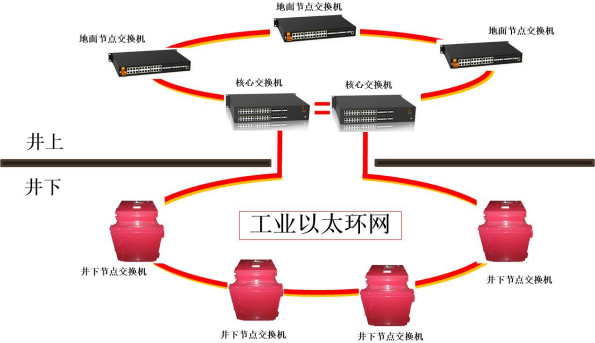
Mine Explosion-proof and Intrinsically Safe Industrial Ethernet Ring Network (10 Gigabit/Gigabit)
Chongqing Mas Sci&Tech Co., Ltd.
Automatic Aiming Laser Remote Obstacle Removal Robot
Pinggao Group Weihai High-Voltage Apparatus Co., Ltd.

Multi-function Marine Monitoring Low-altitude Detection Radar Sea-air Boundary Ocean Dynamic Environment Measurement
Chengdu Dixin Technology Co., Ltd.