Apple Inc. Launches Trust Insights to Combat Social Engineering Attacks
en.Wedoany.com Reported - Apple has introduced a new framework called "Trust Insights" to help app developers identify and respond to cyberattacks that use social engineering tactics to manipulate users. These attacks are difficult to counter with traditional technical defenses, as two-factor authentication or biometric verification cannot prevent legitimate users from being tricked into making large money transfers or granting data access.
The Trust Insights framework is designed to provide assessments to app developers when users exhibit abnormal behavior. Such behaviors include making large transfers to accounts impersonating a family member's doctor, granting remote access to strangers, deleting accounts, exporting data, or sharing sensitive information. The framework can identify typical social engineering attack scenarios and send signals to apps when medium- or high-risk fraud is detected. How the signal is utilized depends on the app developer.
App developers are responsible for subsequent response measures. For example, one response could be displaying a warning prompt to users, alerting them to common criminal tactics, or delaying transactions. Developers must report to Apple via an interface how they handled the signal to improve detection and identify false positives. Failure to do so may result in restrictions on future use of the framework.
The Trust Insights framework will be launched with iOS 27, expected in the fall. Users can choose to disable behavior monitoring, which is primarily conducted on-device, with some processes assessed via cloud infrastructure, adhering to Apple's data minimization principles. Device data is processed locally only and does not involve photos, messages, or email content. To prevent scammers from tricking users into disabling detection, a "cooling-off" period is implemented before the deactivation takes effect.
Potential audiences for this framework include banks, social media providers, and app developers handling personal data or assets. As cybercrime consumes significant corporate resources and incurs costs, many businesses may be willing to adopt such measures. Cybercriminals are already recruiting social engineering experts on the dark web and leveraging artificial intelligence for larger-scale attacks, highlighting the pressure on companies to take action. However, whether users will accept such behavior monitoring and whether misidentification could lead to restrictions on users in worst-case scenarios remains to be seen.
Related Products



One-Stop Steward Service for the Entire Logistics System Integration Chain
Zhongding Intelligent (Wuxi) Technology Co., Ltd.
Mine Explosion-proof and Intrinsically Safe Industrial Ethernet Ring Network (10 Gigabit/Gigabit)
Chongqing Mas Sci&Tech Co., Ltd.
G.652.D Wavelength-extended Non-dispersion Shifted Single-mode Optical Fiber
HONGAN GROUP CO., LTD.
Flat Portable Satellite Terminal 0.35m Aperture Manual Portable Terminal
China Starwin Science & Technology Co., Ltd.


GYTA Type Non-Self-Supporting Aerial/Duct Optical Cable
TONGDING INTERCONNECTION INFORMATION CO., LTD.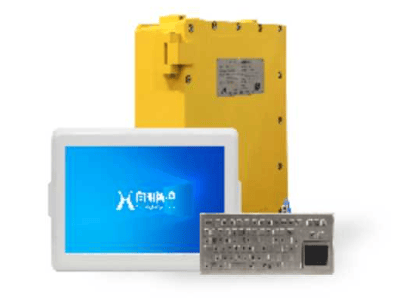
KJD127(A) Mining Explosion-Proof and Intrinsically Safe Computer
Taiyuan Xiangming Intelligent Control Technology Co., Ltd.