en.Wedoany.com Reported - China's State Administration for Market Regulation has organized international standards research in the field of new infrastructure for the Internet of Things (IoT), resulting in a series of innovative achievements that have propelled breakthroughs in the development of computing power network technical standards and IoT applications. The research focuses on computing power network resource certification, resource orchestration, heterogeneous computing power collaboration, and IoT application standardization, providing support for integrating computing resources from different vendors and types into a unified technical framework.
The core challenge of computing power networks lies in enabling computing resources dispersed across different regions, platforms, and vendor systems to be identified, certified, scheduled, and collaboratively utilized. The research team has innovatively designed a technical architecture system for computing power network resource certification and orchestration, offering a universal reference framework for heterogeneous computing power collaboration. The value of this framework lies in its shift from viewing computing resources solely as capabilities within individual data centers or platforms, to incorporating resources from diverse sources, types, and performance characteristics into a certifiable, orchestrateable, and collaborative network system.
The team has drafted and published seven important international standards, promoting the standardization of heterogeneous computing power resource certification and IoT application technologies. IoT scenarios often involve numerous terminals, sensors, edge nodes, industry platforms, and business systems, with complex data sources, varying real-time requirements, and significantly different computing power demands. The establishment of the standards system reduces interface fragmentation and collaboration barriers between different devices, platforms, and computing resources, providing a more stable technical foundation for applications such as the Internet of Vehicles (IoV), visual IoT, network co-construction and sharing, and forest fire prevention.
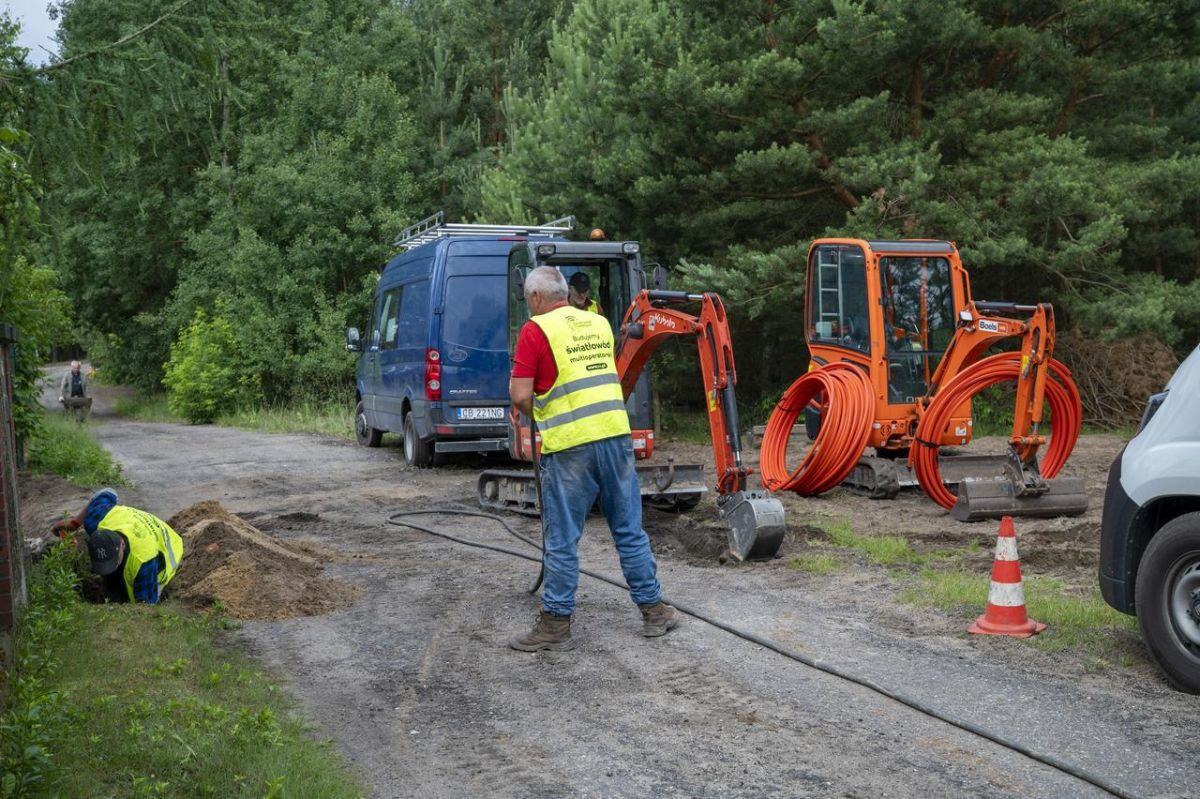
Relevant achievements have been applied in scenarios including China Unicom's IoV, China Telecom's visual IoT, the co-construction and sharing of networks between China Unicom and China Telecom, and Zhejiang Dahua Technology Co., Ltd.'s forest fire prevention. The IoV requires processing vehicle operation, road perception, communication connections, and edge computing data; visual IoT involves extensive video capture, recognition, analysis, and transmission; and forest fire prevention necessitates collaboration among front-end perception, image recognition, alarm linkage, and regional monitoring capabilities. These scenarios all impose high demands on computing power resource scheduling, network connectivity, and IoT application stability.
Progress in developing computing power network standards also signifies that new IoT infrastructure is transitioning from single-point construction to systematic collaboration. Previously, industry projects focused more on device access, platform construction, and individual application deployment. With increasing demands for AI recognition, edge computing, video analysis, and cross-regional scheduling, a single computing power node struggles to meet complex scenario requirements. Through resource certification and orchestration technologies, different computing resources can be organized and invoked based on business needs, improving the operational efficiency of IoT applications across multiple scenarios.
These research outcomes have also generated multiple independent intellectual property rights, providing technical support and standard assurance for enhancing the core capabilities of new IoT infrastructure. The publication of international standards has strengthened China's participation in computing power networks, heterogeneous computing power resource certification, and IoT application specifications, while also facilitating broader industry adoption of relevant technological achievements. As scenarios such as the IoV, visual IoT, smart forestry, and co-constructed and shared networks continue to advance, computing power network resource certification and orchestration technologies will become crucial pillars in the upgrade of IoT infrastructure.