Vietnam's VinGroup Abandons $6.7 Billion LNG Project, Shifts to Renewable Energy
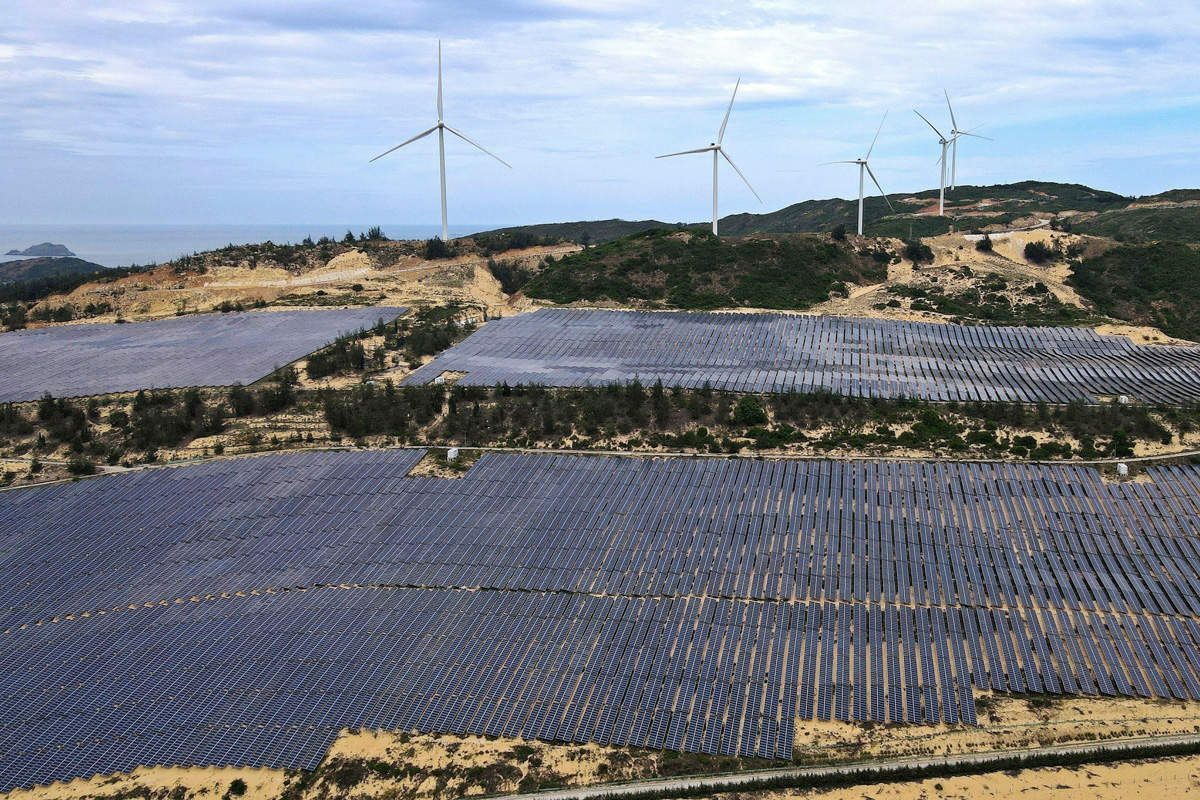
en.Wedoany.com Reported - Vietnamese developer VinGroup has proposed abandoning a 4.8 GW, $6.7 billion liquefied natural gas (LNG) power plant project in Haiphong City, opting instead to develop a hybrid renewable energy project paired with a battery energy storage system. This decision is seen as a clear signal of setbacks in the country's LNG development strategy.
The project was jointly inaugurated in September 2025 by then-Prime Minister Pham Minh Chinh and VinGroup founder Pham Nhat Vuong, originally intended to help Vietnam achieve its target of 22.5 GW of LNG capacity by 2030. According to Reuters, just six months later, VinGroup proposed abandoning the project, citing high fuel prices driven by conflicts in Southwest Asia and the foreign exchange pressure of $3.5 to $3.8 billion needed to import approximately 5 million tons of LNG annually.
Vietnam is currently one of the countries with the most extensive renewable energy grids in Southeast Asia, holding a 41.55% market share in the region. From 2018 to the end of 2020, solar feed-in tariff policies drove the country's photovoltaic capacity from 86 MW to 16.5 GW, but this also increased electricity procurement costs from $4.5 billion in 2018 to $11.5 billion in 2023, leaving state-owned power buyer Vietnam Electricity Group (EVN) with cumulative losses of about $1.7 billion by the end of 2024 and still facing $216 million in cumulative losses in fiscal year 2025.
Vietnam's Ministry of Industry and Trade has set a price cap of 3,327 Vietnamese dong (approximately $0.13) per kWh for LNG power plants, far higher than the $0.03 to $0.07 cap for solar power. EVN currently prioritizes dispatching the lowest-cost power sources, increasing risks for LNG projects that rely on high utilization rates. Current laws only require EVN to purchase an average of 65% of a plant's annual generation for up to 10 years after commercial operation. Lam Pham, an Asia analyst at energy think tank Ember, noted that this ratio is below the 80% to 90% "take-or-pay" level typically required for international financing. The Ministry of Industry and Trade has proposed raising the guaranteed purchase ratio to 75% and extending the term to 15 years, but investor demands for higher purchase commitments, exchange rate guarantees, and government buyouts have all been rejected. The Ministry insists on a 75% cap, citing calculations by the National Power System and Market Operation Company (NSMO) showing that a higher ratio would force EVN to bear costly LNG power costs when the grid does not need it.
A global shortage of gas turbines has exacerbated challenges for Vietnam's projects. Gas turbine supply is concentrated among GE Vernova, Siemens Energy, and Mitsubishi Heavy Industries, and Lam Pham noted that these companies have full order books and are not eager to expand capacity. LNG transport disruptions and high spot prices due to conflicts in Southwest Asia have further exposed the vulnerability of Vietnam's import-dependent strategy amid declining domestic gas supplies. The country currently has only one long-term LNG contract, with deliveries set to begin in 2027.
Policy direction is also shifting. Former Prime Minister Pham Minh Chinh left office in April 2026, and his successor, Le Minh Hung, has shown a more cautious approach to the energy future. Gary Zieff, who participated in a U.S.-supported technical assistance project advising the Vietnamese government and industry on renewable energy, believes VinGroup's abandonment of "a large project with sunk costs" signals market trends. Vietnam has set a target to increase battery storage capacity from less than 100 MW to 16.3 GW by 2030. However, Sunita Dubey, a Hanoi-based energy transition expert, stated that banks and national stakeholders need time to understand how to finance this new sector, and about 70% of the country's battery materials come from China.
Despite the stagnation of LNG projects, state-backed investments continue. Reports indicate that state-owned PV Gas has committed to investing over $3.8 billion from 2026 to 2030 in developing infrastructure such as receiving terminals and pipelines. Le Hong Hiep, a senior fellow at Singapore's ISEAS-Yusof Ishak Institute, noted that Hanoi has geopolitical considerations, as importing LNG from the U.S. could serve as leverage in managing bilateral trade relations. He stated that the core issue is that investors need long-term offtake guarantees and protection against price and exchange rate risks, while EVN and the government are unwilling to bear these risks on behalf of the state, with neither side backing down. Sunita Dubey believes the concept of natural gas as a "baseload" or "transition fuel" is outdated, and Vietnam could leapfrog directly to renewable energy, though a small portion of LNG could still provide flexibility.