Stanford University Develops New Methane Pyrolysis Process for Hydrogen Production, Boosting Output Tenfold
en.Wedoany.com Reported - A research team from the School of Engineering at Stanford University has reported a new methane pyrolysis process for hydrogen production in the journal Science. The new process supplies heat from inside the reactor, directly decomposing methane into hydrogen and solid carbon. The researchers state that, with the same energy input, the new reactor's material output is approximately ten times that of traditional external heating methods.
Existing natural gas-to-hydrogen routes release gaseous carbon dioxide while producing hydrogen; methane pyrolysis, by contrast, decomposes methane into hydrogen and solid carbon without generating gaseous carbon dioxide. This technology has been studied for years but has struggled to scale from the laboratory to industrial levels, with two main obstacles: removing solid carbon from the reactor and supplying sufficient heat for the reaction process. Henry Moise, co-first author of the paper and a researcher in Stanford's Department of Chemical Engineering, noted that this work focuses on the latter heating challenge.
Matteo Cargnello, senior author of the paper and associate professor of chemical engineering at Stanford, stated that to scale pyrolysis to match the hydrogen market, reactors must be built very large and heated to 1,000 degrees Celsius, requiring highly efficient heating methods. Current industrial reactors are mostly heated externally, and the larger the reactor, the harder it is for heat to penetrate to its center. Rather than using external combustion of natural gas—which produces carbon dioxide—the research team placed a burner inside the reactor to selectively combust a portion of the hydrogen. The combustion products of this portion of hydrogen are primarily water, which both drives the methane cracking reaction and avoids direct carbon dioxide emissions.
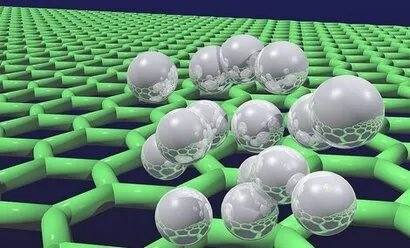
According to Moise, this autothermal heating approach improves efficiency by roughly tenfold. With the same energy input, a reactor using the new method yields approximately the same material output as ten reactors using traditional external heating. The study also found that the solid carbon produced is deposited in the form of high-quality graphite, which can be used in products such as batteries and electrodes. Moise called this the project's "biggest surprise."
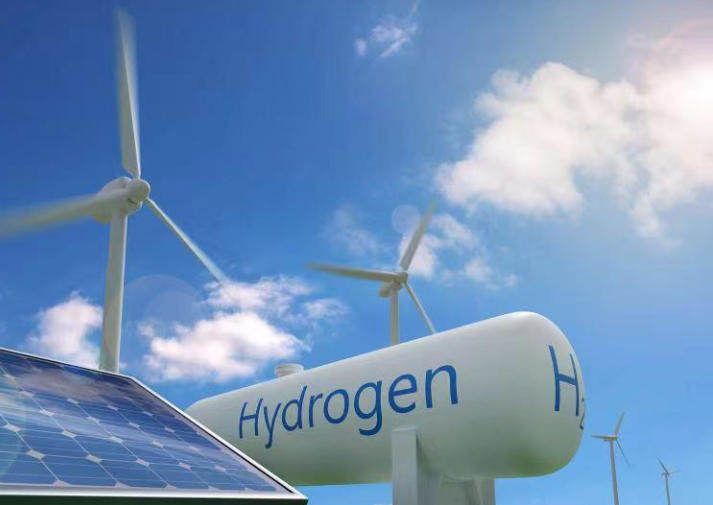
Moise noted that at least a few percentage points of GDP depend on hydrogen. He cited fertilizer as an example: ammonia production is inseparable from hydrogen, and ammonia-based fertilizers are estimated to sustain roughly half of the global population; hydrogen is also used in oil refining to remove sulfur from gasoline and helps produce products such as methanol. Hydrogen is "everywhere, so much so that it becomes invisible." The research team hopes the new process can pave the way for inexpensive, clean hydrogen production.
According to the paper, additional co-first authors include German visiting student Sebastian Moll, who worked in Moise's laboratory for six months. Eric McFarland's team at the University of California, Santa Barbara provided data from larger-scale reactors; Arun Majumdar encouraged the team to tackle this challenge. Other co-authors include Stanford's Joshua Martinez-Navarro, Sai Varanasi, former postdoctoral scholar Kun Xu, as well as researchers from the University of California, Santa Barbara and the Karlsruhe Institute of Technology in Germany.
Stanford University has filed a provisional patent application related to the research findings. The work was supported by the Kavli Foundation, the Carbon Hub at Rice University, the Natural Gas Initiative at Stanford, and the CO2 Research Center at Aarhus University in Denmark. Cargnello stated that further scale-up efforts are still needed to validate the method's application in mainstream hydrogen production.