China's Ministry of Industry and Information Technology Approves Industry Standard Project for "Technical Requirements for Unstructured Data Processing and Analysis Platforms"
en.Wedoany.com Reported - On July 7, the General Office of China's Ministry of Industry and Information Technology officially issued the 2026 fourth batch of industry standard revision and development project plans, approving the project "Technical Requirements for Unstructured Data Processing and Analysis Platforms for Telecommunications and Internet." The project, numbered 2026-1186T-YD, has a development cycle of 12 months. It will establish unified technical requirements for unstructured data processing and analysis platforms in telecommunications and internet scenarios, providing a standard basis for platform research and development, system construction, product testing, and procurement selection.
This project is supervised by the Information and Communication Administration Bureau of the Ministry of Industry and Information Technology, with technical oversight by the China Communications Standards Association. Key drafting units include the China Academy of Information and Communications Technology, China Telecom Group Co., Ltd., China Mobile Communications Group Co., Ltd., China United Network Communications Group Co., Ltd., Tencent Cloud Computing (Beijing) Co., Ltd., iFLYTEK Co., Ltd., and Inspur Communication Information Systems Co., Ltd. The participating entities cover basic telecom operators, cloud computing enterprises, artificial intelligence companies, and research institutions.
The standard development targets not the structured tabular data in traditional relational databases, but data lacking a unified predefined structure, such as text, images, audio, video, web pages, business documents, and operation logs. With the continuous expansion of telecom network operations, internet content services, intelligent customer service, enterprise knowledge bases, and large model applications, the volume of such data is steadily increasing. However, different platforms vary in data ingestion, parsing, processing, retrieval, and analysis methods, and product capabilities lack a unified evaluation metric.
The "Data Element Development Report (2025)" released by the China Academy of Information and Communications Technology states that unstructured data, such as text, images, and audio/video, accounts for a high proportion of data held by various entities. Existing technologies can identify, extract, and interpret this content, and complete structured processing through metadata, business information, and topic tags. After governance, unstructured data can be further used for data retrieval, business analysis, high-quality dataset construction, and AI model applications. However, the correlation and integration between different data modalities remain an important direction for R&D and governance.
Once the "Technical Requirements for Unstructured Data Processing and Analysis Platforms for Telecommunications and Internet" enters the development phase, related work will proceed according to industry standard management procedures. The working group will sequentially carry out standard draft refinement, preparation of the exposure draft, comment processing, formation of the review draft, technical review, and submission of the approval draft, ensuring the standard content undergoes industry discussion, technical verification, and expert review before entering the publication process.
Based on the project name, the standard's object of specification is the processing and analysis platform, not a single algorithm or a specific data product. The specific clauses of the standard have not yet been officially released, so all test indicators and functional boundaries cannot be predetermined at this stage. Considering the actual operational chain of unstructured data platforms, the core issue to be addressed in subsequent development is how to use unified requirements to evaluate different platforms' capabilities for ingesting, parsing, organizing, processing, and analyzing multi-source data, and to enable comparison of test results across different products.
The supporting evaluation system will be developed in parallel with the standard. The working group plans to leverage this standard to iteratively upgrade the "Trusted Digital Intelligence" series of assessment and testing capabilities, transforming the technical clauses of the standard into executable test items, test methods, and judgment rules. This will allow verification of whether a platform meets requirements through actual testing, rather than relying solely on functional descriptions or promotional materials submitted by enterprises.
This implies that after the standard is implemented, platform evaluation may shift from "whether a certain function exists" to "whether the function operates stably, whether performance meets requirements, whether complex data is correctly processed, and whether security and reliability are verified." For platform R&D enterprises, the standard and test results can be used to identify deficiencies in basic capabilities, processing efficiency, system stability, and security assurance. For telecom operators, internet companies, and other industry users, a unified testing system can reduce issues such as inconsistent indicator definitions and difficulty in horizontal comparison of product capabilities during procurement.
The "Trusted Digital Intelligence" series of assessments and tests focuses on big data technology products and solutions. The evaluation scope covers product selection, project implementation, business application, and operation and maintenance, conducting comprehensive tests from dimensions such as basic capabilities, performance, reliability, and security. To date, 411 products from 199 enterprises have completed relevant assessments, with a total of 451 tests conducted. The evaluation objects cover data platforms and technology products formed at different stages of China's big data industry.
Introducing the standard for unstructured data processing and analysis platforms into the existing system will further expand the scope of evaluation. Past big data platform construction focused more on structured data storage, batch computing, and real-time computing. However, AI applications require continuous processing of documents, images, recordings, videos, and other multimodal content. Platforms not only need to store raw data but also perform recognition and parsing, content extraction, correlation organization, and subsequent analysis. Original product evaluation indicators cannot fully cover these new capabilities.
Upon completion of the standard development, it is expected to primarily impact telecom operators, cloud service providers, big data platform vendors, and AI solution providers. When developing unstructured data platforms, relevant enterprises will need to adjust product functions, interfaces, operation management, and testing methods according to the unified requirements. Industry users, when building enterprise knowledge bases, intelligent customer service, large model data platforms, or multimodal data governance systems, can also select platforms based on the standard and test results, reducing the selection costs arising from the difficulty of comparing technical solutions from different vendors.
Currently, the project is still in the development phase following the approval of the industry standard. The official technical content will be subject to the subsequent exposure draft and the final published text. Key milestones to watch include the formation of the standard working group, the public release of the exposure draft, the development of supporting test methods, the first batch of product assessments, and the formal submission for approval. These developments will determine how the technical capabilities of unstructured data processing platforms are uniformly defined and quantitatively verified.
Related Products



Multi-function Marine Monitoring Low-altitude Detection Radar Sea-air Boundary Ocean Dynamic Environment Measurement
Chengdu Dixin Technology Co., Ltd.




TWP16 P-Band Tropospheric Wind Profile Radar
China Huayun Meteorological Technology Group Co., Ltd.
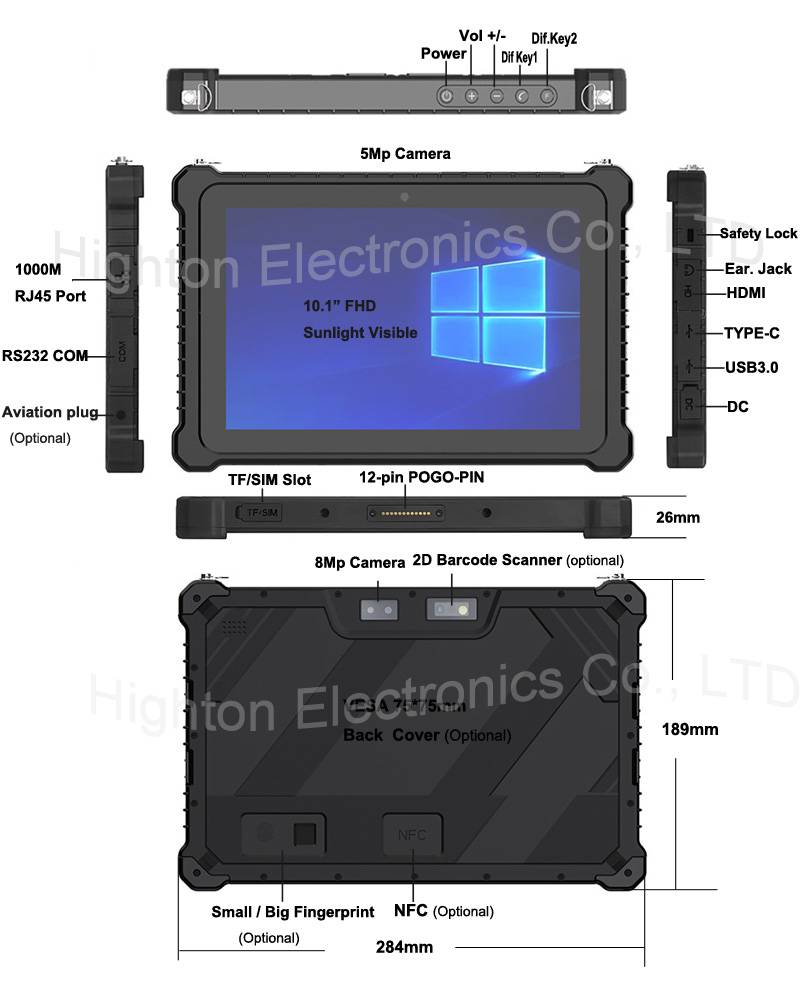
Hot Selling 10 Inch Intel N5100 I5 I7 FHD 8 +128GB 16+256GB Win10 Pro Win11 Pro 4G 5G Rugged Tablet PC Pad with NFC Barcode
Highton Electronics Co., Ltd.

G.652.D Wavelength-extended Non-dispersion Shifted Single-mode Optical Fiber
HONGAN GROUP CO., LTD.