Toshiba Japan Expands Four-Channel Digital Isolator Product Line
en.Wedoany.com Reported - On July 14, Toshiba Electronic Devices & Storage Corporation of Japan expanded its DCL34xx0B series of four-channel standard digital isolators for industrial equipment, adding four new products: DCL340L0B, DCL340H0B, DCL342L0B, and DCL342H0B. The new devices adopt an SSOP16 small package, with a maximum data transfer rate of 25Mbps, primarily used for electrical isolation in industrial automation, field devices, motor control, inverters, and switching power supplies.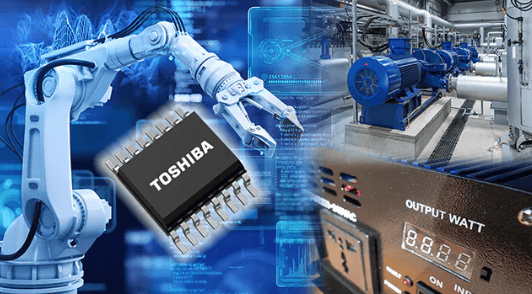
The four products offer two channel configurations. Among them, DCL340L0B and DCL340H0B adopt a four-forward, zero-reverse structure, suitable for transmitting multiple signals in the same direction; DCL342L0B and DCL342H0B adopt a two-forward, two-reverse structure, supporting bidirectional digital signal connections. The L and H in the model names correspond to different default output logic states: the L type maintains a low level when the input signal is undefined, while the H type maintains a high level. Device developers can select the appropriate product based on the safety state of the control system.
This series employs Toshiba Japan's proprietary magnetic coupling isolation transmission method, integrating a modulation chip, demodulation chip, and insulation layer into the same package, completing signal transmission through a magnetic field. Compared to direct connection of high and low voltage circuits, digital isolators can block current paths between circuits at different potentials while transmitting control and communication signals, reducing the risk of noise, abnormal voltage, or local faults spreading to other circuits.
The typical operating current per channel for the new products is 0.2mA. This value is calculated under conditions of 3.3V supply voltage, 1Mbps data rate, 15pF load, and 25 degrees Celsius. Toshiba Japan stated that the new isolation signal transmission circuit reduces power consumption while maintaining a maximum data transfer capability of 25Mbps, making it suitable for industrial control interfaces that require moderate communication speeds but need multiple channels and low-power operation.
In terms of withstand capability, the four products have a minimum isolation voltage of 3000Vrms, can operate in environments ranging from minus 40 degrees Celsius to 125 degrees Celsius, and support a supply voltage of 2.25V to 5.5V. The devices have a minimum common-mode transient immunity of 30kV/μs and a maximum propagation delay of 52 nanoseconds, helping them maintain stable signal transmission in equipment with strong noise, such as inverters, actuators, sensors, and programmable logic controllers.
Toshiba Japan previously mass-produced the DCL341L0B and DCL341H0B with a three-forward, one-reverse configuration, which can be used for interfaces with SPI communication. With the addition of the four-forward and bidirectional products, the DCL34xx0B series now forms a variety of four-channel combinations, allowing equipment manufacturers to select different devices based on the number of I/Os, communication direction, and system power-on state. The company also offers the DCL54xx01A and DCL52xx00 series for high-speed industrial communication, as well as the DCM34xx01 and DCM32xx00 series for automotive equipment.
Related Products


Multi-function Marine Monitoring Low-altitude Detection Radar Sea-air Boundary Ocean Dynamic Environment Measurement
Chengdu Dixin Technology Co., Ltd.
MUX Series Communication Interface Device for Security and Stability Control System
Nanjing NR Electric Co., Ltd.
Industrial and Commercial Point-Type Gas Detector
Jinan Benan Technology Development Co., Ltd.
G.652.D Wavelength-extended Non-dispersion Shifted Single-mode Optical Fiber
HONGAN GROUP CO., LTD.
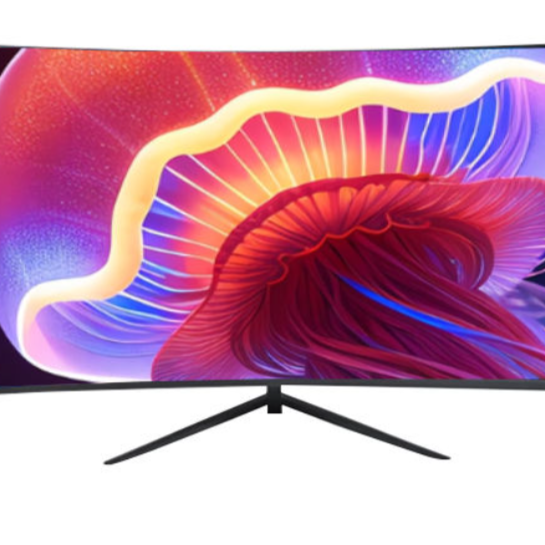
20 Inch 1600*900 Full HD 60Hz TFT LED Monitor with VGA and DP Interfaces for Desktop Computers-Business Use
Guangzhou Zanying Optoelectronics Technology Co., Ltd.
Conveyor Belt Intelligent Monitoring System
LUO YANG WIRE ROPE INSPECTION TECHNOLOGY CO., LTD.