Xiaomi Robot Deployed on Auto Production Line, Station Success Rate Exceeds 90%
en.Wedoany.com Reported - Xiaomi's robot has entered the Xiaomi automobile factory for long-duration flexible workpiece operations and has successfully completed tasks at two new workstations.
In less than half a year, the robot has learned to handle flexible workpiece operations, adapting to inconsistent object positions, postures, and unexpected situations on the fly.
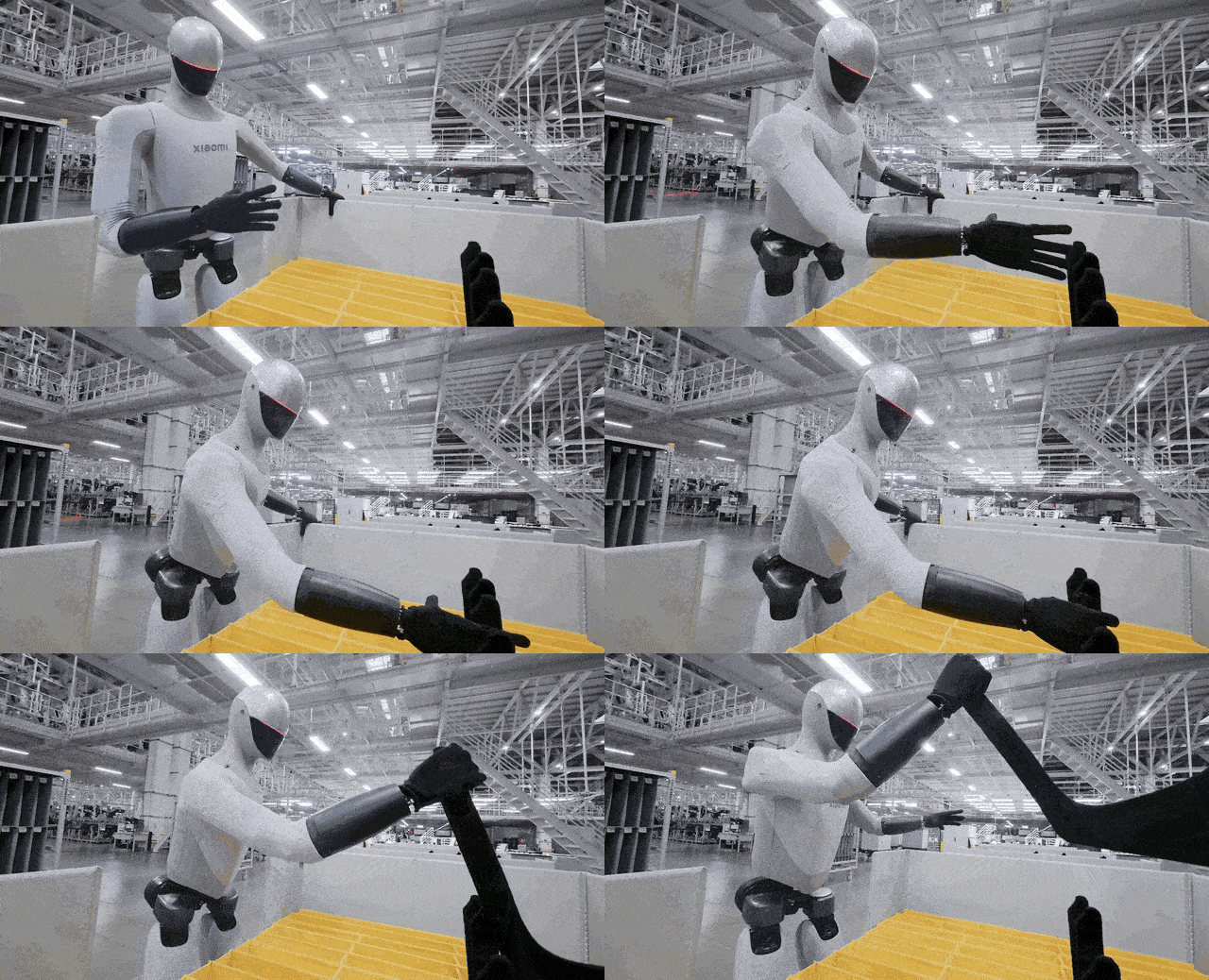
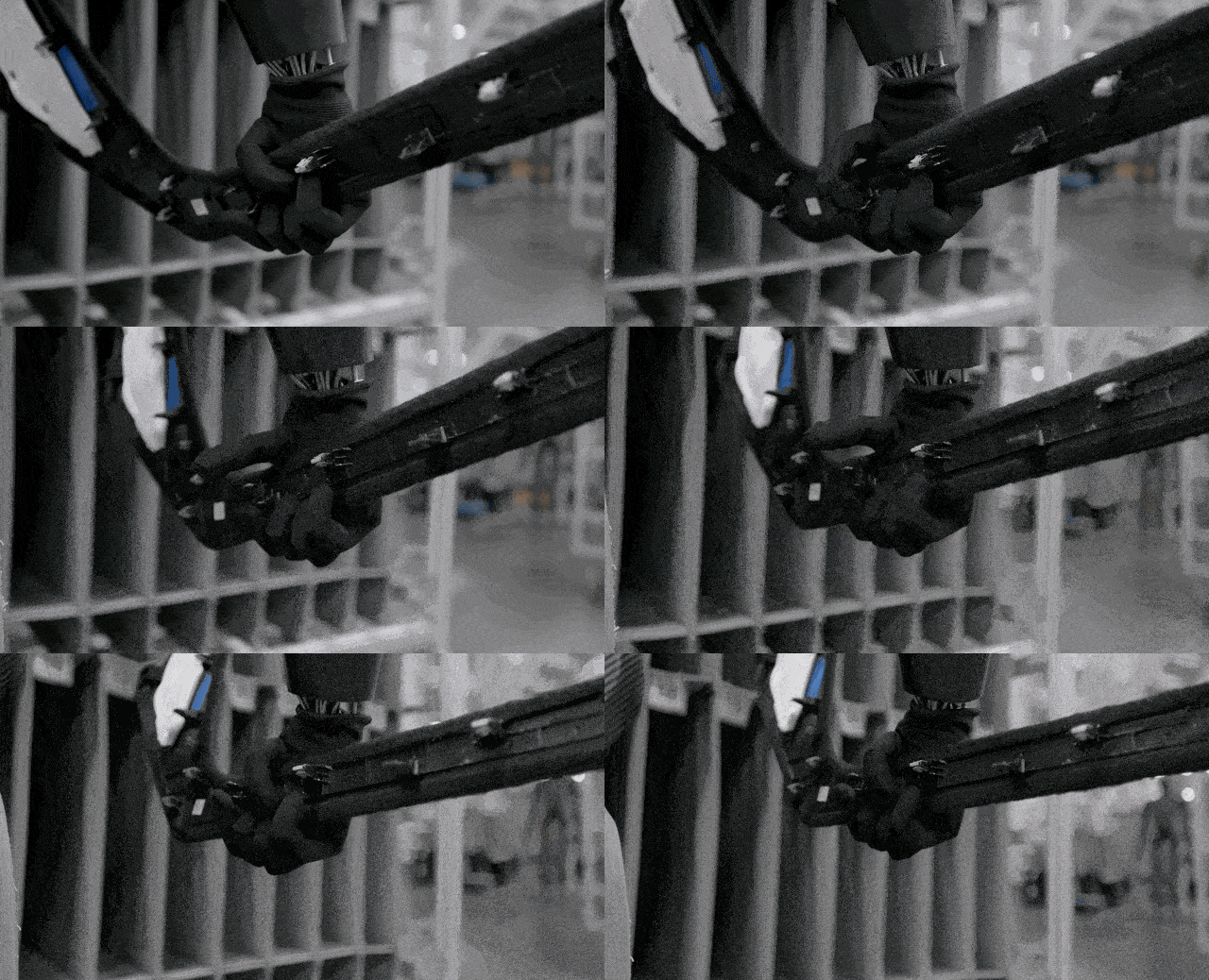
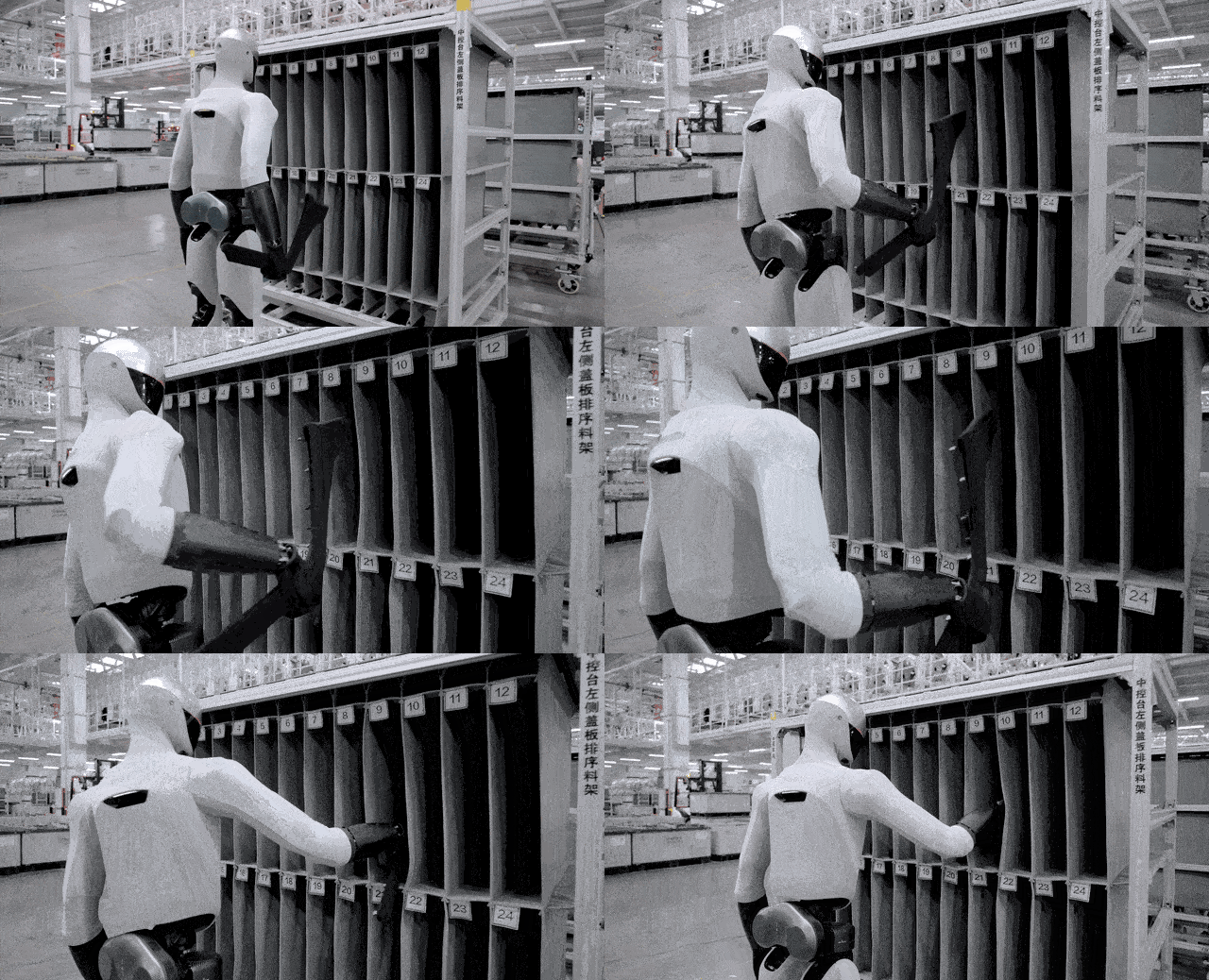
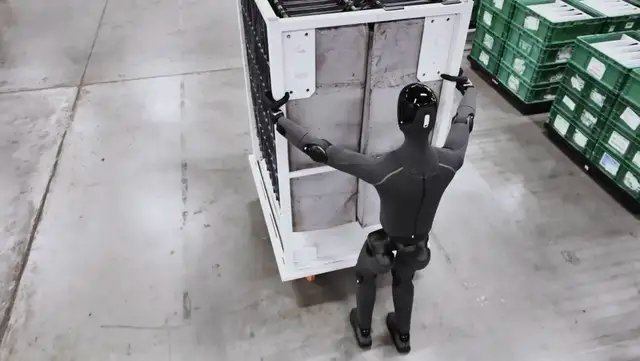
In the final assembly workshop of the Xiaomi automobile factory, the robot picks up an irregularly shaped, soft center console side cover for stacking operations. It first reaches out to stabilize its center of gravity by holding the edge of the bin, then adjusts its posture by switching hands left and right before placing the cover into the grid.
This quarter, the robot has unlocked two new workstations: sorting center console side covers and folding and recycling bins. In these tasks, the robot's success rate has reached over 90%, enabling continuous long-duration operations. Previously, its tasks were limited to tightening nuts at the self-tapping nut workstation, where the success rate has now reached 98%.
The robot was first publicly unveiled at Xiaomi's investor conference in late April, where it could deliver gifts, shake hands, and high-five. About two months later, it achieved long-duration flexible workpiece operations in the automobile factory. At the side cover sorting workstation, the robot must retrieve covers from three rows of bins and place them into the grids of a material rack cart. The covers are large, irregularly shaped, and relatively soft, requiring the robot to perform whole-body motion control, dual-arm coordination, fine manipulation, and active compliance strategies.
When picking up covers from the far end, the robot first stabilizes its center of gravity by holding the bin edge while adjusting its whole-body degrees of freedom to maintain balance. During placement, the robot continuously switches hands left and right to adjust its grip and spatial posture. Before placing, it uses the proprioceptive sensing of its bionic dexterous hand for fine posture adjustments. If the cover gets stuck during placement, the robot retrieves it and re-adjusts the angle before re-placing, based on an active compliance strategy using end-effector force sensing.
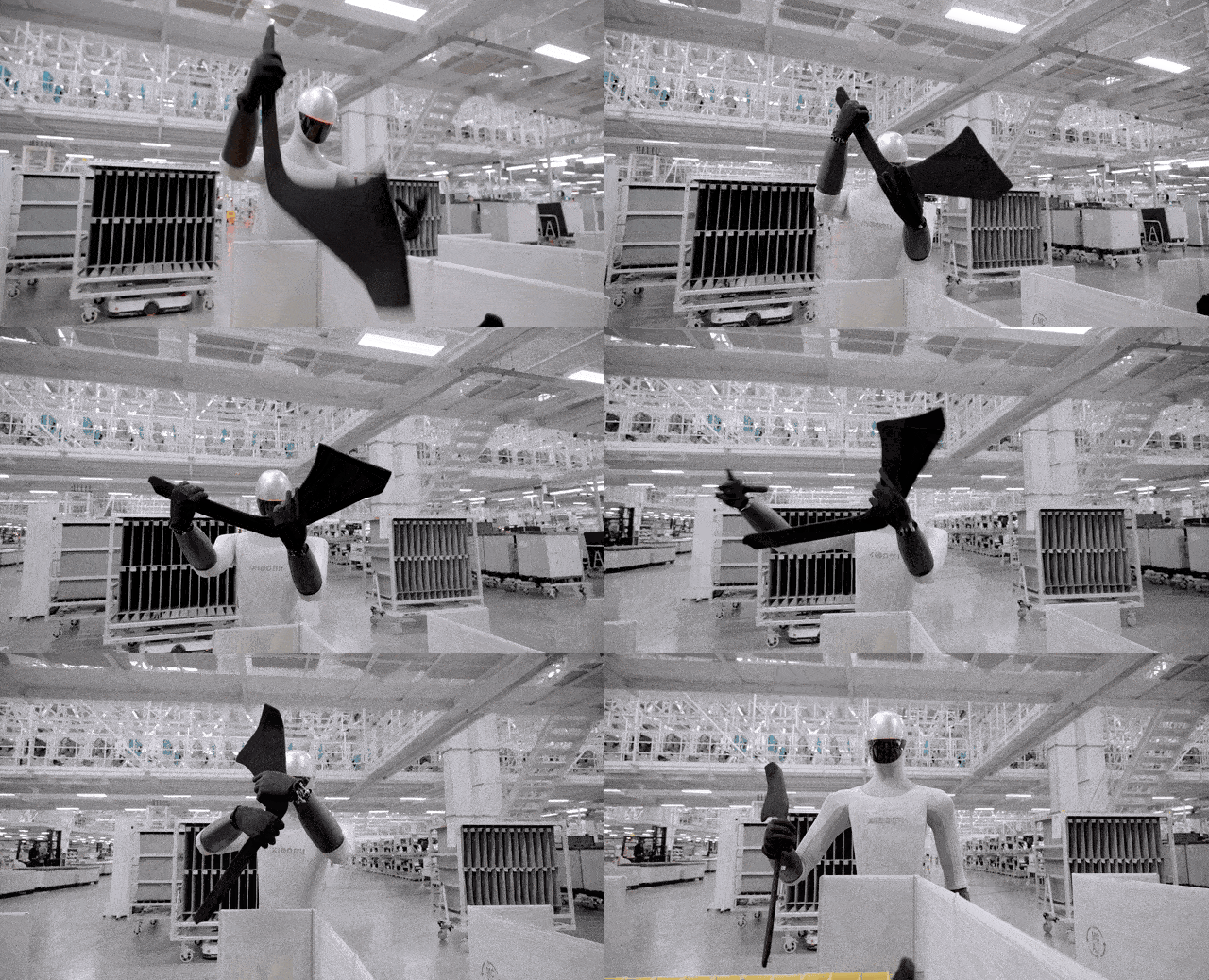
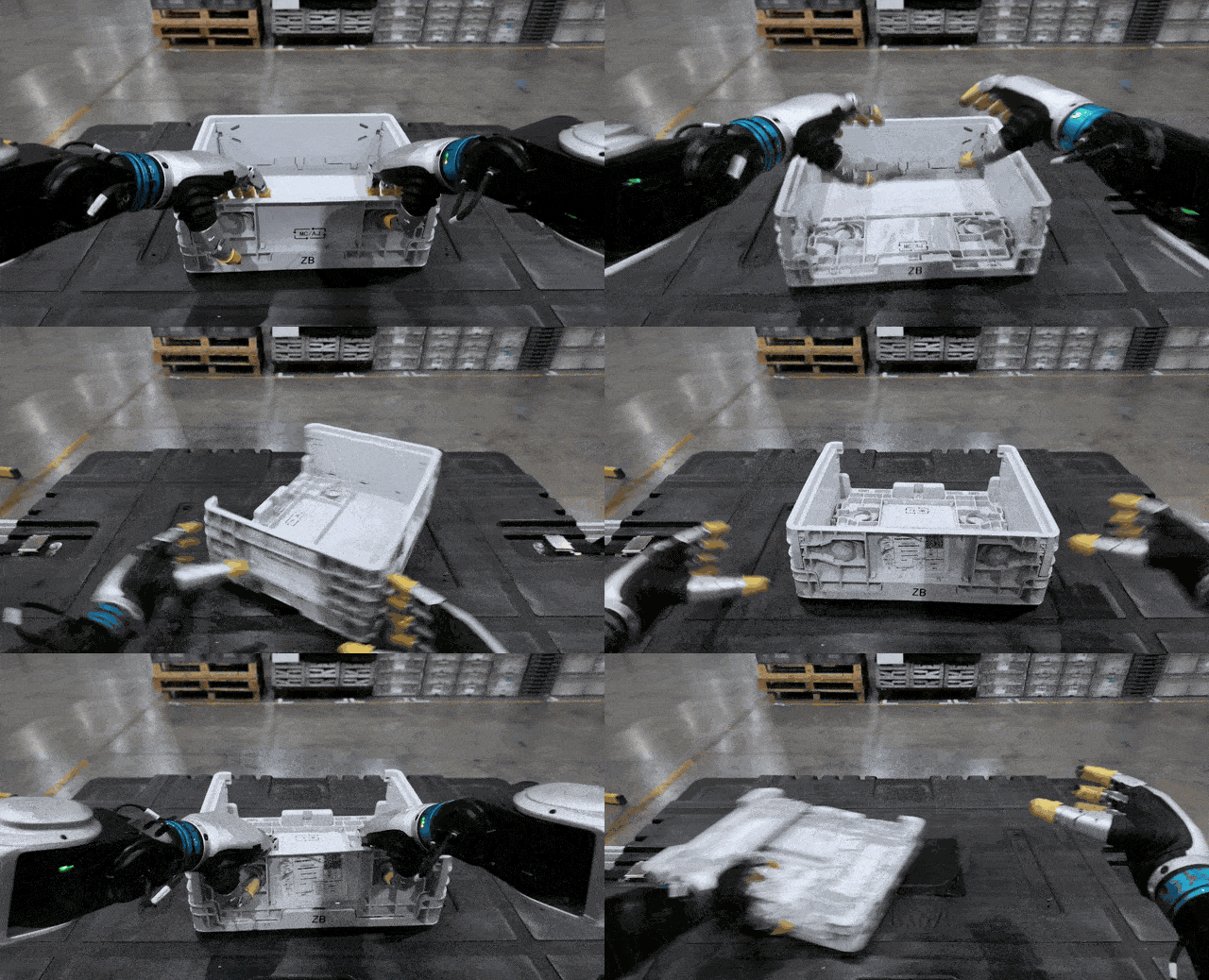
At the bin folding and recycling workstation, the robot must pry open the bin's pull ring and rely on dual-arm coordination to complete the folding action. After stacking multiple bins, the robot synchronously pushes them to the target position, involving motion coordination and cycle time matching between multiple robots, which has now been operating stably.
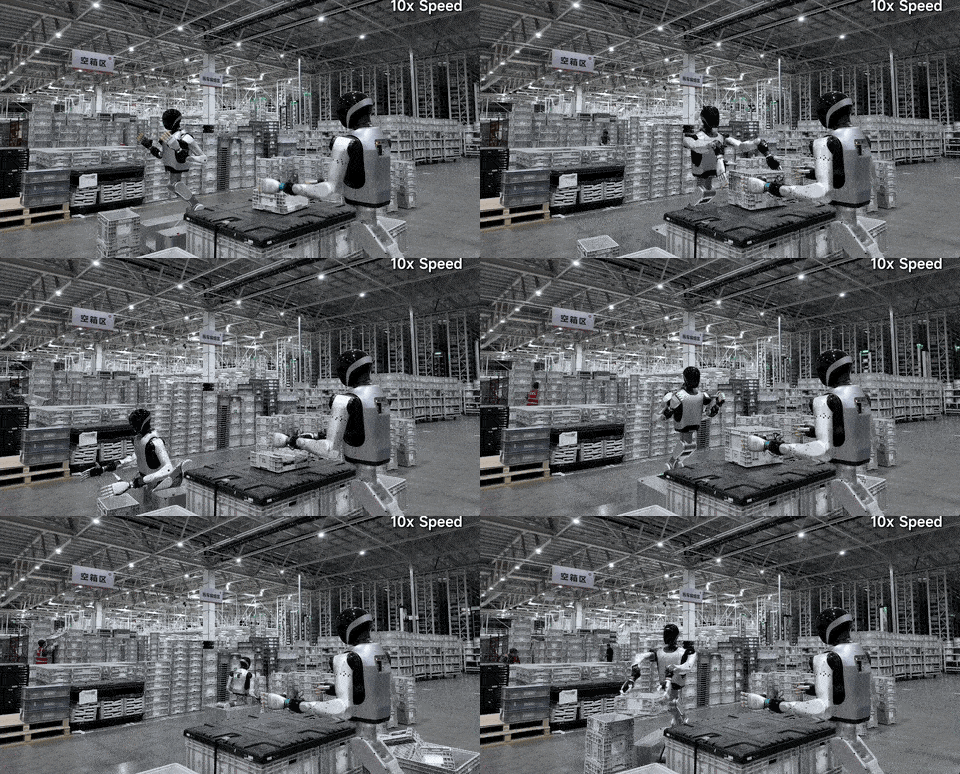
In June, Figure03 from the U.S. robotics company Figure achieved complex part logistics sorting scenarios at a BMW factory. About two weeks after Figure03's public demonstration, Xiaomi's robot reached a similar level of difficulty at the side cover sorting and bin folding and recycling workstations. In these operations, the robot maintains balance through whole-body motion control, handles jams with an active compliance strategy based on end-effector force sensing, completes hand-switching through dual-arm coordination, and uses the proprioceptive sensing of its bionic dexterous hand for posture adjustments. The same cover can be grasped from multiple angles, and if placement is not successful, the robot can automatically retry, with material rack transfers already automated.
Xiaomi's robot is directly connected to the production management system of the Xiaomi automobile factory, allowing it to obtain production tasks and material information without reading paper material sheets. Different robots can synchronize their operation status through the system, which also retains a remote intervention mechanism.
With a 98% success rate at the self-tapping nut workstation and 90% success rates at the center console side cover sorting and bin folding and recycling workstations, the robot continues to explore more application scenarios in automotive manufacturing. The team's next steps will focus on advancing research and practice around high-degree-of-freedom bionic dexterous hands, complex manipulation capabilities, and more workstation applications.
Related Products


CAP1400 main feedwater flow nozzle flowmeter.
Jiangsu Hongda Instrument Technology Co., LTD.

Pneumatic high-pressure wear-resistant ball valve
Zhejiang Deca Control Valve Meter Co., Ltd.
LBH4000 Batch Environmental Protection Asphalt Mixing Plant | Asphalt Batching Plant | Asphalt Mixing Plant
Jilin Province Road Construction Machinery Co., Ltd.
QLZNGJ Intelligent Steel Reinforcement Trolley
Luoyang China Railway Qiangli Machinery Co., Ltd.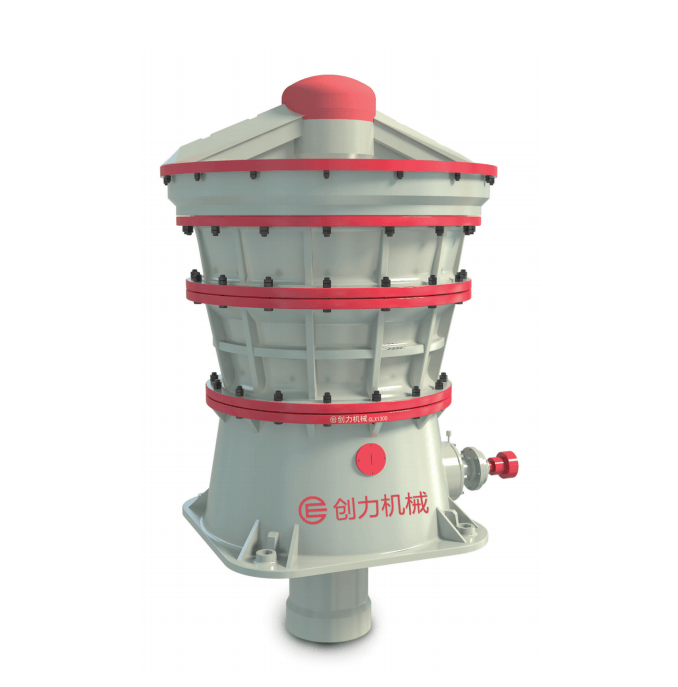
CLX Series Intelligent Hydraulic Gyratory Crusher
Guangdong CHUANGLI intelligent machinery Equipment Co., LTD
Standard Nozzle Flowmeter
Jinggong Automatic Control Instrument Complete Technology Development Company