en.Wedoany.com Reported - PKP Intercity has launched a tender for the reconstruction and expansion of the Lublin Technical Center, a project aimed at enhancing rolling stock maintenance capacity in eastern Poland.
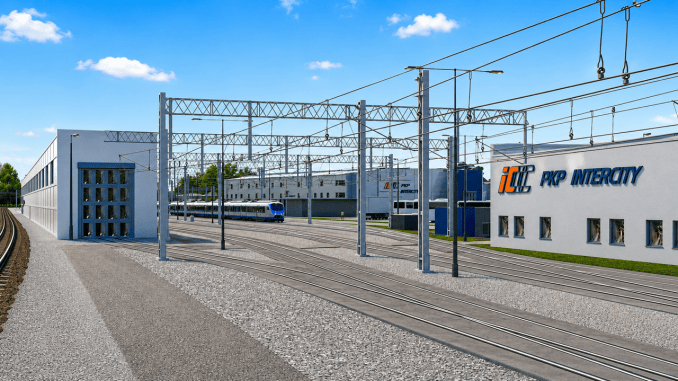
The Polish operator is adapting its technical infrastructure to accommodate increasingly modern rolling stock fleets and higher operational demands. Lublin's role in PKP Intercity's maintenance network is growing, but the existing center lacks the facilities needed to diagnose, park, and prepare the increasing number of vehicles. Capacity constraints force the company to divert trains to other technical centers, leading to additional costs, longer transit times, and reduced rolling stock utilization efficiency. The new investment aims to eliminate these bottlenecks and provide greater operational flexibility.
The project involves constructing a technical complex with three main objectives: a repair hall for P1, P2, and P3 level overhauls and unscheduled repairs; a dedicated facility for daily maintenance, including washing, cleaning, diagnostics, and preparing trains for service; and a rolling stock inspection station providing workspace and staff facilities for technicians. The repair hall will be equipped with four inspection and repair tracks, inspection pits, cranes with a lifting capacity of up to 16 metric tons, and an underground wheel lathe.
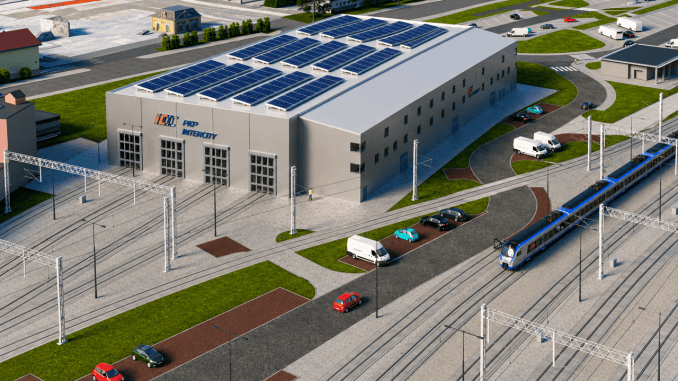
In addition to these buildings, the project includes extensive modifications to the railway infrastructure. A total of 17 tracks will be laid, along with running lines and sidings, enabling the new layout to support more intensive train turnaround and more efficient operational processes. Simultaneously, the electrical network, traction systems, water supply and drainage systems, as well as compressed air networks, communications, surveillance, and signaling systems, will be modernized.
The investment covers an area of approximately 7.7 hectares, with a building area of about 6,400 square meters, and the structures will be equipped with photovoltaic panels. The project is expected to be completed in the third quarter of 2028, with construction work scheduled between 2026 and 2028. The new center will enable PKP Intercity to reduce trips to other facilities, shorten train preparation times, and improve rolling stock availability in the region.
PKP Intercity CEO Janusz Malinowski stated that the investment aims to increase parking and maintenance capacity at the station and improve the process of preparing vehicles for service. Once completed, the Lublin Technical Center will not only be more efficient in train operations but will also significantly raise the working standards for technicians.
The expansion of the Lublin Technical Center is part of PKP Intercity's broader plan to modernize its technical facilities and related infrastructure during the 2025–2030 period. The Polish operator has announced total investments of PLN 25.4 billion (EUR 5.9 billion) in rolling stock and infrastructure, with nearly PLN 3.4 billion (EUR 785 million) specifically allocated for the modernization of technical infrastructure and depots. By 2030, all Category A and B depots and maintenance workshops will meet the standards required to operate modern vehicles.
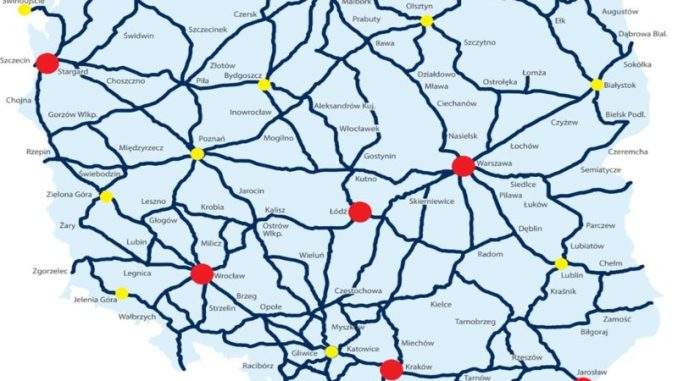
PKP Intercity's 2030 strategy focuses on strengthening the entire operational infrastructure. In addition to investing in trains, the Polish operator is modernizing technical facilities and depots at key network nodes, enabling them to support higher traffic volumes and increasingly modern vehicles. Alongside centers in Gdynia, Kołobrzeg, Kraków, Olsztyn, Przemyśl, Szczecin, Warsaw, and Wrocław—which are also being gradually modernized or expanded—Lublin is becoming a key component of the operational network.
Through this investment, PKP Intercity is not only strengthening the technical hub in eastern Poland but also enhancing the resilience of the entire operational system. For a long-distance operator, maintenance capacity directly impacts punctuality, safety, and service stability, and Lublin is becoming one of the key components of this system.