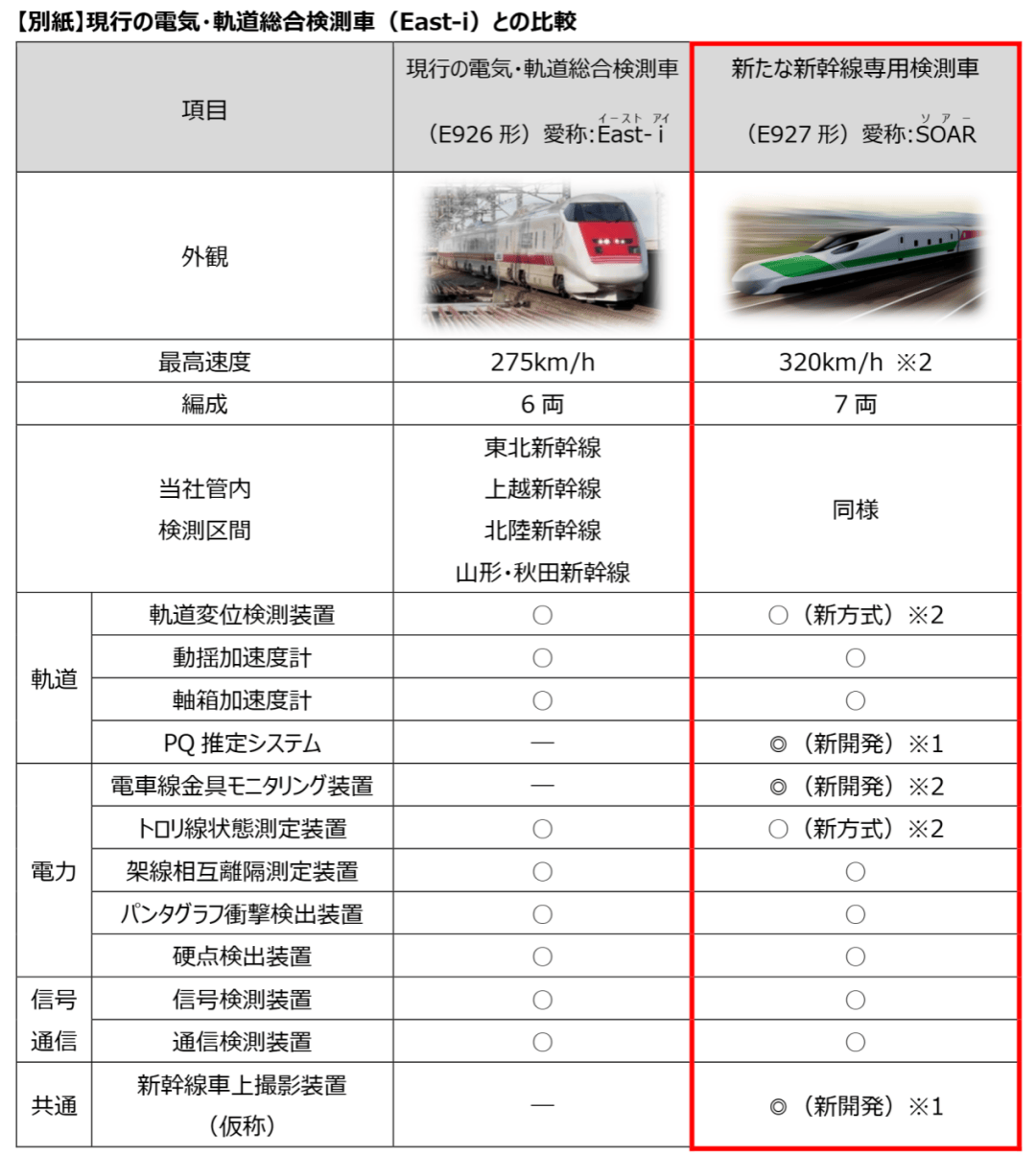
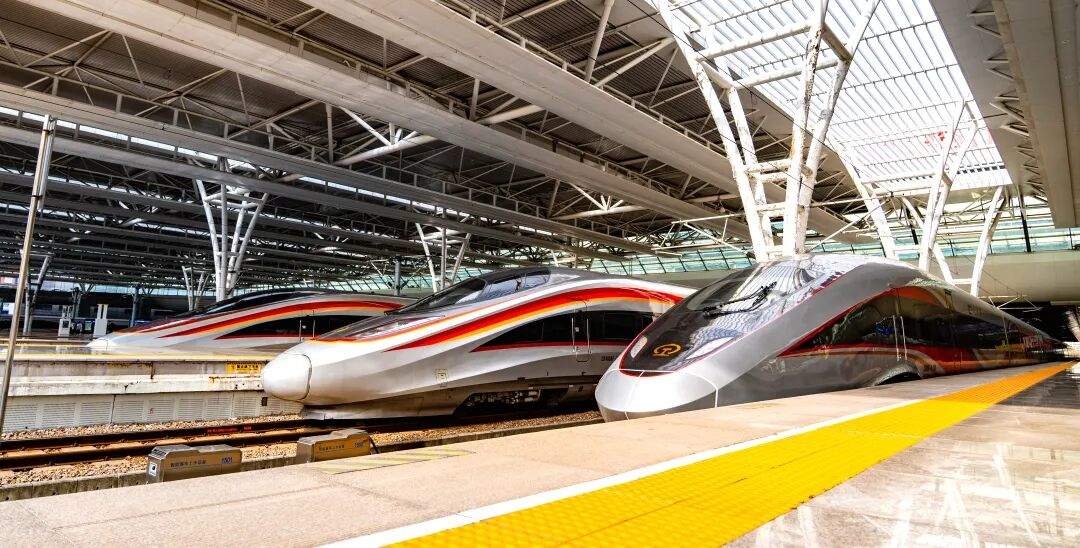
en.Wedoany.com Reported - East Japan Railway Company (JR East) has announced the body design of its next-generation Shinkansen inspection train, the E927, naming it SOAR. As the successor to the current East-i (E926) inspection train, its inspection speed has been increased from 275 km/h to 320 km/h, essentially matching the normal operating speed of Shinkansen trains. This marks Japan's first attempt to have an inspection train run at the same speed as revenue service trains. The E927 is equipped with a PQ estimation system and a Shinkansen onboard camera system. By analyzing wheel-rail interaction forces, capturing high-definition images, and utilizing AI image recognition, it enhances track condition monitoring and preventive maintenance capabilities.
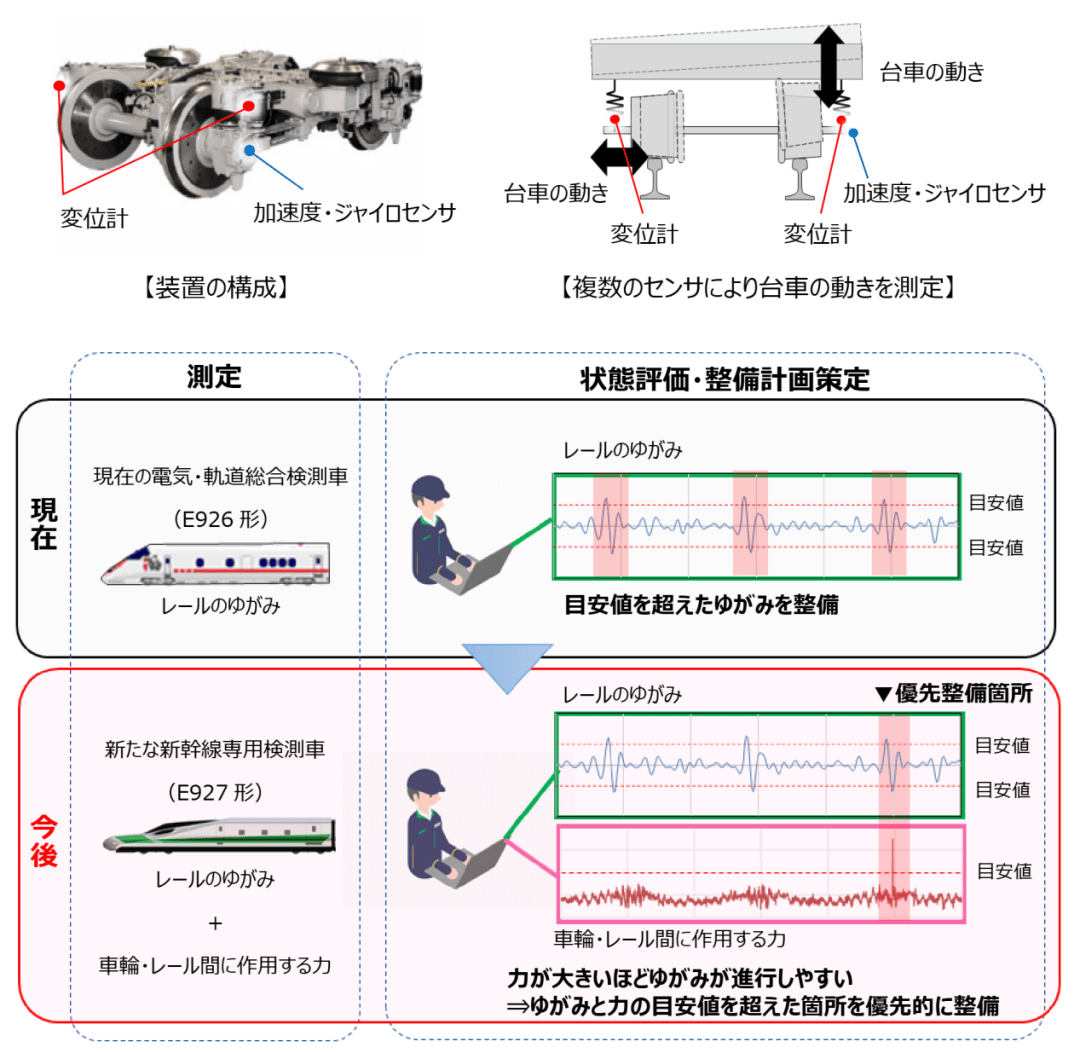
The mission of the Shinkansen inspection train is to periodically survey track geometry, overhead catenary conditions, and signal communication equipment, providing data support for track maintenance. The newly added PQ estimation system on the E927 is a preventive maintenance tool. By deploying multiple sensors on the bogies, it measures bogie vibration and tilt in real time, calculating the forces between the wheels and rails—vertical force as wheel load (P) and horizontal force as lateral pressure (Q). Combining wheel-rail force data with traditional track inspection results allows for more precise identification of locations requiring maintenance and prioritization, providing a basis for track condition assessment and maintenance planning.
The seven-car E927 is also equipped with a device tentatively named the "Shinkansen Onboard Camera System." Cars 1 and 7 each have eight cameras at the front, while Car 3 has an additional 32 cameras on the side and roof, totaling 48 high-definition cameras. These continuously capture images of trackside equipment and the environment while the train is running. By comparing with historical images, the system can identify anomalies such as defects in overhead catenary fittings and deterioration of structures, as well as detect hazards like trees encroaching on the clearance or threatening operational safety. JR East plans to continue developing AI-based automatic image judgment and anomaly extraction functions to further improve inspection efficiency.
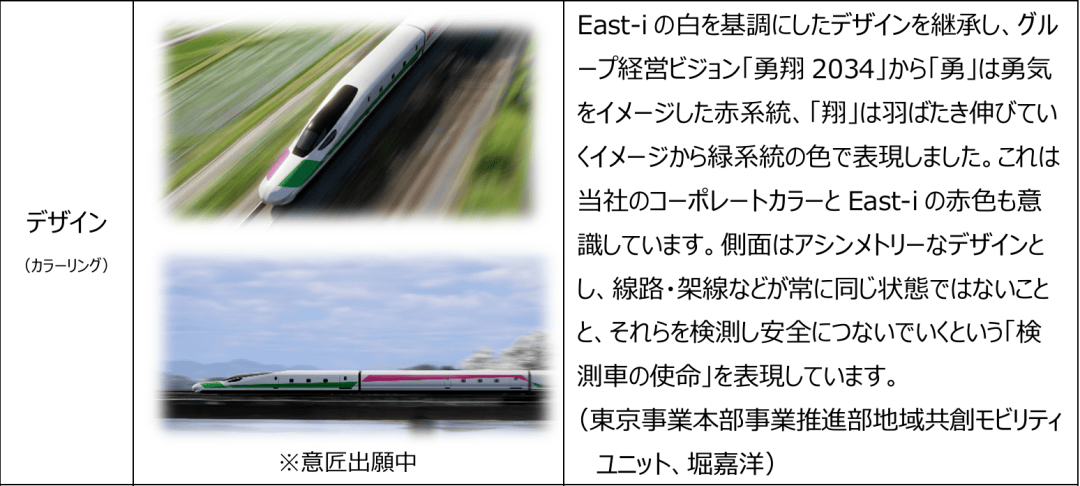
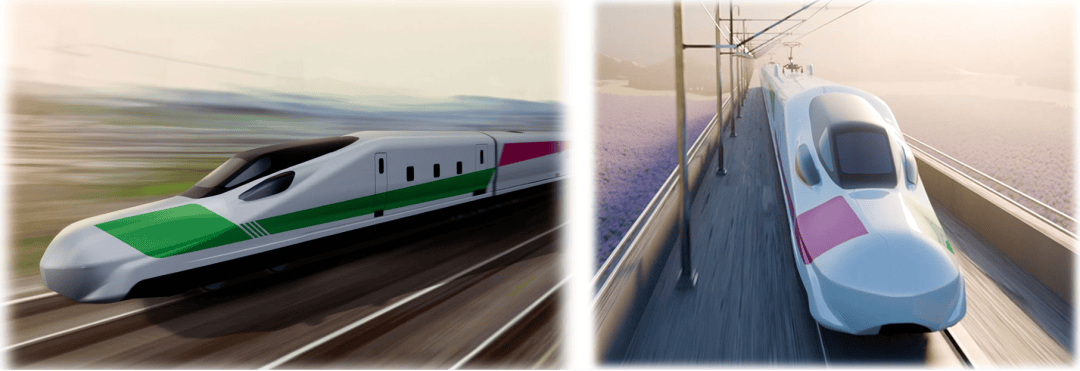
In terms of appearance, the E927 SOAR retains the white body color of the current East-i, adding red and green elements. Red represents "courage," while green symbolizes "spreading wings and extending," incorporating both JR East's corporate colors and the red logo of the East-i inspection train. The body features asymmetric coloring on the sides, suggesting that the condition of railway facilities such as tracks and overhead catenaries is not static, while also highlighting the inspection train's role in continuously monitoring the line and ensuring transportation safety.