China's Unitree Releases UnifoLM-OminiA-0.3 Embodied Large Model
en.Wedoany.com Reported - Unitree Robotics, based in Hangzhou, China, officially released the Unitree UnifoLM-OminiA-0.3 embodied large model on July 20, 2026. This model achieves single-model coordination of multiple home healthcare tasks, supports full-modal interactive understanding, and can operate autonomously throughout the entire process while maintaining stable anti-interference performance.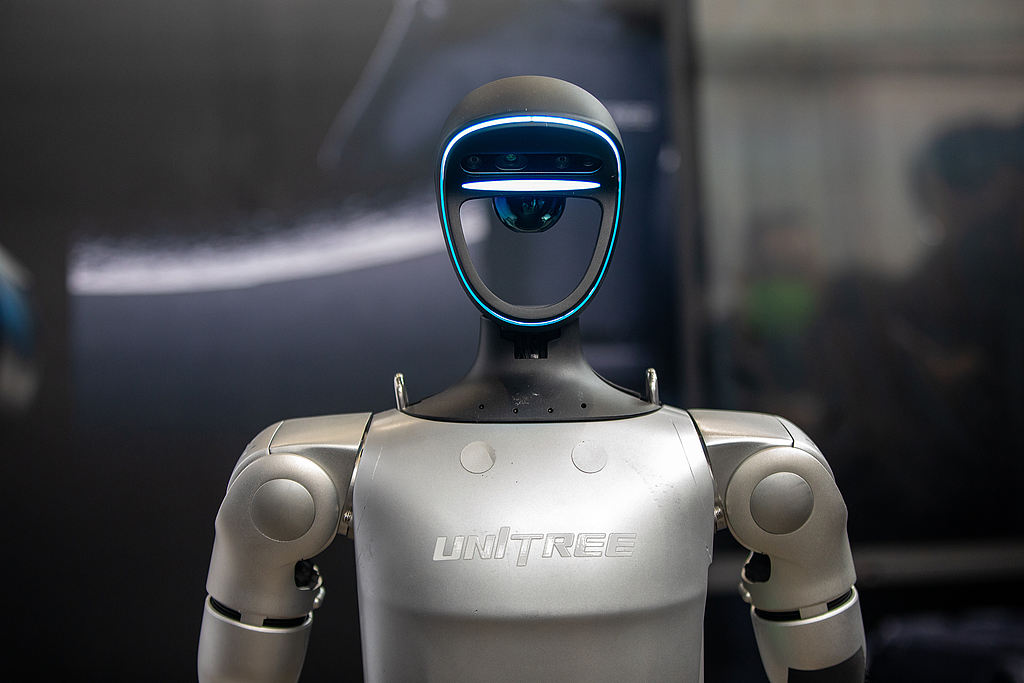
Founded in 2016, Unitree Robotics is a global leader in the research, development, and manufacturing of consumer-grade and industry-grade quadruped robots and humanoid robots. The newly released UnifoLM-OminiA-0.3 represents a significant technological breakthrough for Unitree in the field of embodied intelligence large models. UnifoLM is the core technical framework applied by Unitree to its G1 and other humanoid robot product lines, featuring a modular hardware architecture, self-developed high-performance actuators, and a multi-modal perception system. Previously, Unitree had released the open-source UnifoLM-VLA-0 model for the VLA (Vision-Language-Action) domain, as well as the industry-grade embodied large model UnifoLM-X1-0, which completed deployment testing at its own factory in early 2026.
According to the official real-machine demonstration video, UnifoLM-OminiA-0.3 completed closed-loop validation of multiple practical tasks on Unitree's G1 humanoid robot. In basic object handling scenarios, the robot can autonomously identify scattered pillows on the floor, plan a route, and smoothly place them onto the sofa. In terms of visual perception and question-answering, the model can accurately distinguish the colors of pillows and layered pill boxes, quickly count three boxes of medicine in red, blue, and yellow, and proactively report the information to the user. In fine manipulation tasks, the model can pick up and place stacked pill boxes layer by layer, precisely extract the top-layer pill box of a specified color, autonomously sort clothing, and steadily grip tableware to load it into the dishwasher. Additionally, in healthcare scenarios, the model can control the raising and lowering of hospital beds via voice commands and achieve immediate braking upon receiving the user's verbal instruction "stop."
Unlike traditional segmented robot algorithms, UnifoLM-OminiA-0.3 establishes a complete closed loop of perception, decision-making, and execution, eliminating the need for multi-model switching and scheduling. This significantly reduces hardware computing power consumption while maintaining task continuity. This model is a key milestone for Unitree's UnifoLM series in the civilian healthcare track, and its ability to coordinate multiple home healthcare tasks with a single model marks the evolution of embodied intelligence from single-scenario applications to full-scenario generalization.
Related Products

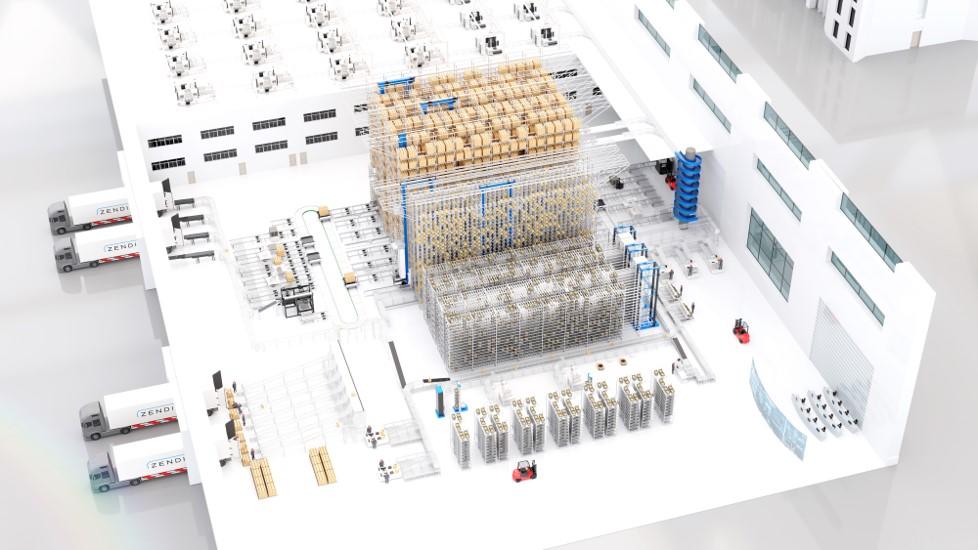
One-Stop Steward Service for the Entire Logistics System Integration Chain
Zhongding Intelligent (Wuxi) Technology Co., Ltd.


Multi-function Marine Monitoring Low-altitude Detection Radar Sea-air Boundary Ocean Dynamic Environment Measurement
Chengdu Dixin Technology Co., Ltd.
Mine Explosion-proof and Intrinsically Safe Industrial Ethernet Ring Network (10 Gigabit/Gigabit)
Chongqing Mas Sci&Tech Co., Ltd.

Industrial and Commercial Point-Type Gas Detector
Jinan Benan Technology Development Co., Ltd.