India's Non-Ferrous Metal Recycling Industry Relies on 90% of Aluminum Scrap Imports, Policy Promotes Circular Economy
en.Wedoany.com Reported - India's non-ferrous metal recycling industry stands at a critical turning point. As the country advances its "Viksit Bharat 2047" vision, recycling is becoming a core pillar for ensuring supply security, enhancing cost-effectiveness, improving resource utilization, and achieving decarbonization goals. Despite increasing policy momentum, structural shortcomings in scrap statistics, infrastructure, industry formalization, and reliance on imports continue to constrain the full realization of the sector's potential.
A major regulatory change is the implementation of the Extended Producer Responsibility (EPR) system. According to the 2024 Hazardous and Other Wastes (Second Amendment) Rules, from April 2025, producers must register with the Central Pollution Control Board and are responsible for the collection and recycling of end-of-life products. To promote a circular economy, the government has set minimum recycled content targets: 5% by FY2028 and 10% by FY2029. By FY2031, targets for aluminum, copper, and zinc will increase to 10%, 20%, and 25%, respectively.
Industry players believe that actual recycled content in Indian applications may already exceed these thresholds. Current estimated minimum recycled content usage rates are around 35-40% for copper and 25-30% each for aluminum and zinc. The issue is that a significant amount of recycling activity still occurs through parallel and informal channels, causing official statistics to not accurately reflect the actual situation. Industry feedback indicates that the Indian government currently does not fully estimate domestic scrap (especially post-consumer scrap) re-entering the recycling stream, so the actual scale of the recycling ecosystem is severely underestimated.
These new regulations are expected to improve recycling rates, consolidate the fragmented scrap ecosystem, enhance traceability, and attract investment for building standardized recycling infrastructure. However, in the short term, compliance costs may rise, especially for micro, small, and medium enterprises transitioning from informal operations to a regulated system.
India's policy direction is gradually shifting towards seeking a more balanced supply mix between primary and recycled metals. Taking aluminum as an example, secondary demand is growing at a compound annual growth rate of approximately 10.7%, far exceeding the growth rate of primary demand. In the long term, by 2070, secondary aluminum could contribute nearly 50% of supply, benefiting from a 95% reduction in energy consumption and significantly lower emissions compared to primary aluminum production. The transition for copper is more complex. India currently relies on imports for over 90% of its copper concentrate demand, highlighting significant supply chain vulnerability. Meanwhile, secondary copper demand is expected to grow at a CAGR of 13-14%, reaching approximately 1.4 million tonnes by FY2030, with policymakers aiming for secondary copper to account for 55% of supply.
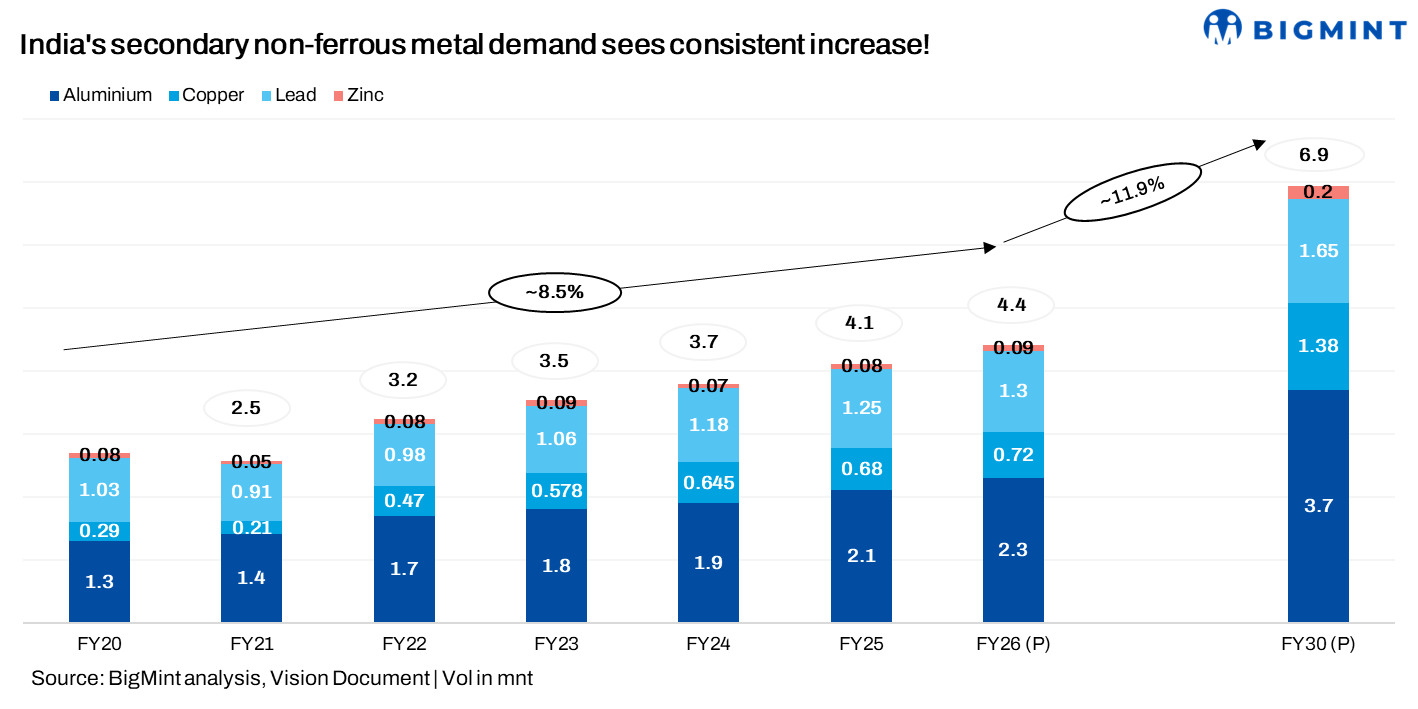
Unlike mature recycling economies, India's copper recycling industry is still dominated by direct melting, accounting for nearly 38% of supply, which often leads to instability in purity and product quality. However, industry stakeholders believe that India's collection, sorting, and aggregation ecosystem is already highly efficient. Once scrap is correctly sorted by specification and directly applied to suitable alloy systems, it is often more economical than expensive secondary refining. For example, copper scrap containing trace amounts of aluminum might be more suitable for application in aluminum bronze rather than being refined to produce pure secondary copper. This highlights the need for an application-oriented recycling strategy.
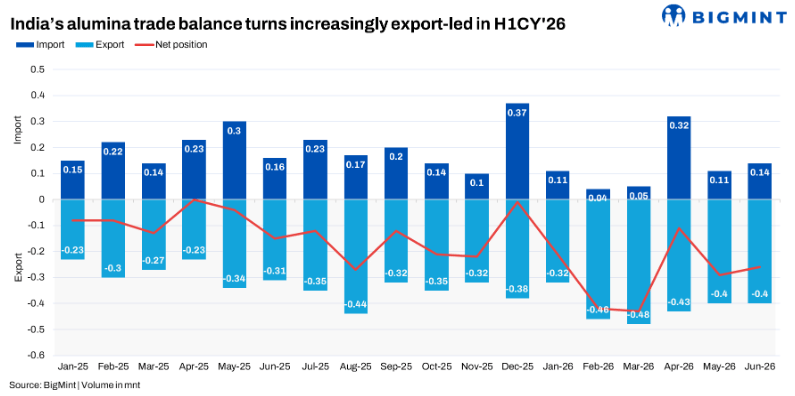
One of the main challenges facing the non-ferrous metals industry is its heavy reliance on imported scrap. In the aluminum sector, India relies on imports for approximately 85-90% of its scrap demand and became one of the world's largest scrap importers in FY2026, with imports of about 2 million tonnes. In the copper sector, India is the world's third-largest scrap importer, with estimated imports of around 410,000 tonnes in FY2026. The tariff structure affects competitiveness, but the bigger issue is structural dependence.
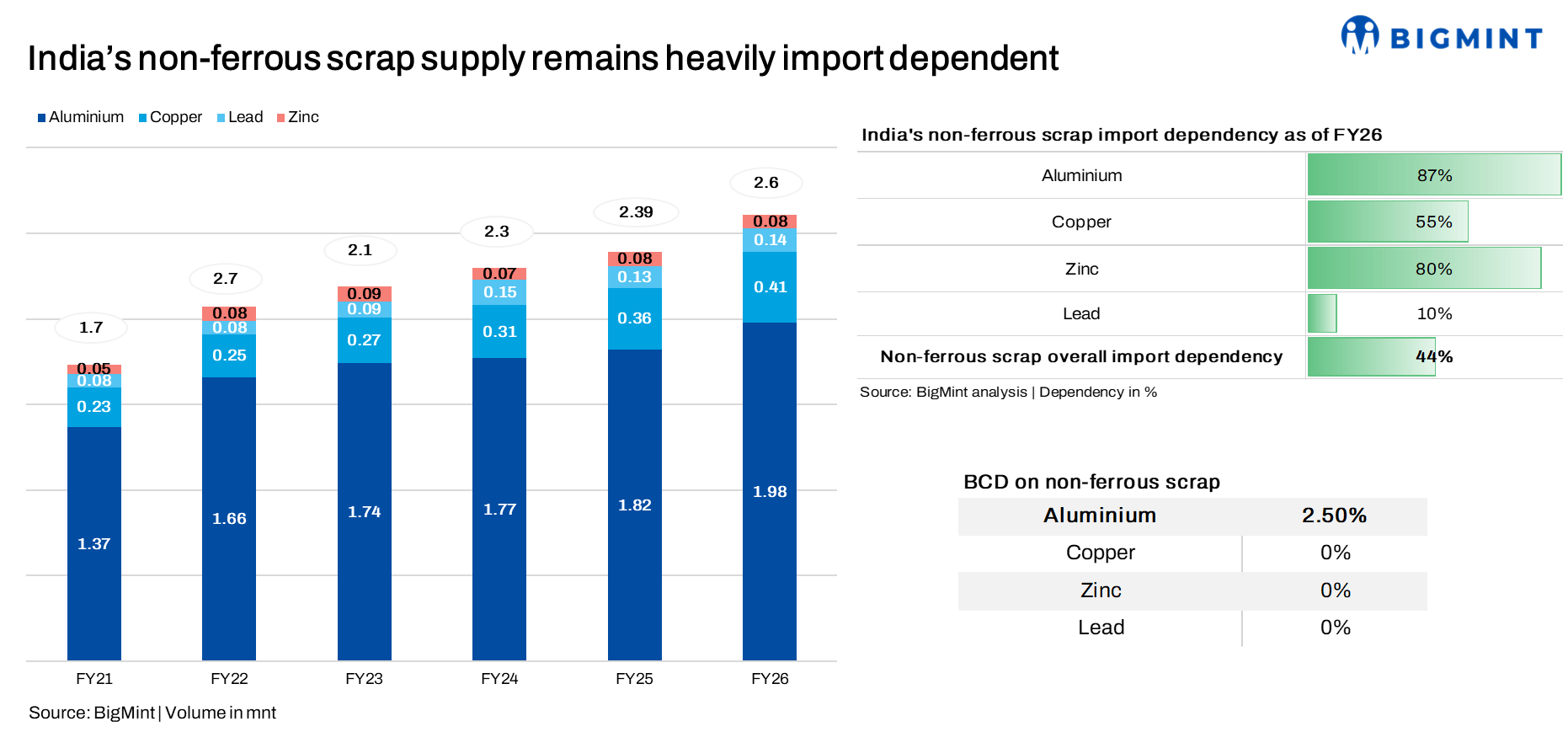
It is reported that a working group under the Ministry of Mines has recommended abolishing the 2.5% basic customs duty on aluminum scrap imports to address the inverted tariff structure and enhance the competitiveness of downstream manufacturers. The recommendation is expected to be submitted to the Ministry of Finance soon. Currently, India imports 1.6-1.8 million tonnes of aluminum scrap annually, and due to growing demand and limited domestic scrap supply, imports are expected to rise to 1.9-2.0 million tonnes this fiscal year. In the copper sector, the removal of import duties on scrap in the FY2026 budget is expected to support domestic manufacturing and recycling. Meanwhile, global supply risks are intensifying, with the US and EU considering restricting scrap exports, which could significantly tighten raw material supply for import-dependent economies like India. Policies such as Quality Control Orders are also reshaping trade flows by restricting low-quality imports and encouraging domestic value addition.
The cost structure continues to challenge the competitiveness of India's recycling industry. Recyclers face an inverted tariff structure on machinery and processing equipment, limiting scale expansion and technology adoption. Industry stakeholders point out that the Goods and Services Tax on concentrates primarily acts as an input tax credit mechanism, with tariffs being a more significant factor affecting international competitiveness. The industry has been pushing for support for the recycling and downstream sectors through Production Linked Incentive schemes. Given the capital-intensive nature of recycling infrastructure, such support is crucial. For example, establishing a 500,000-tonne copper recycling facility could require an investment of nearly INR 100 billion. Additionally, India's existing coal and electricity taxes are increasingly acting as implicit carbon pricing mechanisms, gradually aligning the domestic market with global carbon frameworks.
Despite strong policy momentum, industry players believe India's recycling ecosystem is not underdeveloped but rather undervalued. India already has an active collection, sorting, and aggregation ecosystem, ensuring that non-ferrous metal scrap rarely ends up in landfills. The challenge is that a significant amount of activity occurs outside formal reporting systems, making the true scale of recycling missing from official statistics. To improve efficiency and formalization, the industry advocates for developing recycling clusters near urban waste generation centers to improve logistical feasibility and reduce transportation costs. Furthermore, there is a growing call for the formal recognition and legalization of the existing urban mining ecosystem. Technology adoption is another priority. It is recommended to create shared infrastructure platforms within recycling clusters, enabling MSMEs to access advanced sorting and refining technologies through common facilities. For copper, experts have also proposed a "green fence mechanism" to restrict the import of low-grade scrap, ensuring higher quality materials enter the domestic recycling stream.
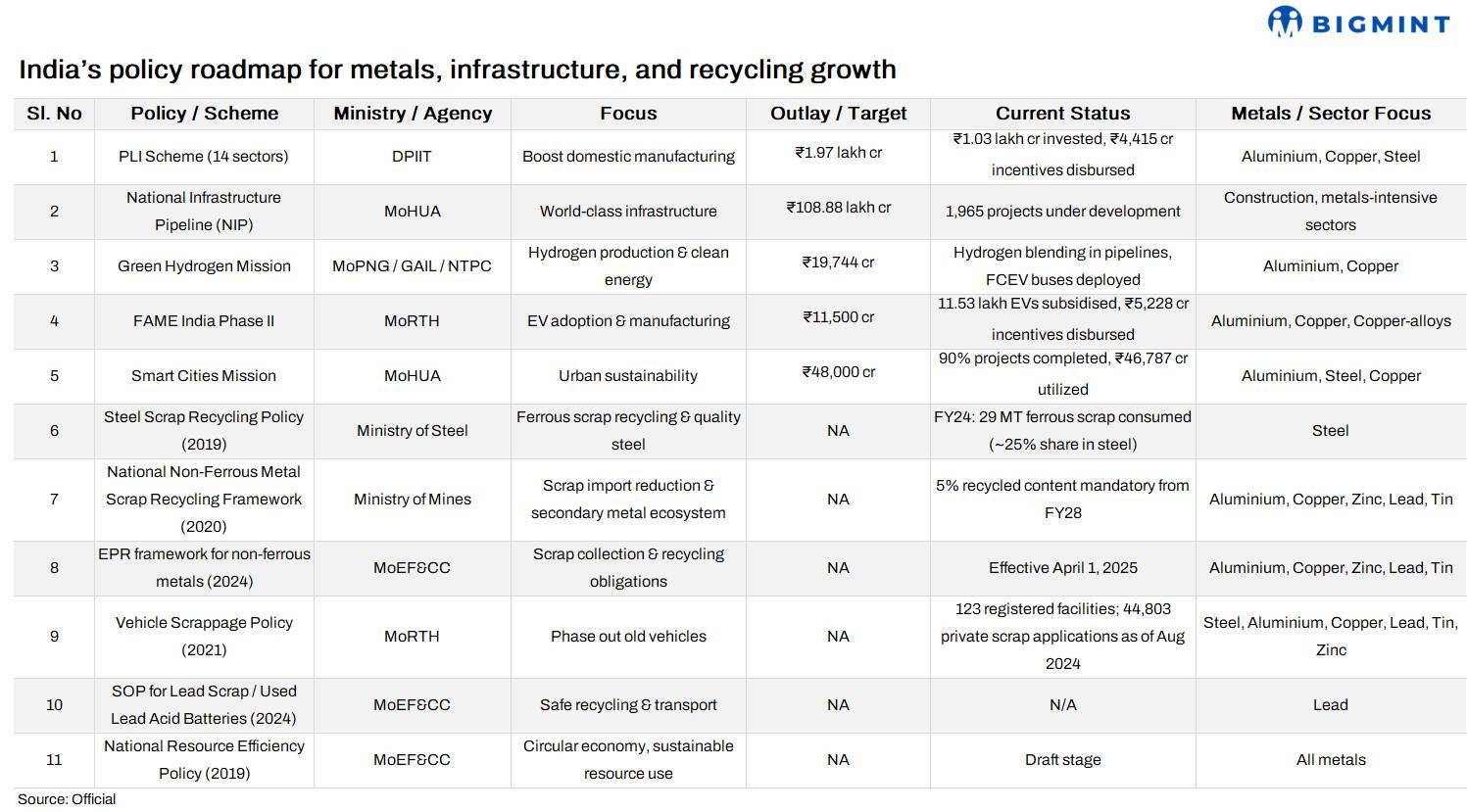
To unlock the full potential of non-ferrous metal recycling, industry stakeholders have outlined several long-term priorities. These include formulating a comprehensive national non-ferrous metal scrap recycling policy, formalizing informal recycling channels through EPR and related tax mechanisms, creating dedicated standards and application development bodies, and promoting closed-loop recycling systems in the automotive, electronics, and packaging industries. Additionally, there is increasing emphasis on retaining high-quality domestic scrap in India through appropriate export controls and value addition incentives.
India's push towards a circular non-ferrous metals economy is accelerating. With rising demand from infrastructure, renewable energy, transportation, and manufacturing, recycling will play a more significant role in reducing import dependence, lowering emissions, and ensuring long-term supply security. However, the transformation is not yet complete. The next phase of growth depends on India's ability to effectively regulate existing parallel operations, strengthen domestic processing infrastructure, improve traceability, and reduce vulnerability to disruptions in the global scrap trade. The opportunity is immense, and execution will be the decisive factor. These critical industry developments will be in focus at the Global Commodity Summit, hosted by MCX and co-hosted by BigMint, scheduled to take place from August 12-14, 2026, at the JIO World Convention Centre in Mumbai.
Related Products


Industrial and Commercial Point-Type Gas Detector
Jinan Benan Technology Development Co., Ltd.
Integrated Excavation and Anchoring Machine (EJM Series)
China Railway Construction Heavy Industry Corporation Limited
Mine Explosion-proof and Intrinsically Safe Industrial Ethernet Ring Network (10 Gigabit/Gigabit)
Chongqing Mas Sci&Tech Co., Ltd.
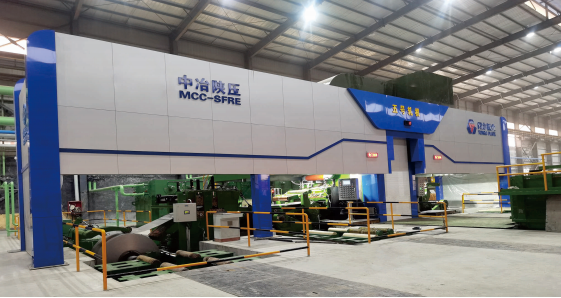
1050-1750mm Steel Strip Single-stand Reversible Cold Rolling Production Line
MCC-SFRE HEAVY INDUSTRY EQUIPMENT CO., LTD.
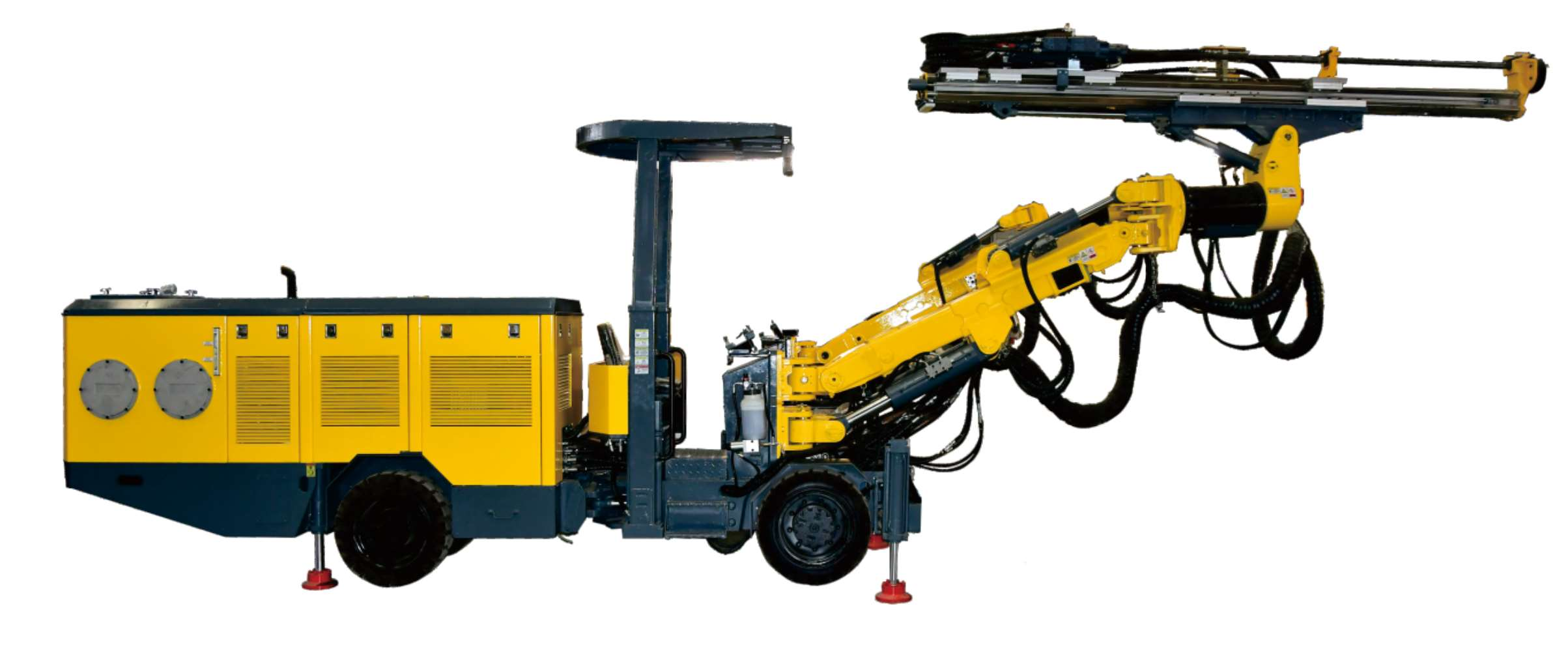
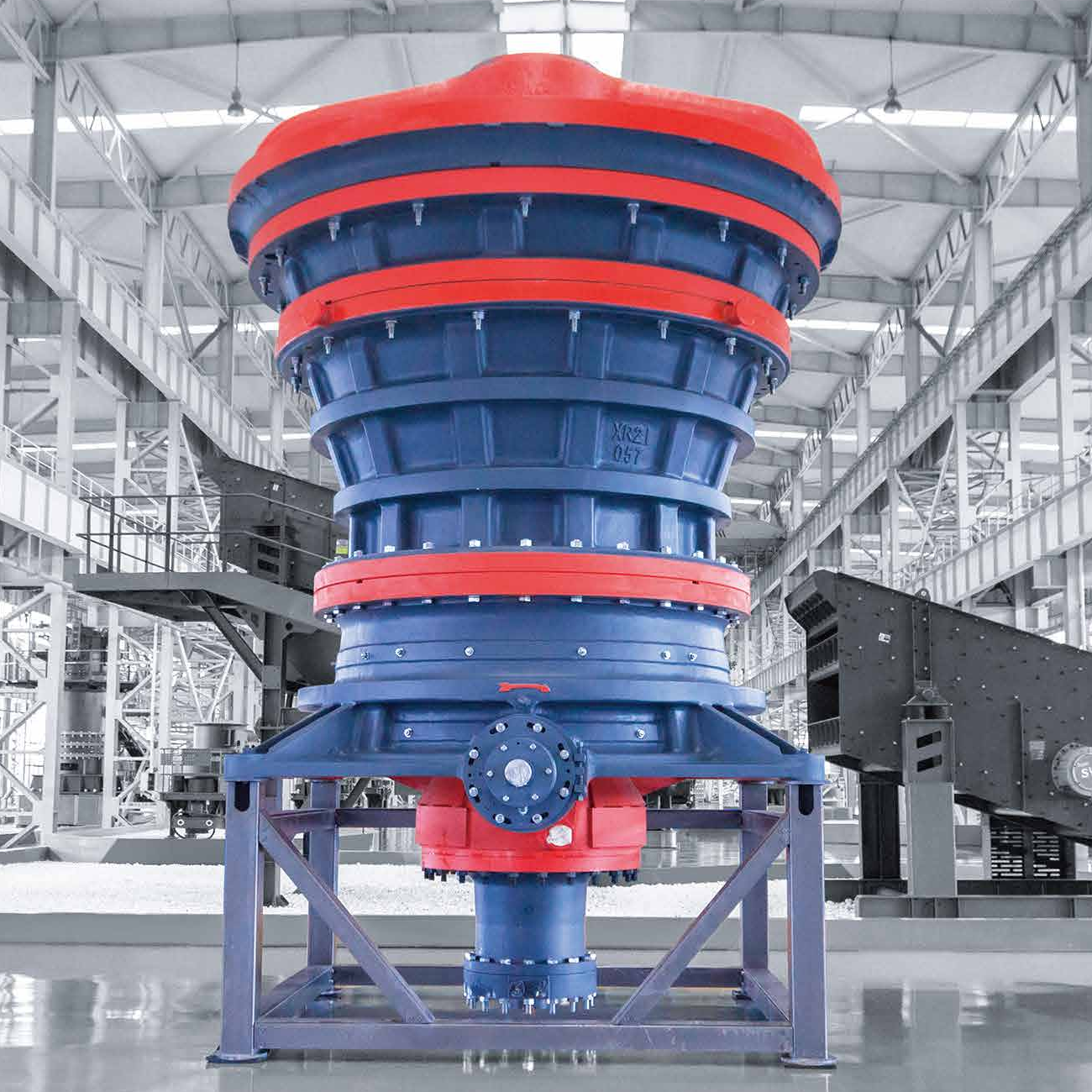
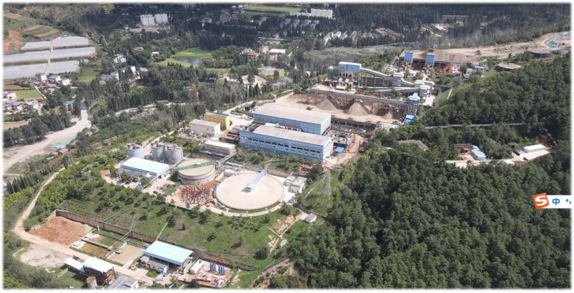
Yunnan Phosphorus Chemical Group Co., Ltd. 2 Million t/a Phosphorus Ore Mining and Beneficiation Project
China Bluestar Lehigh Engineering Corporation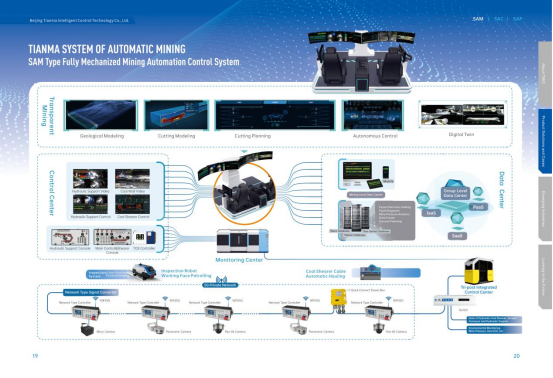
Comprehensive Mining Automation Control System
Beijing Tianma Intelligent Control Technology Co., Ltd.