Meta invests over 13 billion Canadian dollars in Alberta to build a data center
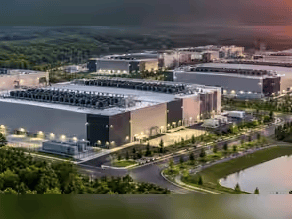
en.Wedoany.com Reported - Meta Platforms Inc. announced an investment of over 13 billion Canadian dollars to build a hyperscale data center in Sturgeon County, north of Edmonton, Alberta, Canada. The facility will use a closed-loop cooling system, with annual water consumption after operation lower than that of a typical golf course in Alberta. The complex, covering an area equivalent to 33 Canadian Football League fields, will be powered by a new natural gas power plant, whose final electricity output may exceed the power consumption of Edmonton.

Gary Demasi, Vice President of Data Center Strategy and Development at Meta, stated at a press conference on July 8 that routine cooling operations do not require water, and on-site water use is limited to domestic water, fire protection systems, and some equipment maintenance applications. Unlike evaporative cooling systems that rely on large amounts of cold water, the closed-loop cooling system absorbs heat through coolant flowing in pipes above the chips, then circulates the heat to the exterior of the building for expulsion via fans, with the cooled fluid returning to the servers for reuse.
Marina Freire-Gormaly, Associate Professor of Mechanical Engineering at York University, noted that closed-loop technology is more suitable for cooler climates like Alberta, while data centers in hotter regions tend to use evaporative cooling due to insufficient temperature differences between indoors and outdoors. She expressed curiosity about how the design will handle Edmonton's summer heat. A recent blog post from AI chip maker Nvidia indicates that its latest servers can use coolant up to 45°C, with fluid leaving the rack at 55°C, a capability suggesting efficiency gains, as cooling has historically accounted for 40% of data center power consumption. The coolant used by Nvidia is three-quarters water and one-quarter propylene glycol.
Freire-Gormaly believes Canada can be an attractive location for hyperscale companies to establish operations, while emphasizing the need to focus on the power source of cooling systems and their water footprint, and exploring the possibility of using data center waste heat for heating. Earlier this year, research by University of Cambridge researchers estimated that after AI data centers become operational, the surrounding surface temperature rises by an average of 2°C, with temperature increases still detectable 10 kilometers away.
A paper by Lyndsey Rolheiser and Alexander Carlo, researchers at York University's Schulich School of Business, shows that as of June this year, Canada has 194 operational data centers with a total capacity of 1.6 gigawatts, and 213 planned data centers with a total capacity exceeding 22 gigawatts. Alberta accounts for 92% of the planned new capacity, while currently active facilities represent only 10%. Rolheiser stated that the province relies on a deregulated self-generation energy market to attract investment, rather than taxpayer-funded incentives. Due to insufficient grid capacity, projects prioritize matching with self-built power sources, almost entirely from natural gas. She noted that many residents are in an information vacuum and need accurate communication of environmental and safety protection measures.
Ali Bayat, Professor of Civil and Environmental Engineering at the University of Alberta, stated that the province, as an industrial hub, has the labor conditions to meet data center construction needs. Meta expects the construction phase to provide 3,000 jobs.
Related Products

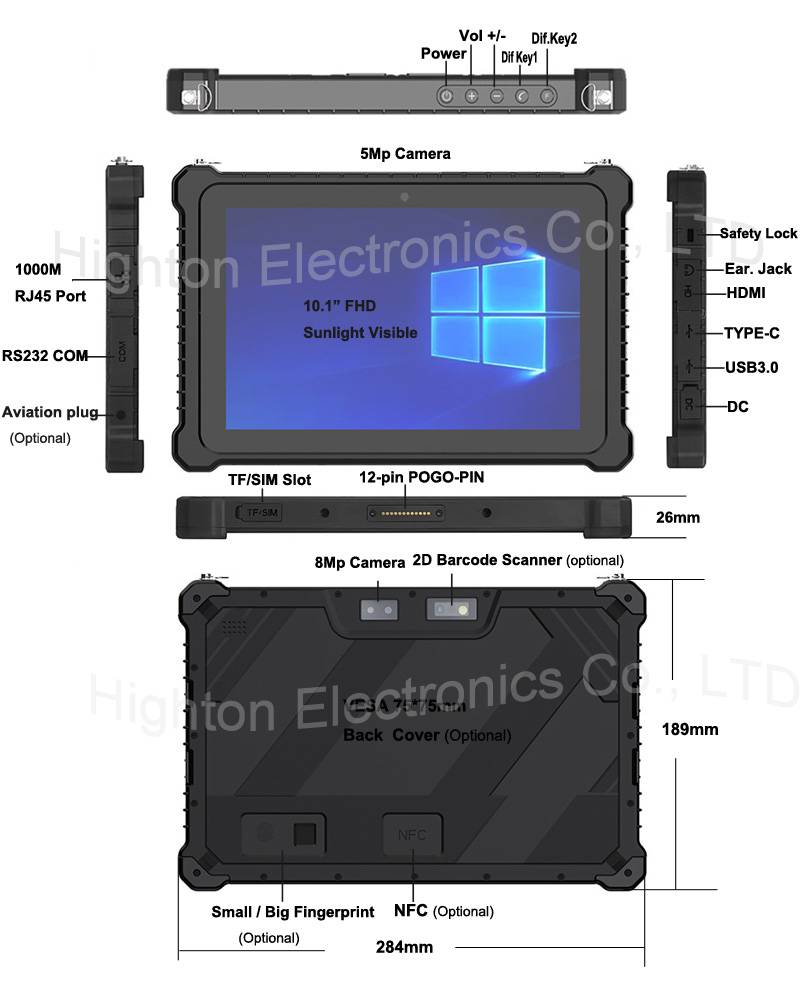
Hot Selling 10 Inch Intel N5100 I5 I7 FHD 8 +128GB 16+256GB Win10 Pro Win11 Pro 4G 5G Rugged Tablet PC Pad with NFC Barcode
Highton Electronics Co., Ltd.
Conveyor Belt Intelligent Monitoring System
LUO YANG WIRE ROPE INSPECTION TECHNOLOGY CO., LTD.


MUX Series Communication Interface Device for Security and Stability Control System
Nanjing NR Electric Co., Ltd.
KJD127(A) Mining Explosion-Proof and Intrinsically Safe Computer
Taiyuan Xiangming Intelligent Control Technology Co., Ltd.