China Releases 2026 Draft of Humanoid Robot and Physical AI Standards System
en.Wedoany.com Reported - China has released a draft national standards system covering the supply chain and lifecycle of humanoid robots and physical Artificial Intelligence (AI), aiming to secure a leading role in shaping future international technical standards. South Korea has yet to issue a separate roadmap, primarily responding through the preparation of international standard working groups and research projects.
According to industry sources on the 22nd, the Humanoid Robot and Embodied Intelligence Standardization Technical Committee under China's Ministry of Industry and Information Technology unveiled the "2026 Edition of the Humanoid Robot and Embodied Intelligence Standards System" at its annual meeting in Beijing on February 28. This standards system is a national-level framework covering the physical AI supply chain and lifecycle, with approximately 120 research institutions, robotics companies, component suppliers, and industry demand organizations participating in its development. China's strategy is to expand this system into detailed national and industry standards to gain an advantage in the global standards competition. The system comprises six major areas: foundational commonalities, brain-type AI and intelligent computing, body/core components, complete machines/systems, industry applications, and safety and ethics.

The brain-type AI domain involves standards for data collection, processing, learning, utilization, as well as model training, inference, and deployment. The body and components domain establishes technical standards for torsos, arms, legs, robotic hands, and drive, perception, and communication modules, with a focus on improving compatibility between components. The industry applications domain proposes standards for developing and operating physical AI in manufacturing, logistics, healthcare, electric power, and lifestyle services. The safety and ethics domain covers machine safety, functional safety, data protection, algorithm reliability, and ethical standards.
This standards system aims to unify data formats, communication methods, performance evaluations, and safety standards, enabling robots, AI models, sensors, components, and data to connect according to the same standards. It supports interoperability between products and systems from different companies, reducing redundant development and simplifying industrial field applications, testing and certification, and international standard promotion. The AI industry believes this move lays the foundation for China to exert influence over technical terminology, evaluation criteria, and component specifications within the global ecosystem. However, the current standardization direction remains at the proposal stage, and promoting it to the global market still faces obstacles.
A representative from the Telecommunications Technology Association (TTA) of South Korea stated that for Chinese standards to become international specifications, they must obtain the consent of governments and companies from various countries. Standards themselves are not mandatory, and even if the Chinese system becomes a benchmark, whether it can spread to the global market remains uncertain.
The South Korean government has also begun laying the groundwork to secure a leading position in physical AI technical standards, currently still in the stage of strengthening private-sector cooperation networks and international standard activities. The Ministry of Science and ICT launched the second phase of the Physical AI Alliance in July this year. This alliance is responsible for building an ecosystem for cooperation among companies, universities, and research institutions in areas such as technology development, verification, data utilization, safety and reliability, testing and certification, and standardization.

The government also operates a private-sector-led Physical AI Standardization Forum, where companies and research institutions discuss candidate standards and industry needs. Organizations such as the TTA and the Electronics and Telecommunications Research Institute (ETRI) then develop these into agendas for international standardization bodies. Notably, the TTA has established a new working group for developing physical AI standards in manufacturing within the Institute of Electrical and Electronics Engineers (IEEE), chaired by a South Korean expert. The working group will discuss high-level standards required for manufacturing sites, including common terminology and concepts, safety, reliability, accuracy, and autonomous process optimization.
The government has also launched a specialized physical AI standards research lab project centered around ETRI. This project, spanning approximately eight years, will conduct R&D and international standardization activities in parallel, aiming to transform technology concept verification and industrial field validation results into international standard contribution documents and new standard proposals. Domestic industry sources in South Korea point out that the country's physical AI sector has yet to finalize specific technical and data standard projects, and a detailed roadmap for prioritizing which specifications to propose to international standards is unclear. The lengthy timeline for producing standardization outcomes is also a major obstacle. As this project is pursued as a long-term initiative of about eight years, the ability to quickly adapt to technological trends and promptly propose standard drafts is critical. A representative from South Korea's Ministry of Science and ICT stated that physical AI only began to receive significant attention in 2025, creating practical difficulties in preparing related budgets and projects. The government is currently collaborating with private companies and is in the stage of building a standards ecosystem, starting by supporting these companies' networks and research foundations so they can participate in international standardization organizations.
Related Products
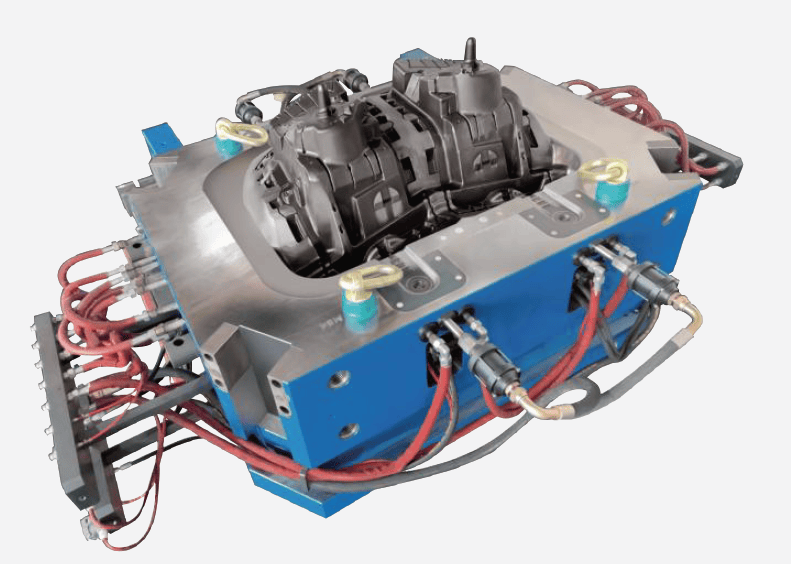

Aluminum-Magnesium Alloy High-Pressure Die-Casting Molds
NINGBO HELI TECHNOLOGY CO., LTD.

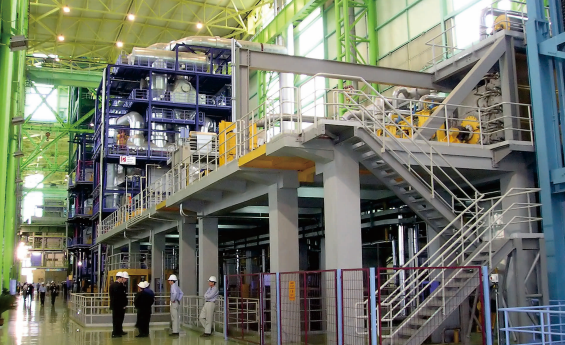
Strip Coating and Plating Production Line Equipment
MCC-SFRE HEAVY INDUSTRY EQUIPMENT CO., LTD.
Standard Nozzle Flowmeter
Jinggong Automatic Control Instrument Complete Technology Development Company
CAP1400 main feedwater flow nozzle flowmeter.
Jiangsu Hongda Instrument Technology Co., LTD.
Pneumatic high-pressure wear-resistant ball valve
Zhejiang Deca Control Valve Meter Co., Ltd.