Rowan University Develops Cold Spray Repair Method: Restores 80% Strength in 30 Minutes
en.Wedoany.com Reported - A research team at Rowan University in the United States has developed a polymer cold spray method for repairing composite material damage, reportedly faster and more effective than traditional repair methods used in aerospace, automotive, infrastructure, marine, and energy industries. The findings were published in the Journal of Thermal Spray Technology, led by a multidisciplinary team from Rowan University, focusing on restoring the strength of glass fiber-reinforced polymer (GFRP) composites after impact damage.
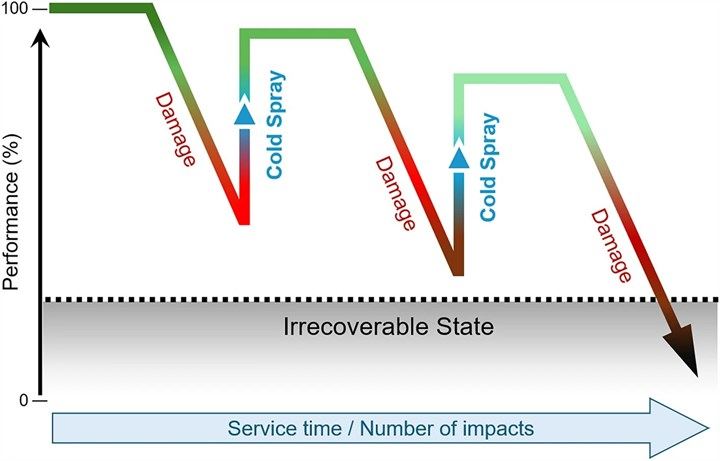
Composites are prone to internal damage upon impact. Co-author Dr. Francis Haas, Associate Professor of Mechanical Engineering at the Henry M. Rowan College of Engineering, compared this process to a zipper effect: "One fiber breaks, then another fiber breaks. The remaining fibers must bear all the load. If they encounter a strong gust of wind or other external force, they could catastrophically snap." To address this issue, the team explored cold spray repair methods. This process deposits fine polymer powder onto the damaged surface without requiring high temperatures and is already widely used in manufacturing, but applying it to on-site repair of damaged composites has been challenging.
Rowan University researchers developed a specific cold spray application method, similar in principle to dental fillings, capable of restoring most of the material's lost mechanical strength. Test results show that in shallow damage cases, the method can restore up to 80% of the material's original strength; in the most severe damage cases, it can restore about 40% of the strength. Under all test conditions, the cold spray method outperformed traditional resin-based repair methods in both effectiveness and speed. Traditional repairs may require up to 48 hours of curing time, while the cold spray process takes approximately 30 minutes, making the method particularly attractive for rapid on-site repairs.
The study also indicates that material selection is crucial. An epoxy-based powder reinforced with chopped glass fibers consistently provided the strongest repair results, not only improving the recovery of mechanical properties but also enhancing the repaired material's ability to withstand additional impacts.
This research was co-led by Behrad Koohbor, Haas, and Joseph F. Stanzione III from Rowan University's Henry M. Rowan College of Engineering, with significant contributions from students in the Departments of Mechanical Engineering, Chemical Engineering, and the Institute for Advanced Materials and Manufacturing. The project also included collaboration with Isaac Nault and Tristan Bacha from the U.S. Army Research Laboratory, bringing together expertise from academia and federal research institutions to address challenges in material durability and repair.
Potential applications of this technology include wind turbine blades, pipelines, aircraft structures, and composite vehicle components—anywhere lightweight composites are used and may suffer wear or impact damage.
Related Products

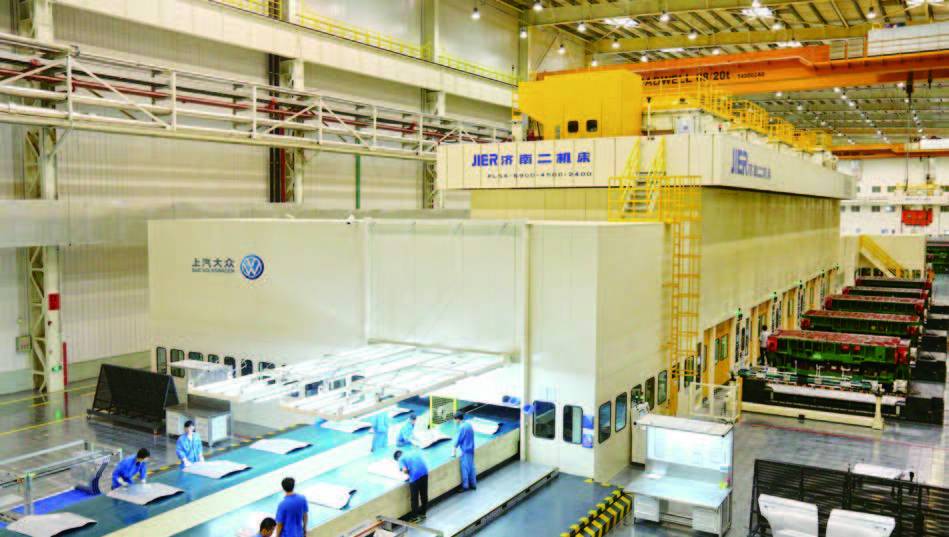
High-Speed Flexible Fully Automatic Stamping Production Line
JIER Machine-Tool Group Co., Ltd.
High-Speed Railway Lifting, Transporting, and Erecting Equipment: Integrated Transport and Erection Machine
Hanjiang Heavy Industry Co., Ltd. of China Railway 11th Bureau Group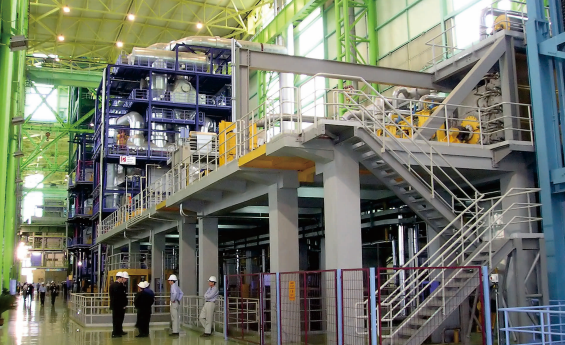
Strip Coating and Plating Production Line Equipment
MCC-SFRE HEAVY INDUSTRY EQUIPMENT CO., LTD.
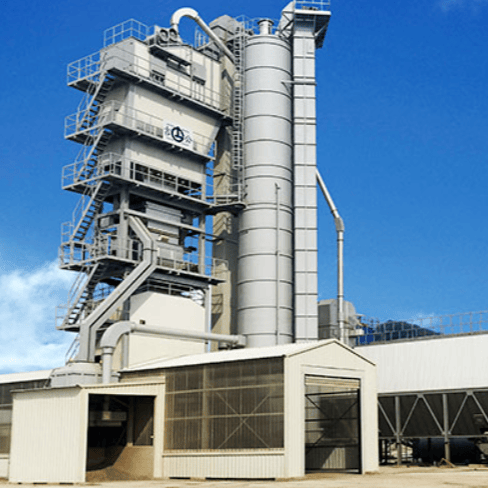
LBH4000 Batch Environmental Protection Asphalt Mixing Plant | Asphalt Batching Plant | Asphalt Mixing Plant
Jilin Province Road Construction Machinery Co., Ltd.

Industrial and Commercial Point-Type Gas Detector
Jinan Benan Technology Development Co., Ltd.
Pneumatic high-pressure wear-resistant ball valve
Zhejiang Deca Control Valve Meter Co., Ltd.