ProTx, an Australian road safety construction hardware manufacturer, launches the world's first temporary static work zone vehicle barrier
en.Wedoany.com Reported - ProTx, an Australian road safety construction hardware manufacturer, has launched the world's first vehicle barrier designed specifically for temporary static work zones, the Arresta 100, filling a safety gap in short-term road work scenarios. The product aims to address the lack of targeted protection solutions for "temporary static work zones" between mobile operations and long-term construction.
According to statistics from Austroads, nearly 800 crashes occur in road work zones in Australia each year, resulting in 18 fatalities and 245 serious injuries, with an average of two crashes per day, and the actual numbers may be higher. After entering the road safety and barrier industry in 2018, ProTx founder John Ferguson, through interactions with industry professionals and accident victims, identified a gap in existing solutions. Mobile operations are served by Truck Mounted Attenuators (TMAs), and long-term construction uses longitudinal barriers like concrete barriers, but temporary static work zones—covering maintenance operations lasting from hours to days—account for the majority of road work yet have no dedicated solution. TMAs are fixed in one position for continuous use over hours, with drivers strapped inside the vehicle, posing both safety and commercial challenges.
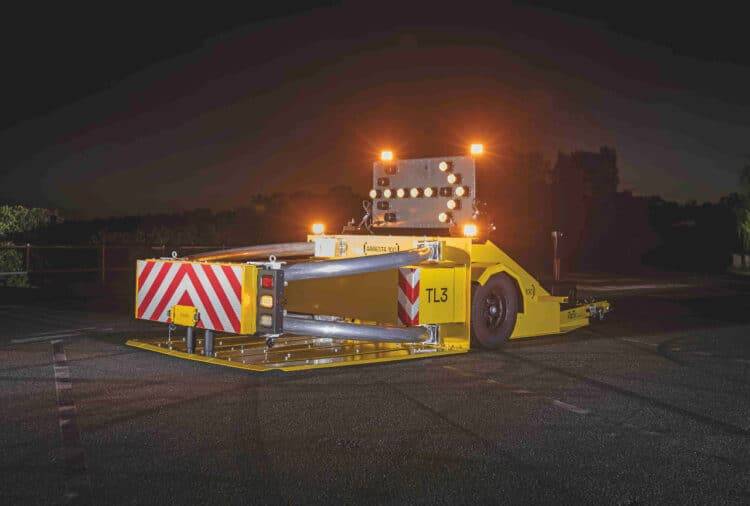
After market research, Ferguson established core requirements: the system must be able to withstand impacts, be towable by a standard work pickup truck, be "drop-and-go" without requiring operators to remain in the danger zone, and be commercially viable. The Arresta 100 is a trailer-type structure, with a heavy-duty reusable front section connected to the pickup via a 50mm tow ball, and a replaceable energy-absorbing rear section facing oncoming traffic, which collapses to absorb energy upon impact. Over 30 rubber feet on the underside grip the road surface, achieving a "catch and slow" effect—using the impacting vehicle's own mass to help it stop. During deployment, the tow vehicle must be disconnected to allow unattended operation.
The concept was first realized in 2021. Due to the closure of the Transport for NSW crash lab during the COVID-19 pandemic, testing was conducted at Holmes Solutions in Christchurch, New Zealand. The concept prototype was an inverted "T"-shaped steel frame, undergoing five concept validation crash tests, four at MASH Test Level 2 (TL-2) speed of 70 km/h, and the last at MASH Test Level 3 (TL-3) speed of 100 km/h. Results showed the cab remained intact, doors could be opened, and occupant forces were within acceptable limits.
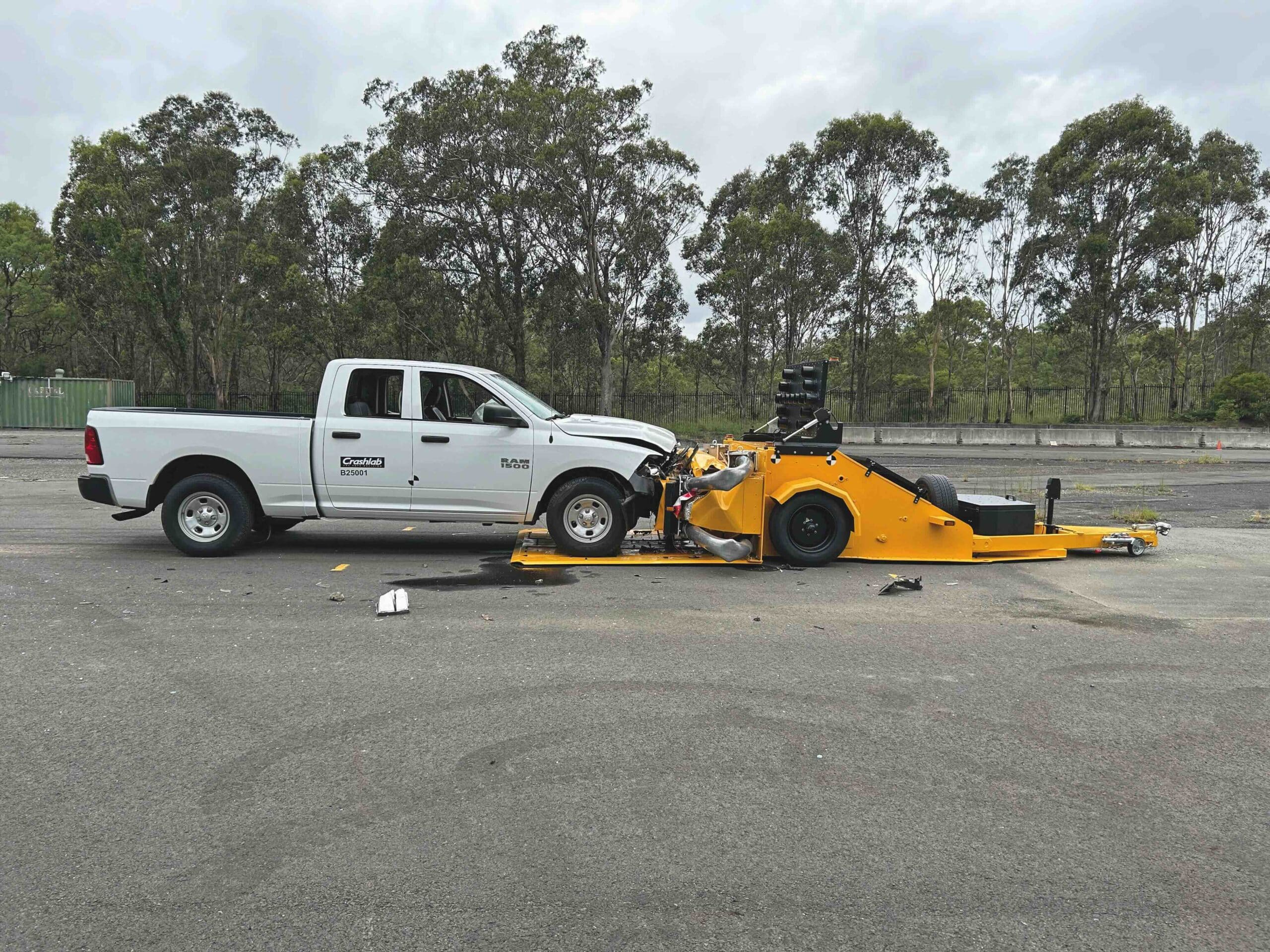
Subsequently, hundreds of crash simulation iterations were performed between 2022 and 2023. Full-scale MASH testing began at the Transport for NSW crash lab, with the first three rounds failing. After a design-test cycle optimization, four consecutive positive results were achieved, satisfying the complete MASH TL-3 matrix (covering small cars and large vehicles at various impact angles). Tests showed the Arresta 100 prototype could reduce vehicle speed by over 50% within 3 meters, with the same main body used for all seven tests, only replacing the energy absorber each time. In December 2025, the Arresta 100 received a crash performance assessment from the Austroads Safety Barrier Assessment Panel (ASBAP); after obtaining federal vehicle type approval, all barriers to release were cleared.
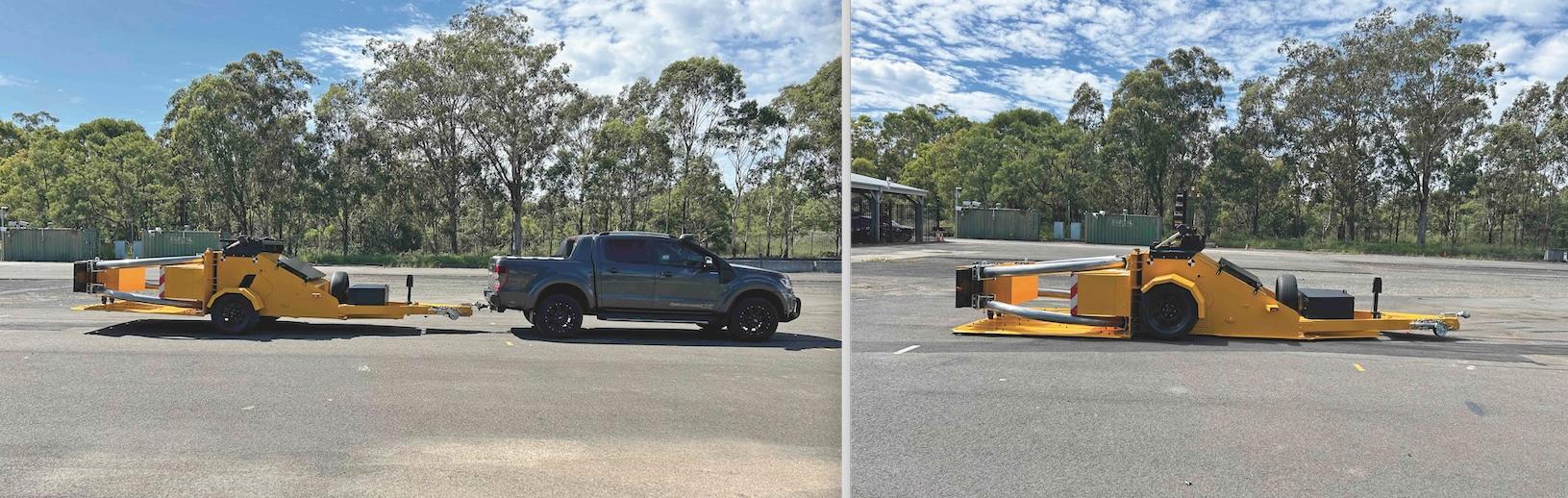
In June 2025, ProTx officially launched the Arresta 100 at the ARM Hub in Brisbane, where the system was designed and developed. Ventia, which supported the product during development, became the first customer and has already deployed the equipment. Taking five years from concept to market, the Arresta 100 is designed, developed, and manufactured in Australia, a world first, with international patents pending. Ferguson stated that the Arresta 100 is not intended to replace TMAs, but to allow them to return to their role in mobile operations, with the two complementing each other, adding a new tool to the worker protection toolbox.
Related Products


Strip Coating and Plating Production Line Equipment
MCC-SFRE HEAVY INDUSTRY EQUIPMENT CO., LTD.

Industrial and Commercial Point-Type Gas Detector
Jinan Benan Technology Development Co., Ltd.
QLZNGJ Intelligent Steel Reinforcement Trolley
Luoyang China Railway Qiangli Machinery Co., Ltd.
High-Speed Railway Lifting, Transporting, and Erecting Equipment: Integrated Transport and Erection Machine
Hanjiang Heavy Industry Co., Ltd. of China Railway 11th Bureau Group
CAP1400 main feedwater flow nozzle flowmeter.
Jiangsu Hongda Instrument Technology Co., LTD.
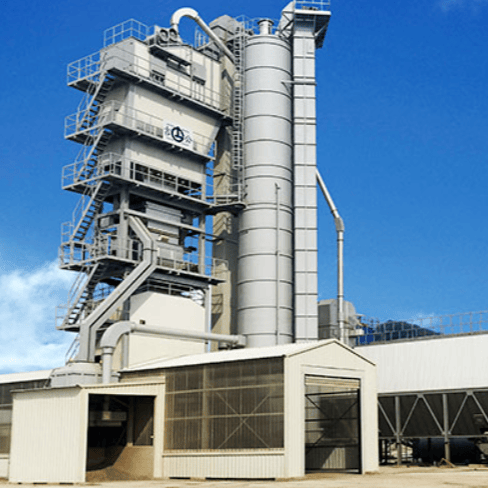
LBH4000 Batch Environmental Protection Asphalt Mixing Plant | Asphalt Batching Plant | Asphalt Mixing Plant
Jilin Province Road Construction Machinery Co., Ltd.