China's first fully domestically produced industrial internet platform for the entire nuclear industry control zone has been deployed
en.Wedoany.com Reported - According to Dimension News, the latest member of China Nuclear Control System Engineering Co., Ltd.'s "Long" series product matrix is named "Long Bi" — Long Bi®, China's first fully autonomous and controllable industrial internet platform for the entire nuclear industry chain. With its recent initial application, this "digital Bixi," carrying the mission of digital and intelligent transformation in the nuclear industry, has finally moved from the laboratory to the industrial frontline. Its emergence not only fills the long-standing gap in domestic digital infrastructure for the nuclear industry control zone but also marks a profound transformation in China's nuclear industry control zone from "single-core drive" to "full-domain collaboration."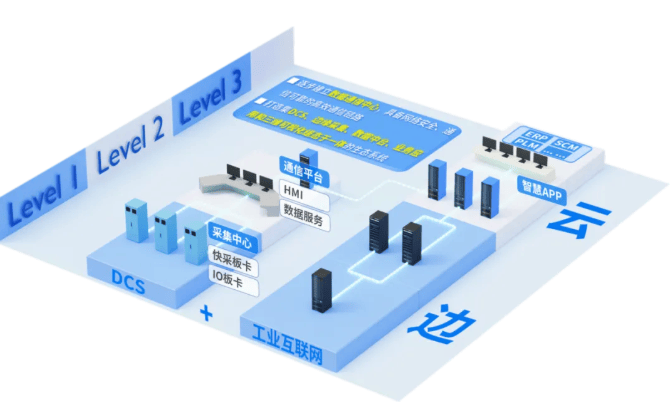
A Digital Foundation That Cannot Be Outsourced
The "Long" character sequence is the identifier engraved in the product genes of China Nuclear Control. Starting from the fully autonomous and controllableLong Qi® and Long He® DCS systems, the naming of each core product implies the expectations of nuclear industry professionals for autonomous technology. Long Bi® is no exception, taking the meaning of"Bixi bearing the weight", positioned as an autonomous and controllable industrial internet platform serving the entire nuclear industry chain, aiming to be the load-bearing foundation for the digital and intelligent transformation of the entire industry.
Behind this bearing weight lies an inevitable proposition as the nuclear industry reaches a new stage. Over the past decade, China Nuclear Control has tackled the hard nut of 100% domestically produced DCS, firmly grasping the initiative of the "control brain" for nuclear facilities. However, with the advancement of high-quality development in the nuclear industry, deeper shortcomings have gradually emerged: For a long time, there has been a gap in the digital and intelligent infrastructure construction of the CNNC nuclear industry control zone. Data standards for production, control, and management systems are inconsistent, interfaces are not interconnected, and data silos are scattered throughout the entire industry chain, which not only restricts production efficiency but also hinders full-process safety management.
"The construction of a digital and intelligent nuclear industry cannot rely solely on isolated 'control brains'; it must have an autonomous digital foundation that connects the entire process," admitted Wang Dong, member of the CNNC Science and Technology Committee and Assistant General Manager of China Nuclear Control. As a core backbone enterprise in the group's nuclear instrumentation and control field, overcoming this key technology is both a responsibility and a test that must be answered well in the era.
In 2022, the Long Bi® project was officially launched. The team faced a shortcut: directly purchasing mature foreign industrial software, which would have a short development cycle and sufficient scenario validation, offering the highest return on investment and the least risk. But after several rounds of discussion, there was only one answer:Unswervingly pursue a fully domestically produced route.
"Every step of China's nuclear industry towards autonomy cannot tolerate any risk of 'bottleneck' issues; this is engraved in the genes of the nuclear industry," stated Zhang Fan, Secretary of the Party Committee and Chairman of China Nuclear Control, at the project kickoff meeting. "The control zone is the core production domain of nuclear facilities. The digital foundation here must never be built on someone else's land."
Unlike platforms in consumer internet or general industrial fields, nuclear industry scenarios have extremely stringent requirements for safety, reliability, and stability: they mustmeet nuclear-level cybersecurity specifications, with no security vulnerabilities; they mustadapt to the complex equipment environment of nuclear facilities, ensuring long-term stable operation; they mustalign with the actual production processes of the nuclear industry, solving real frontline problems. This also means that Long Bi® could not simply follow the technical route of general platforms from the start of its development; it had to forge an independent innovation path fully tailored to the needs of the nuclear industry.
Growing a "Neural Network" from the DCS Gene
At the start of the project, the core team members all came from the DCS technology R&D field, with rich experience in control system development, but in the field of large-scale industrial internet platform construction, they were almost starting from scratch. "At that time, everyone's understanding of the industrial internet was mostly at the conceptual level. They couldn't clearly articulate the specific connotation of the platform, nor could they grasp the real needs for intelligent operation of nuclear facilities," recalled Li Hualong, head of the Long Bi® platform and Deputy Chief Engineer of the R&D Center at China Nuclear Control.
To identify the direction for platform construction, Hu Yiwu, Manager of the R&D Center at China Nuclear Control, led the team to dive into the frontline. From nuclear power bases on the coast of the East China Sea to inland nuclear chemical plant areas and nuclear fuel production lines, they traveled over 100,000 kilometers in total, covering scenarios across the entire nuclear industry chain. Their notebooks were densely filled with hundreds of real needs. At the same time, they benchmarked advanced construction experiences in China's industrial software and energy sectors, recruited outstanding talents from the internet field, and gradually built the platform's prototype.
"Developing industrial software for the nuclear industry is harder than making DCS hardware," Li Hualong felt this most deeply. "DCS is a tangible control device, equivalent to the 'brain' of nuclear facilities; the industrial internet platform is the 'neural network' densely distributed in the system, invisible and intangible, but if any link is blocked or data is wrong, the entire production process will stall."
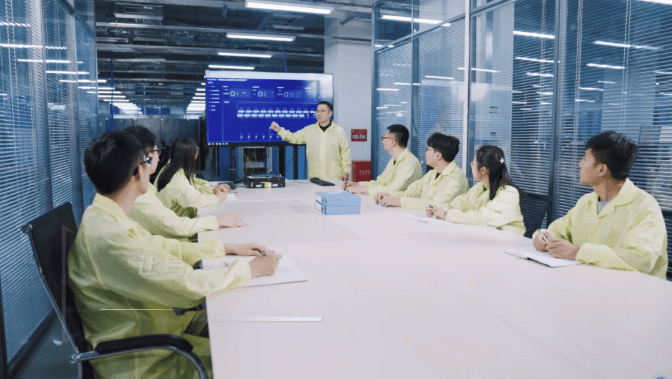
The first difficulty lies in full-process domestication and autonomization. From underlying hardware and basic software to upper-layer core applications, all must adopt domestically produced technical solutions. To tackle the hard nut of adaptation, the team completed thousands of compatibility tests and stress tests, solving adaptation issues for different domestic components one by one, ensuring stable operation of the platform under high-concurrency and high-load scenarios. To meet the extremely stringent safety requirements of the nuclear industry, the team built a full-chain network security protection system, conducted multiple rounds of penetration testing and security verification, and blocked every security risk before going online.
The biggest obstacle during the R&D process was the adaptation between the industrial internet platform and the control system. If the platform does not adapt well to the DCS system, it may not only fail to leverage data value but also affect the safe and stable operation of the control system. To achieve deep integration, the team specifically developed adedicated high-speed communication protocol, enabling millisecond-level data exchange between the Long Bi® platform and the Long Qi® and Long He® DCS systems. This ensures the independent safety of the DCS system while fully releasing data value, truly forming an integrated nuclear instrumentation and control autonomous technology system of "DCS + Industrial Internet".
In tackling core technologies, the team successively broke through two industry-level challenges. One was theinnovative integration of no-code, low-code, and full-code development technologies with nuclear instrumentation and control characteristics, pre-installing over 200 industrial mechanism model operators and intelligent algorithm components, supporting flexible expansion of the algorithm library, compressing the traditional application development cycle from months to weeks or even days. The other was thedynamic expansion technology for data acquisition-driven protocols, finding the optimal balance between flexibility, performance, and security, achieving seamless hot loading and resource isolation for multi-protocol drivers. As one of the earliest core developers to join the project, software engineer Tong Xiaodong's work computer had over twenty layers of operator model folders, from dozens of initial types to hundreds of components now, each undergoing hundreds of test verifications.
"Many general platforms in the industry understand 'cloud' but not 'control.' We are different," said Li Hualong. Long Bi® is a platform that truly grows out of nuclear industry scenarios, understanding industrial protocols, real-time control, instrumentation and control timing, while also possessing cloud-edge collaboration, big data, and AI capabilities—a core advantage that general platforms cannot match.
Winning Market and Industry Recognition with Real Results
At the end of 2024, the Long Bi® platform was officially released, first diving into China Nuclear Control's own production scenarios for pilot testing.
In the DCS engineering intelligent project, the platform connected data across the entire process of design, production, and testing, achieving full-process quality traceability. Software engineering design efficiencyincreased by 50%, and test execution efficiencyincreased by 20%. At the DCS intelligent manufacturing factory in the Shandong branch, the platform served as the core data foundation, supporting digital flow across 33 interaction scenarios, 22 forms with 520 fields, and 20 types of documents, achieving a30% increase in goods picking efficiency, a50% increase in inbound and outbound efficiency, and a30% increase in inspection process efficiency, creating an autonomous, less labor-intensive, intelligent, and efficient digital manufacturing factory.
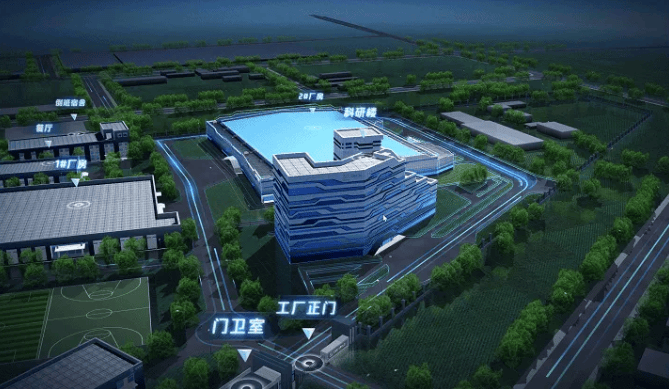
Tong Xiaodong and team members moved directly into the workshop, following the frontline production pace, collecting needs on the same day and completing iterative optimization. The team always adhered to a practical orientation, with the sole criterion for all function design and iteration being"whether it can solve actual production problems."
Production data that previously required cross-referencing multiple systems and manual statistics can now be retrieved and automatically summarized on the platform with one click. The feedback from frontline workers was the most practical: "In the past, we had to fill out five or six forms a day; now the system automatically syncs, saving a lot of time and labor costs."
This practical effectiveness, "grown" from the workshop, not only won internal recognition but also received authoritative validation at the national level. In December 2025, the 7th China Industrial Internet Competition national finals concluded in Beijing. This event, co-hosted by the Ministry of Industry and Information Technology and the State-owned Assets Supervision and Administration Commission, brought together over 700 top teams from across the country. Competing for the first time, China Nuclear Control stood out with the Long Bi® platform, winningSecond Prize in the Emerging Industry Track Leadership Group and Third Prize in the Discrete Manufacturing Track.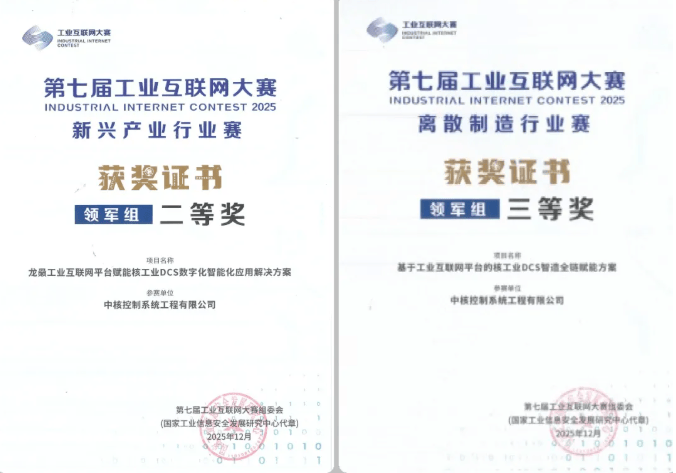
It was precisely this tangible effectiveness that became the strongest confidence for Long Bi® to secure its first order.
During the project bidding process, the team did not pile up conceptual promotional materials but instead visually demonstrated to the client the platform's real operational data, mature application scenarios, and stable technical performance in its own factory. After an on-site inspection of the platform's application, the client gave high praise:"This is a platform that truly aligns with the actual production of the nuclear industry and can solve real problems on site." Ultimately, Long Bi® won the bid with its mature technical capabilities and verifiable application results.
"Compared to many general industrial internet platforms on the market, the core advantage of Long Bi® is that it was not built for the sake of building a platform; it grew bit by bit from nuclear industry production scenarios," Li Hualong noted. All functional designs and technical selections revolve around the real needs of the nuclear industry, which is the fundamental reason the platform gained client recognition.
Forging a New Path for Nuclear Industry Digital and Intelligent Transformation
On the day the winning notice arrived, the experimental hall in Fangshan, Beijing, was still filled with the low hum of server fans. There were no celebrations or cheers; the team immediately turned to organizing the deployment plan and aligning with on-site needs.
"To be honest, no one was particularly excited on the day we won the bid," Li Hualong laughed when asked by a reporter, "Which gives a greater sense of achievement—winning the bid or watching the platform gradually grow?" "Because we all know that winning the bid is just the beginning, even the start of the 'formal exam.' Previously, the platform ran in our own factory, and adjustments were convenient. Now, it needs to be deployed at the engineering site to solve real problems for the client, so the burden on our shoulders is certainly heavier."
In the team's understanding, the significance of the first order has never been limited to a single contract. Its greater importance lies in forging a completely new track for the company. Along this path, the Long Bi® platform can be honed to greater maturity in more real scenarios, truly supporting the company's transformation from a traditional DCS hardware supplier to ahardware + software + full-process service comprehensive solution provider. Along this path, the nuclear industry's own digital foundation can truly be established, eliminating the need to be "bottlenecked" by others in core industrial software.
Unlike the traditional model of customized industrial software projects, the Long Bi® platform adopts an ecosystem architecture of platform + APP, creating an integrated system for intelligent industrial APPs from R&D to operation. In the future, various fields of the nuclear industry will no longer need to develop industrial software from scratch but can call upon platform capabilities like building blocks, significantly shortening the implementation cycle of digital projects and avoiding redundant construction across the industry.
According to the plan, after the first order is implemented, the team will use it as a starting point to drive rapid iteration, accumulating experience, collecting pain points, and continuously optimizing through real projects. At the same time, they will horizontally organize reusable general function modules to form standardized platform products, promoting them across the group's entire fields, including nuclear power, nuclear chemical engineering, and nuclear fuel. Core capabilities will be packaged into industrial APPs to reduce customization costs, and the team will participate in setting industry standards to continuously enhance market influence.
"From the full autonomy of DCS to the breakthrough deployment of the industrial internet platform, every step we take is to solidify the autonomous foundation for the high-quality development of the nuclear industry," said Zhang Fan. China is currently accelerating the energy revolution and Digital China construction. As a high-tech strategic industry, digital and intelligent transformation is the only path for the nuclear industry to achieve high-quality development and cultivate new quality productive forces. "The first order of Long Bi® is just the starting point. In the future, we will deepen and broaden this digital foundation, enabling autonomous technology to truly empower the digital and intelligent upgrade of the entire industry chain, and fulfill the mission of technological self-reliance and self-strengthening through concrete actions."
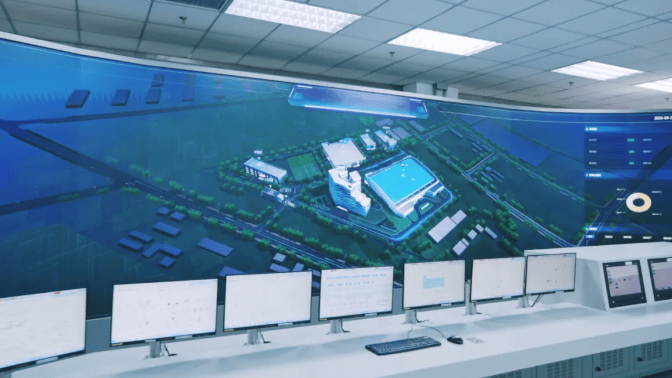
As we walked out of the experimental area, the midsummer sunlight streamed through the glass window onto the screen, where dancing data streams overlapped with the silhouettes of engineers discussing around the equipment. The most simple belief of these nuclear industry professionals is gradually becoming a reality with the deployment of Long Bi®.
Related Products


Pneumatic high-pressure wear-resistant ball valve
Zhejiang Deca Control Valve Meter Co., Ltd.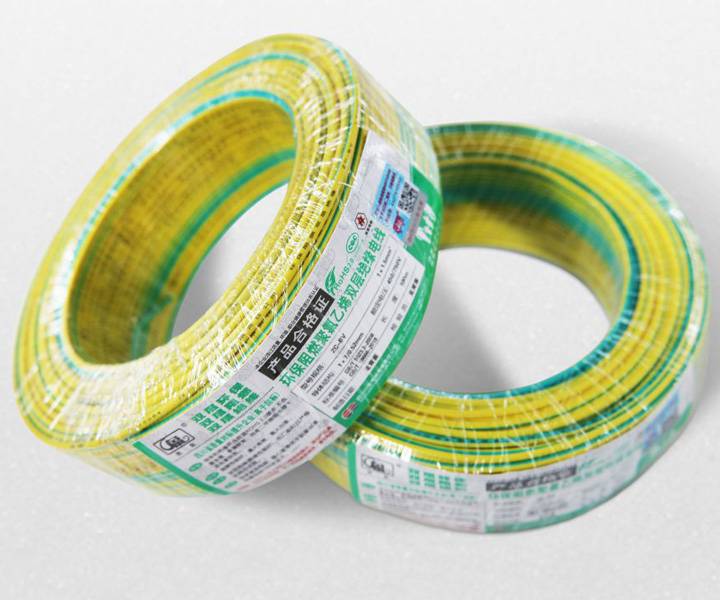
Environmentally Friendly Flame-retardant PVC Double-layer Insulated Wire
Sichuan Chndo Cable Co., Ltd.
Modular Multifunctional Water Supply and Drainage Vehicle (18T)
Changsha Dewater Machinery Technology Co., Ltd.
Optional Accessory - Auxiliary Sampling Module
Beijing Soaring Electric Technology Co., Ltd.
KYN28A-12 Metal Armored Removable Switchgear
Tianjin Ping Gao Intelligent Electric Co., Ltd.


Mars (Liquid Cooling) Series Industrial and Commercial Energy Storage Converter High Protection Module
Shenzhen Winline Technology Co., Ltd.