Malaysia Plans Starlink Direct-to-Cell Satellite Trial
en.Wedoany.com Reported - Malaysian Communications Minister Fahmi Fadzil revealed that SpaceX's Starlink plans to conduct a Direct-to-Cell (D2C) satellite technology trial in Malaysia. The technology aims to extend mobile communications coverage to areas without existing telecommunications towers, providing solutions for signal dead zones in rural and underserved regions.

Fahmi stated that he has instructed the Malaysian Communications and Multimedia Commission (MCMC) to invite local mobile network operators to explore this technology together with Starlink. If the trial materializes, Direct-to-Cell can provide mobile connectivity in locations without telecommunications towers and in areas where building new towers is economically unviable due to sparse user populations. Fahmi added that compared to telecommunications towers, which typically take 18 to 24 months to complete construction, satellite solutions offer faster deployment and lower costs.
Unlike Starlink's broadband service, which requires a dedicated satellite dish, Direct-to-Cell technology supports existing 4G LTE smartphones for direct use without additional hardware or specialized satellite phones. The principle is that when a phone is beyond the coverage of terrestrial base stations, it connects directly to Starlink satellites in low Earth orbit, which act as 4G LTE base stations in space, accessing operators' core networks using their existing licensed LTE spectrum. Users can continue using their existing SIM cards, phone numbers, and compatible 4G phones, while operators retain network control.
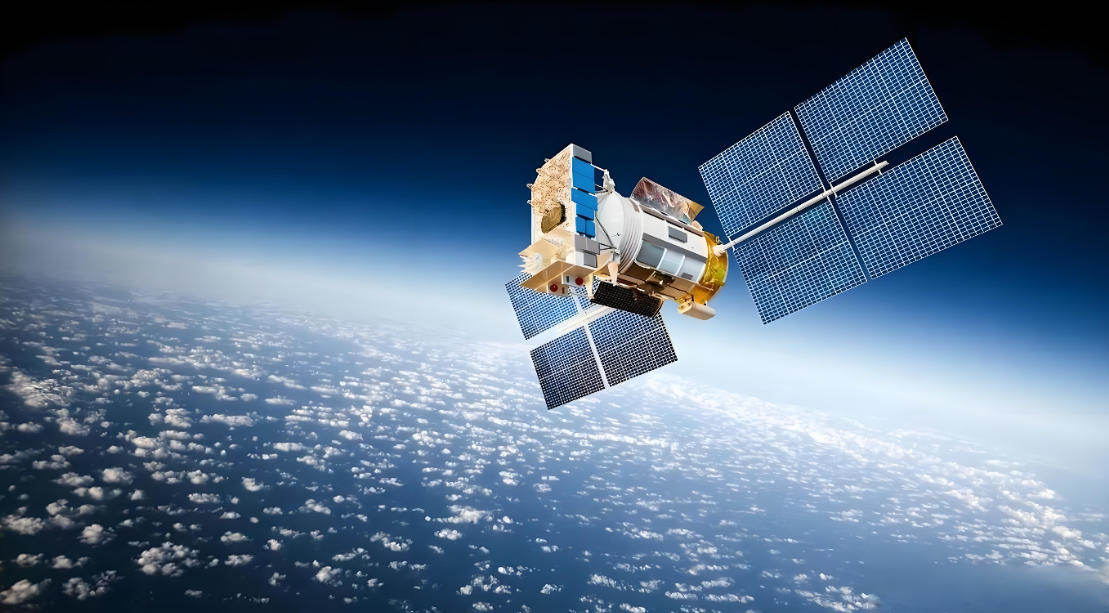
SpaceX has deployed over 650 first-generation Direct-to-Cell satellites, forming one of the world's largest space-based 4G LTE networks. Its next-generation Starlink mobile satellites (V2) are designed to provide more comprehensive cellular coverage, leveraging custom silicon chips and phased array antennas to support thousands of spatial beams and higher bandwidth, with throughput approximately 20 times that of current first-generation satellites.
The service is positioned as a complementary coverage layer for areas where traditional telecommunications infrastructure is uneconomical or difficult to deploy, rather than a replacement for existing 4G/5G networks. Since satellites operate in orbits approximately 500 to 600 kilometers above the ground, users typically need a clear view of the sky, with service scenarios primarily involving outdoor connectivity in rural areas, highways, and offshore locations, and not suitable for indoor use. In Malaysia, the technology is suitable for low-frequency spectrum such as 900MHz or 1800MHz, with the specific spectrum choice depending on participating operators and regulatory approvals. Compared to traditional 4G networks, there are gaps in speed and latency, with the focus on ensuring basic connectivity such as SMS, voice calls, emergency communications, and limited mobile data.
In the Southeast Asian region, the Philippines' Globe Telecom has taken the lead in launching Starlink Direct-to-Cell services, offering plans for both prepaid and postpaid users, with a 2GB package starting at 99 pesos (approximately RM6.60), including 100 satellite SMS to all networks, valid for 30 days. Similar partnerships have also been announced in the United States, New Zealand, Australia, Canada, and Japan. Ookla analysis shows that in the second quarter of 2026, the Philippines held the largest share of Starlink Direct-to-Cell users among monitored Asia-Pacific markets.
Related Products





Automatic Aiming Laser Remote Obstacle Removal Robot
Pinggao Group Weihai High-Voltage Apparatus Co., Ltd.



Conveyor Belt Intelligent Monitoring System
LUO YANG WIRE ROPE INSPECTION TECHNOLOGY CO., LTD.
Multi-function Marine Monitoring Low-altitude Detection Radar Sea-air Boundary Ocean Dynamic Environment Measurement
Chengdu Dixin Technology Co., Ltd.