Brazil's Petrobras Not Giving Up on 60 Billion Reais Seap Deepwater Project
en.Wedoany.com Reported - The first deliberations by the board of Brazil's National Agency of Petroleum, Natural Gas and Biofuels (ANP, Agência Nacional do Petróleo, Gás Natural e Biocombustíveis) on the natural gas market deconcentration plan (Gas Release) have been placed on the agenda for this Friday's (7th) meeting. Federal government members, ANP officials, and oil and gas industry executives interviewed by Agência iNFRA generally believe that Petrobras will not abandon the Sergipe Deepwater Project (Seap, Sergipe Águas Profundas) due to the potential progress of the plan.

The Seap project has reached a "point of no return": the Final Investment Decision (FID) was made in mid-April, construction contracts for the P-81 and P-87 FPSO vessels were signed with SBM Offshore at the end of May, with total investment estimated at over 60 billion reais, and the subsea equipment tenders are also progressing well. This is the largest project Petrobras has underway, expected to increase domestic natural gas supply by up to 18 million cubic meters per day starting in 2031.
Gas Release, established under the New Gas Law (14.134/2021), has regulatory proposals that could harm the project's profitability. For example, it could stipulate that Petrobras, as the dominant company, is completely barred from purchasing wellhead production from other companies, and be forced to sell part of its natural gas to other traders and consumers through auctions, with minimum starting prices, volumes, and terms determined by the ANP. Petrobras believes this would hurt the financial viability of projects like Seap; the government, in turn, aims to reduce concentration in the natural gas market, complementing actions such as the Union's natural gas auctions.
According to Agência iNFRA, the Regulatory Impact Analysis (AIR) and public consultation process, for which Director Pietro Mendes is responsible for reporting, will remain on the agenda. Mendes, Symone Araújo, Fernando Moura, and Daniel Maia lean toward voting in favor; Director Artur Watt may request to review the process in order to adjust the technical area's proposal.
Petrobras has publicly opposed the plan's core measures, as well as arrangements restricting natural gas imports from other countries. Exploration and Production Director Sylvia Anjos warned at the Sergipe Oil & Gas conference that the Seap timeline could be delayed and the financial viability of the natural gas pipeline—whose contract was originally scheduled to be signed this year—is under threat. Reuters subsequently reported that implementation studies for the pipeline had been suspended.
An executive at Petrobras confirmed to Agência iNFRA that only the onshore section of the pipeline (23 km) is being reassessed, while the offshore section (111 km), tendered under an EPCI (Engineering, Procurement, Construction, and Installation) contract model, is still moving forward. The company has not completely halted work related to the natural gas transportation phase, but is awaiting new ANP regulations to gauge their impact on the infrastructure components. The executive stated that Gas Release could generate new definitions for third-party access to pipelines, an issue being addressed by the ANP in a dedicated process. Market sources indicate that investment in the onshore pipeline section should be around 500 million reais, depending on the level of competition in the tender. "A risk has been created that didn't exist before, and now we're waiting for this regulation. We haven't stalled. We're assessing its possible impact on the project," he said. "The project's costs are guaranteed; that doesn't change. But the return expectations that existed are under threat. So we have to go back to the drawing board and see what impact it will have."
Market, government, and ANP sources are skeptical of this, viewing it as a "pressure game." A former ANP director said halting the pipeline "is nonsense," given the high penalties involved in already-signed contracts and the fact that Seap I and II have partners. However, he also acknowledged that the project's financial foundation is "challenging and sensitive": peak production of 240,000 barrels of oil per day is far below pre-salt fields such as Mero and Búzios, and the reserves were discovered 20 years ago. The project's partners are Indian companies IBV (Seap I, 40%) and ONGC (Seap II, 25%), with blocks located in the Sergipe-Alagoas Basin, approximately 80 km from the coast.
Another source countered, asking how abandoning the pipeline would be possible with FPSO contracts already signed—"without a complete pipeline, what would they do with all that natural gas?" Others noted that Petrobras needs Sergipe's natural gas to offset declining pre-salt production over the next decade, and that these statements are fabricated arguments to block Gas Release.
On the export front, Petrobras is reportedly studying an investment in a floating natural gas liquefaction unit to export the product in liquid form, also seen as a fallback if forced to sell part of its production to private buyers. Company sources say the concept is limited to the Colombia project—where two recent discoveries could double mid-term capacity. Market players believe offshore floating liquefaction is not financially viable: the natural gas price cap would need to be set at US$3 per million British thermal units to accommodate liquefaction costs, and it would struggle to compete with onshore or sheltered-water liquefaction projects already existing in the United States and emerging in Argentina.
Related Products
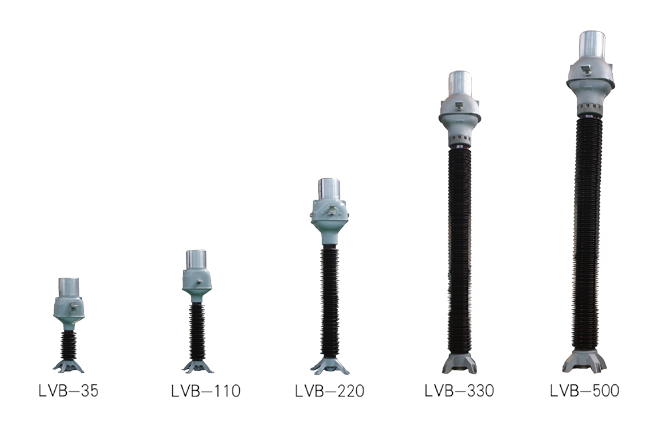

LVB Series 35-500kV Oil-immersed Inverted Current Transformer
Shandong TaiKai Instrument Transformer Co., Ltd.
Forest and Grassland Heat Source Infrared Monitor
China Huayun Meteorological Technology Group Co., Ltd.


TAI Slew-drive Single-axis Independent 1P Tracking Bracket System
ANTAI TECHNOLOGY CO., LTD.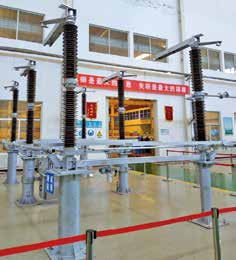
GW4-40.5/72.5/126/145/170/252/363/420 Series Double-column Horizontal Rotary High-voltage AC Disconnect Switch
SHANDONG TAIKAI DISCONNECTORS CO., LTD.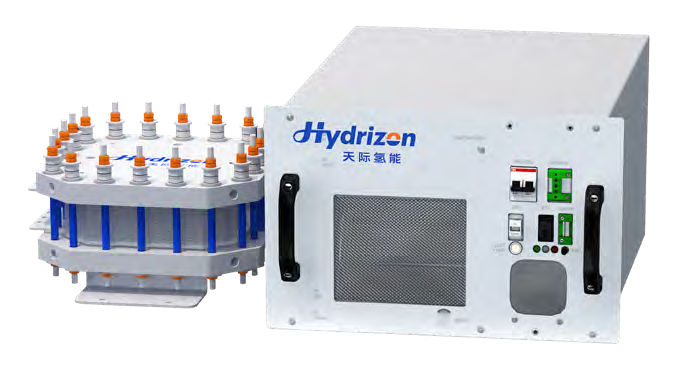
HI-Pro Green Hydrogen High-efficiency Production System-HI-PRO-AEM
Hydrizon Technology (Beijing) Co., Ltd.

TYC Series High-Efficiency Permanent Magnet Synchronous Motor
Xiangdian Smart Energy Technology Co., Ltd.
Quick-Change Single-Seat Control Valve / Quick-Change High-Pressure Single-Seat Control Valve
Beijing Consen Automation Technology Co., Ltd.