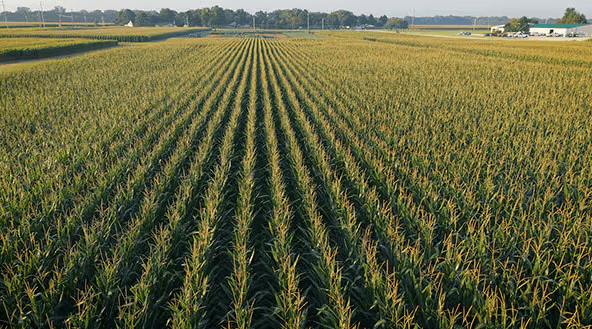
USDA August WASDE Report Cuts Corn Yield, Ending Stocks Fall to 1.7 Billion Bushels
en.Wedoany.com Reported - The USDA's August WASDE report made multiple adjustments to the corn, soybean, and wheat supply-and-demand balance sheets, with corn yield cut by 2.3 bushels per acre to 180.7 bushels per acre, serving as the report's primary bullish factor.
Last August's WASDE report shook the market with a record corn yield of 188.8 bushels per acre and a 2-million-acre increase in harvested area, and traders were concerned this year that history might repeat itself. In the actual report, although the USDA raised harvested area for both corn and soybeans, these increases were offset by lower yields.
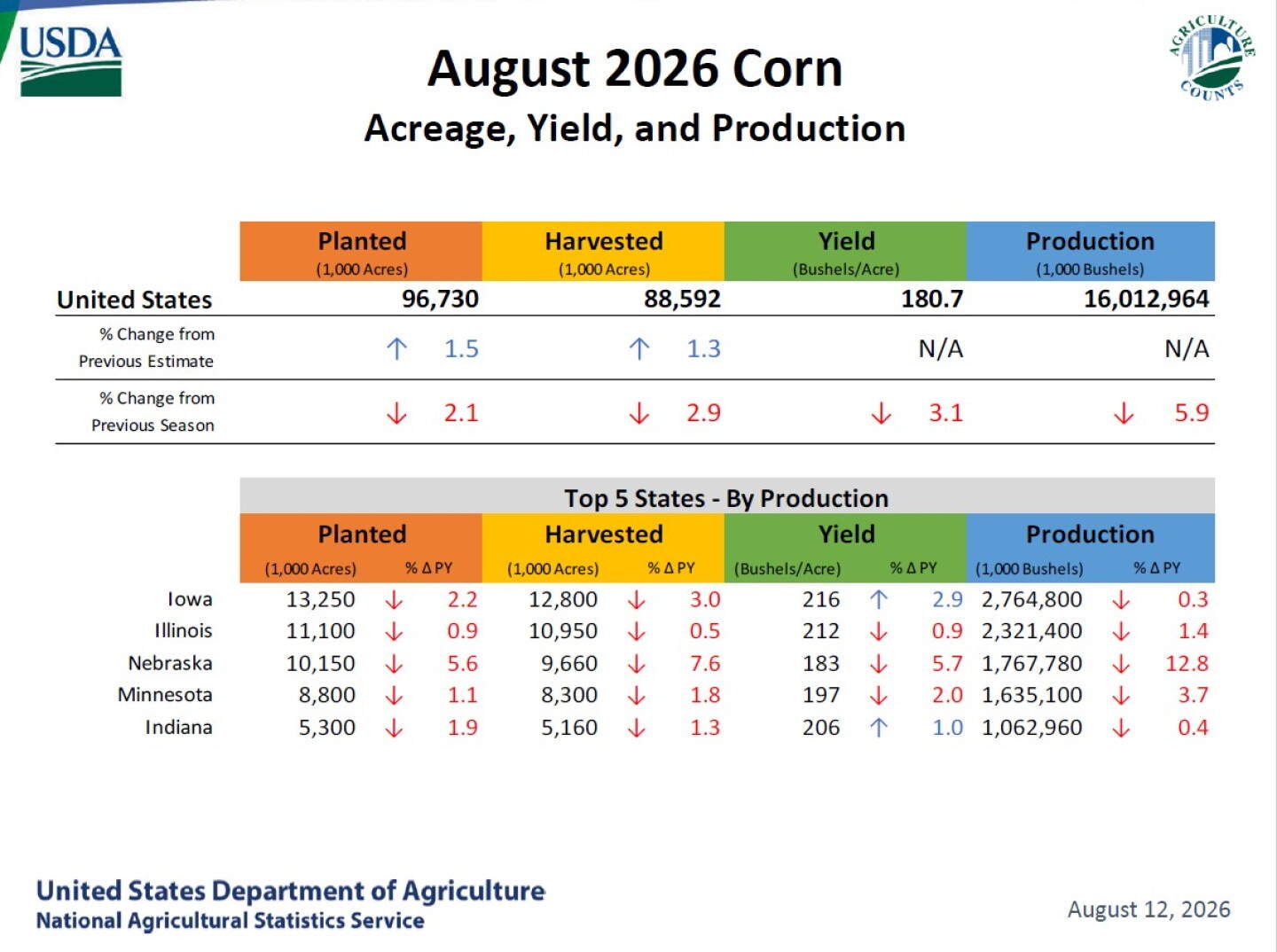
For corn, harvested area was raised by 1.2 million acres, broadly in line with market expectations. Jim McCormick of AgMarket.Net noted that the net impact on production from lower yields and higher acreage nearly offset each other, with total corn production reaching 16 billion bushels. Due to strong demand, ending stocks were cut by 137 million bushels to just 1.7 billion bushels. On the export side, both new-crop and old-crop exports were raised by 75 million bushels each, serving as the main driver behind the sharp decline in ending stocks.
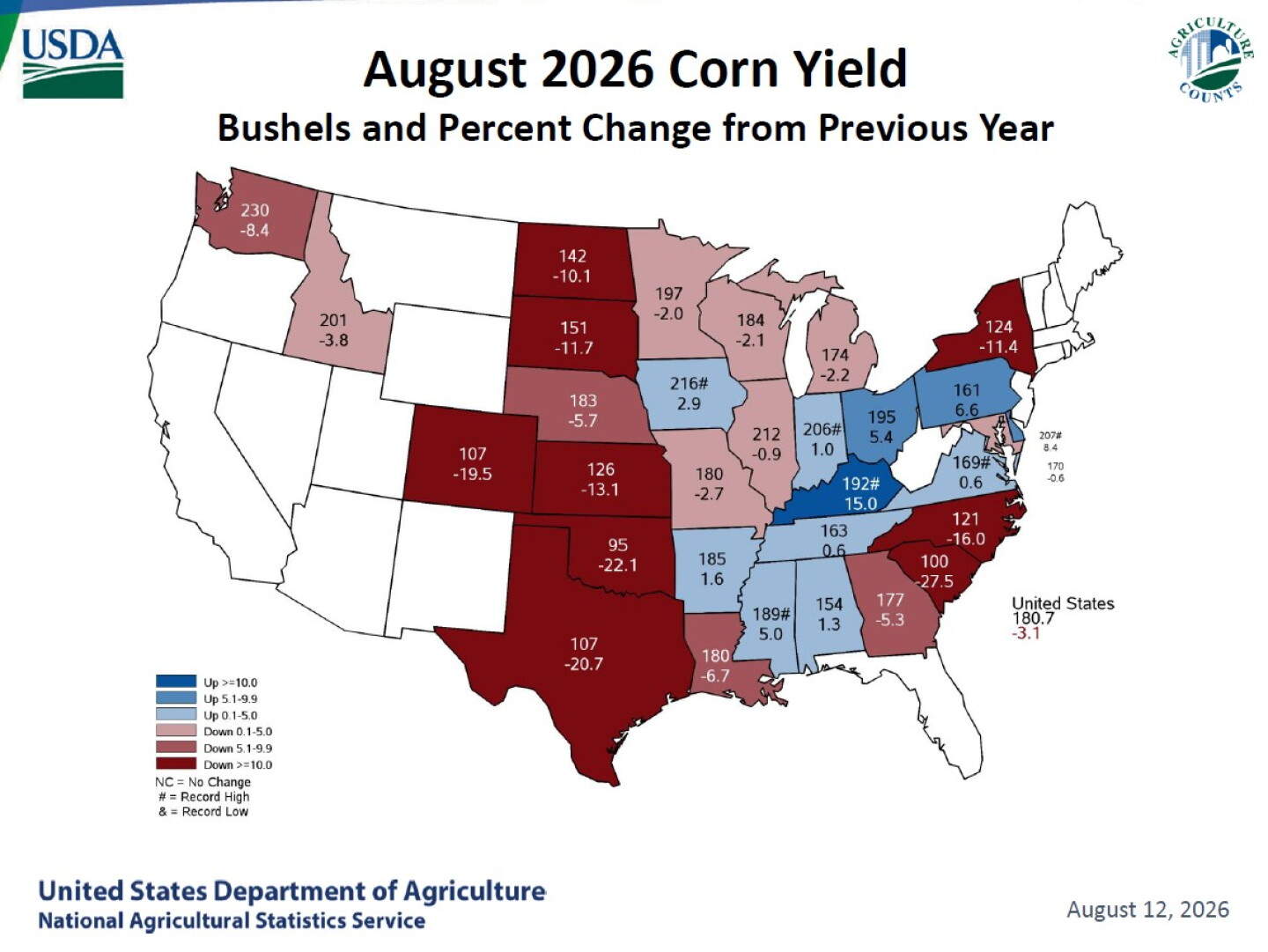
Looking at the regional structure, yields in the western Corn Belt states fell sharply from last year, but this decline was offset by Iowa. The state's corn yield stands at 216 bushels per acre, up 6 bushels from 2025; Illinois is at 212 bushels per acre, only 2 bushels below last year. McCormick believes the Illinois figure may be on the high side.
McCormick stated that last year's bumper crop came from the western production regions, with decent harvests in the east; this year, if the national yield is ultimately to hold above 180 bushels per acre, it will rely on the eastern regions, which will bear the heavy lifting.
For soybeans, the USDA raised harvested area by 1.4 million acres and cut yield by 0.3 bushel per acre to 52.7 bushels per acre. McCormick believes this yield figure could fluctuate based on farmer surveys as of August 1, and with rainfall across much of the Midwest in August, the market typically leans bearish on yields. Soybean production was raised by 44 million bushels, with crush raised by 30 million bushels offsetting most of the production increase, leaving new-crop ending stocks up just 10 million bushels at 320 million bushels.
On the export side, the USDA left soybean export data unchanged. McCormick noted that China is entering the market, unlike the same period last year, creating uncertainty on the demand side. If China's actual purchases exceed 15 to 16 million metric tons, or even reach 25 million metric tons, the soybean supply-and-demand balance sheet could tighten further.
The wheat market saw limited impact from the August WASDE report. U.S. ending stocks fell by just 5 million bushels to 717 million bushels, while global wheat stocks were raised by nearly 500,000 metric tons.
Related Products



714CD Series C-Band Weather Radar
Chengdu Zhongdian Jinjiang Information Industry Co., Ltd.



Industrial and Commercial Point-Type Gas Detector
Jinan Benan Technology Development Co., Ltd.
4HS-8 High-efficiency Peanut Inverted-laying Harvester
Hebei Yongfa Hongtian Agricultural Machinery Manufacturing Co., Ltd.