Storelectric acquires 550-acre Teesside site to develop underground long-duration energy storage (~250 MWh)
en.Wedoany.com Reported - As the scale of intermittent renewable energy expands, grid demand for long-duration energy storage (LDES) continues to rise. Different geological conditions and application scenarios require storage solutions tailored to local circumstances, and a growing number of developers are turning their attention to underground space.
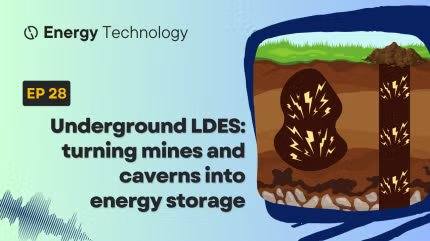
Underground storage can circumvent some of the limitations of conventional electrochemical batteries in terms of degradation, thermal runaway, and supply chain issues, but compressed air energy storage (CAES) and underground gravity energy storage (UGES) each present their own techno-economic challenges. Regarding progress on the two routes, Storelectric CEO Tallat Azad and Green Gravity Founder and CEO Mark Swinnerton respectively provided updates on CAES and UGES, while Edward Barbour, Associate Professor in Energy Systems and Storage at the University of Birmingham, offered analysis on the broader outlook.
The principle of CAES is to store air and heat. Barbour said that when energy is needed, the two are combined to produce hot compressed air, which is used to drive a turbine. Efficiency losses are unavoidable. Storelectric's target efficiency is approximately 62%, but Azad stated that its two CAES plants currently achieve an efficiency of around 42%. The usable energy delivered to the grid will be lower than the amount stored in the cavern due to plant efficiency.
UGES relies entirely on gravitational potential energy. Barbour explained that when heavy objects are positioned at the top, potential energy is stored, and energy is released through a motor as they descend. Swinnerton said that mine shafts are ideal locations for UGES, and the underlying physics is that energy equals mass times height, so substantial mass must be paired with sufficient height.
Geological conditions largely determine the technology route. Barbour stated that in suitable areas with salt layers at depths of around 500 meters, CAES is economically viable, with costs potentially below £5 per kilowatt-hour (kWh) ($6.75). Azad added that once salt caverns are constructed, they only require maintenance once a decade and can operate for decades or even centuries. Hard rock mines have also been considered for CAES, but they carry leakage risks; salt is essentially self-sealing, which is its unique advantage.
Abandoned mines offer ready-made elevation differences, and Swinnerton believes they are "among the best places to find elevation differences," giving mine shafts a techno-economic advantage in UGES, with infrastructure that can likewise last for decades or longer. There are currently nearly 2 million closed mines worldwide, and repurposing the land, assets, and geographic locations of these mines is the primary reason for converting them into storage facilities.
The storage capacity of UGES depends on mass and height. Swinnerton noted that hundreds of thousands of abandoned mines can be classified as medium-sized mine shafts, capable of providing 20 to 50 megawatt-hours (MWh) of storage capacity; larger mine shafts are also abundant, with individual units capable of delivering 150 MWh to 350 MWh of energy. Given that many mines have multiple shafts—for example, one mine with ten shafts—deploying UGES can achieve storage potential on the order of gigawatt-hours (GWh).
The storage capacity of CAES depends on cavern size. Storelectric recently acquired a site of approximately 550 acres in Teesside, a former major industrial and chemical hub with abundant cavern resources. Azad stated that these caverns average about 60,000 cubic meters, equivalent to roughly 250 MWh of energy, enough to power approximately 70,000 or 80,000 homes for one hour. He cautioned that this is the energy density of the cavern itself, and when released through turbines, efficiency losses must be deducted, meaning the actual energy delivered to the grid will be lower than this figure.
Both technology routes remain in their early stages. Green Gravity commissioned its first pilot plant in 2023, while Storelectric's acquisition of the Teesside site marks the culmination of a three-year due diligence process. As grid demand for customized long-duration energy storage solutions grows, innovation momentum in this field continues. Barbour believes that hydrogen storage in salt caverns is a leading technology, and biomethane in salt caverns is also promising; thermal storage is "one of the easiest wins," typically capable of storing heat for long periods at relatively low cost, making it a suitable option when energy is subsequently needed in the form of heat.
Related Products
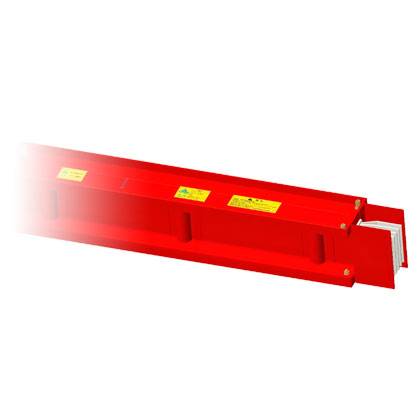

Mineral-insulated Compact Busway (Fire-resistant Busduct)
Zhuhai Guangle Electric Busway Co., Ltd.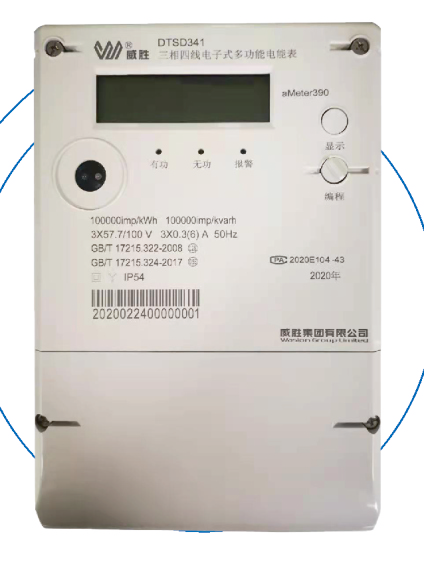
Overseas IEC Gateway Energy Meter - DTSD341/DSSD331-aMeter390
Wasion Group Limited Co., Ltd.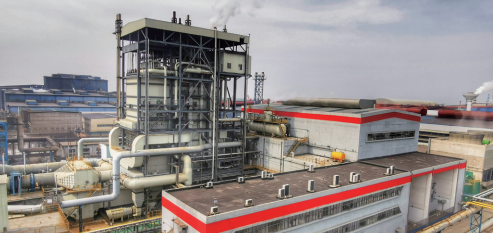
Jiujiang Pinggang 125MW Subcritical Gas Power Generation Project
Capital Engineering & Research Incorporation Limited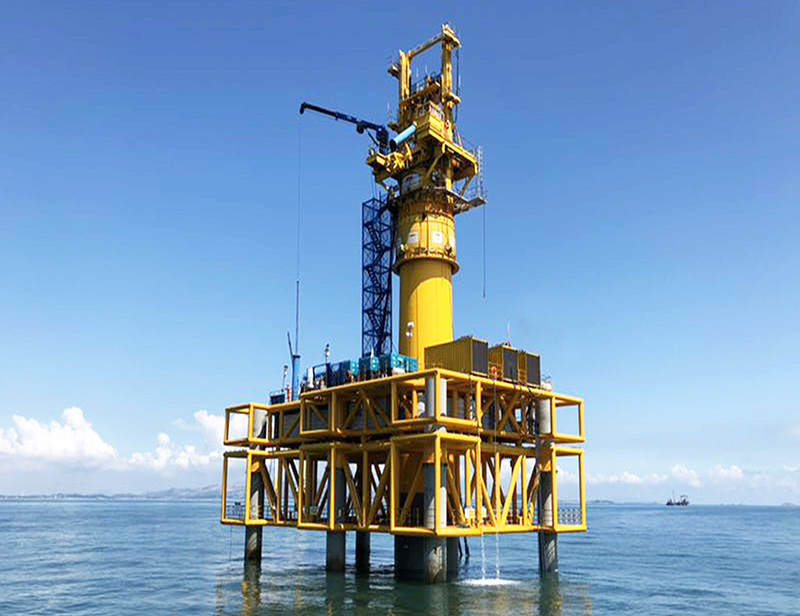
CITIC Heavy Industries Offshore Wind Power Equipment Hydraulic Pile Hammer
CITIC Heavy Industries Co., Ltd.
VEG-12/24/40.5 Series Vacuum Circuit Breaker
SHANGHAI PINGGAO TIANLING SWITCHGEAR CO., LTD.

KYN61-40.5 Indoor AC Metal-clad Removable Switchgear
Chongqing Transformer Co., Ltd.