JCB sets 406.32 mph hydrogen-powered land speed record in the US
en.Wedoany.com Reported - British construction equipment manufacturer JCB has set a new world land speed record for hydrogen-powered internal combustion engine vehicles at the Bonneville Salt Flats in Utah, with its JCB Hydromax averaging 406.320 mph over two runs in opposite directions within one hour, in accordance with Fédération Internationale de l'Automobile (FIA) rules.
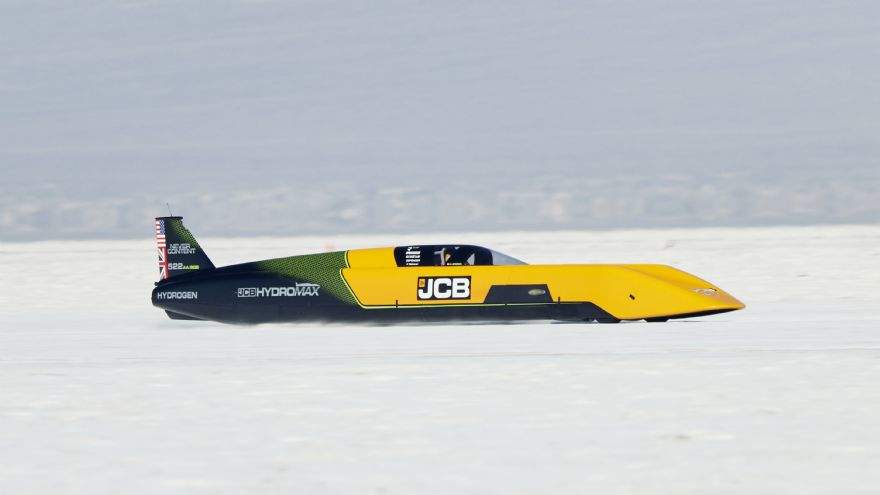
FIA rules require two runs in opposite directions to be completed within one hour. The JCB Hydromax recorded 400.623 mph on its first run and 412.135 mph on the second. The 32-foot-long, twin-engine vehicle was driven by Air Force Lieutenant Colonel Andy Green OBE. The previous FIA-recognized hydrogen internal combustion engine record was 185.5 mph, set by BMW's H2R in 2004; this result is still pending official FIA ratification.
In 2006, Green set the diesel world record of 350.092 mph at the same location in the JCB Dieselmax. Twenty years later, JCB has surpassed that old mark with hydrogen internal combustion engine technology that produces zero CO2 emissions from the exhaust. The recognized hydrogen fuel cell vehicle speed record is 303 mph, and 406.320 mph is also higher, making the JCB Hydromax the fastest hydrogen-powered vehicle of any type.
The new record falls under the FIA Category A, Group XIV, Class 7 world flying-start land speed record classification. The JCB Hydromax is powered by two hydrogen engines based on production models, delivering a combined 1,600 brake horsepower. Built at JCB's engine plant in Foston, Derbyshire, they are part of the company's £100 million hydrogen technology investment and have already been installed in JCB machines and equipment.
JCB Chairman Anthony Bamford led the company's hydrogen engine project and proposed the record attempt last year. He said that twenty years ago, the team came to Bonneville with the JCB Dieselmax to demonstrate British engineering capability in diesel power; today, the team has done it again, this time with hydrogen-powered engines. He also highlighted the significance of production technology: this record was set by production engines—the very engines that now power JCB excavators. The JCB Hydromax proves that hydrogen is viable and that hydrogen engines can achieve the highest levels of performance with zero emissions.
Green's own absolute land speed record stands at 763.035 mph, and he remains the only person to have broken the sound barrier on land. Commenting on the JCB Hydromax, Green said: "Bonneville is the spiritual home of land speed records, and the JCB Hydromax has just written itself into that history. This car is fantastic—stable, solid, and fast."
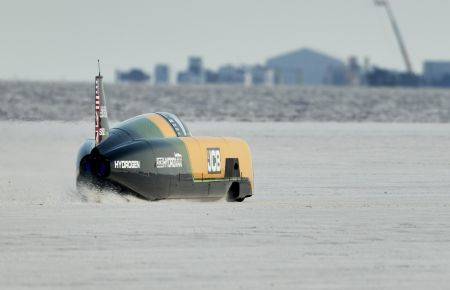
Green added that setting a hydrogen-powered speed record 20 years after the Dieselmax achievement was "a tremendous honor," calling the success "a huge achievement by a world-class team and exceptional technology."
Ryan Ballard, JCB's Engineering Director responsible for the project, said the record belongs to the engineering team that turned a hydrogen excavator engine into the fastest of its kind on the planet. The team prepared thoroughly for the challenge, and the vehicle performed brilliantly.
FIA President Mohammed Ben Sulayem called the achievement "a truly historic milestone in motorsport," stating that it demonstrates "how innovation, performance, speed, and sustainability can go hand in hand." He said the record highlights the potential of hydrogen combustion technology and continues motorsport's long tradition of driving technological progress.
Before the official FIA challenge, the JCB Hydromax had already appeared at Bonneville Speed Week. At the event organized by the Southern California Timing Association (SCTA), it set a new SCTA record in the Blown Gas Streamliner class at 368.347 mph, with the run considered an important step ahead of the official FIA attempt.
JCB set this record ahead of the opening of its new factory in San Antonio, Texas. The $500 million facility is expected to employ 1,500 people and will manufacture machines for the U.S. market. JCB has a history of record-breaking performances: in addition to the Dieselmax, the JCB Fastrac became the world's fastest tractor in 2019 at 135.191 mph, and the JCB GT set a backhoe loader speed record of 72.58 mph in 2014.
With the JCB Hydromax claiming the title of world's fastest hydrogen-powered vehicle, JCB's record-breaking racing and engineering history has gained a new achievement, while also showcasing the potential of hydrogen fuel internal combustion engine technology.
Related Products

MESS8201-2507/5015-BN Prefabricated Liquid-cooled Energy Storage Battery Container
Xuchang Xuji Electric Science Energy Storage Technology Co., Ltd.
714CD Series C-Band Weather Radar
Chengdu Zhongdian Jinjiang Information Industry Co., Ltd.

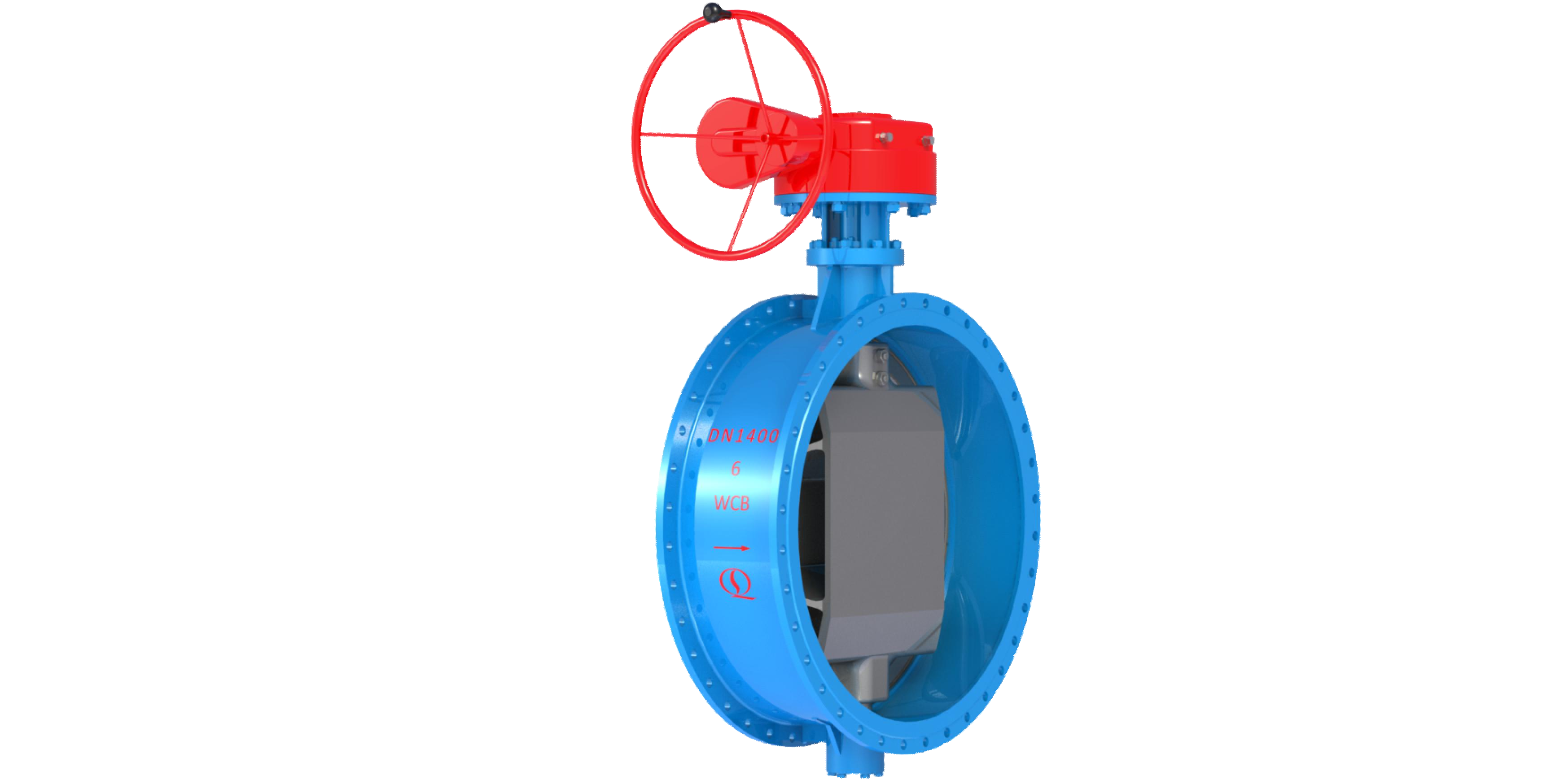
Bidirectional Metal Hard Sealed Seawater Butterfly Valve
Henan Quanshun Flow Control Science & Technology Co., Ltd.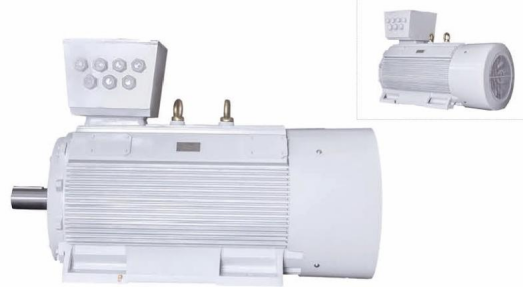
YE3 Series Low Voltage High Power Three-Phase Asynchronous Motor
Shandong Lijiu Electrical Machinery Co., Ltd.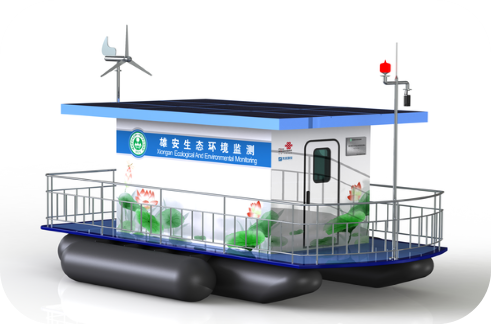
Floating Boat Water Quality Automatic Monitoring System
Hebei Sailhero Environmental Protection High-tech Co., Ltd.