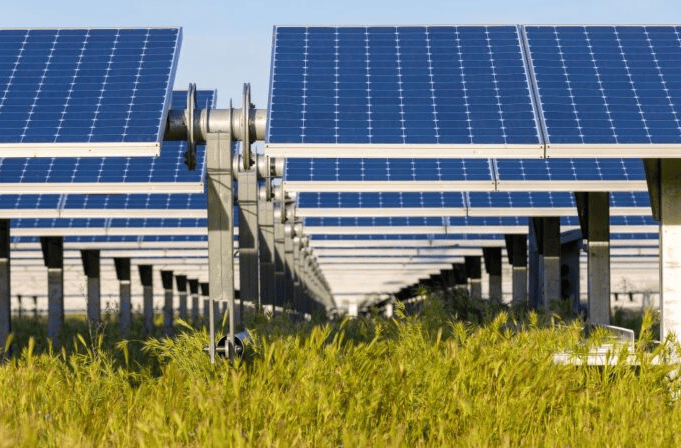
India's New Solar Installations Expected to Exceed 50 GW in 2026, Setting a Record
en.Wedoany.com Reported - India's new solar installed capacity in 2026 is expected to hit a historic record, but the policy driving this growth is causing supply tensions, with system prices set to rise significantly. According to the latest analysis by Wood Mackenzie, India added 34 GW (DC) of new solar capacity in the first half of 2026, a 38% increase year-on-year, driven mainly by developers accelerating project commissioning ahead of the June deadline for the Approved Models and Manufacturers List-II (ALMM-II). In its report "From Modules to Cells: India Deepens Its Solar PV Footprint," the firm projects that full-year new installations will exceed 50 GW (DC), surpassing the record of 49 GW (DC) set in 2025.
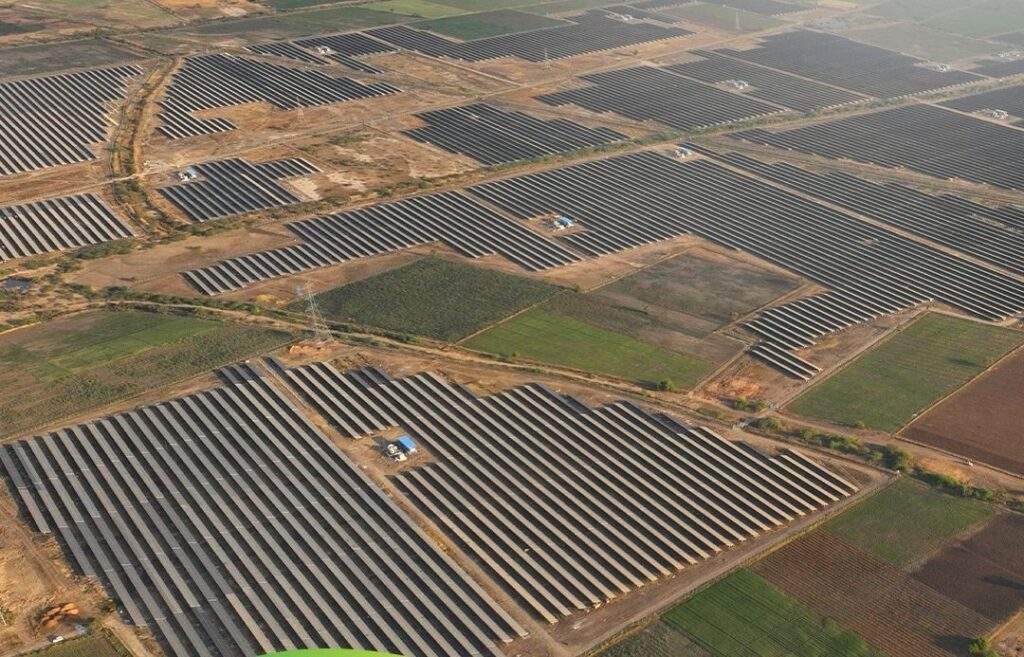
Sureet Singh, Research Analyst at Wood Mackenzie, stated that the ALMM-II mandate is a bold move by India to build a fully integrated domestic solar supply chain, but cell manufacturing capacity has not yet kept pace with module capacity, making short-term cost impacts unavoidable. Developers will need to navigate a difficult transition period before prices stabilize.
The 34 GW (DC) of new capacity added in the first half of 2026 reflects developers' efforts to complete projects ahead of ALMM-II taking effect. The policy requires government-supported projects to use modules produced from domestically manufactured cells. The accelerated build-out was also driven by the phased reduction of exemptions on inter-state transmission charges—projects commissioned from July 2026 onward see the exemption rate drop from 75% to 50%, with full removal after July 2028.
Wood Mackenzie expects new solar installations to slow in the second half of 2026, constrained by cell capacity limits and rising module prices. However, ALMM-II exemptions for net-metering and open-access projects remain in effect until December 31, 2026, which could provide upside to installation figures. India's Ministry of New and Renewable Energy (MNRE) also agreed in July 2026 to waive the mandate for nearly completed projects, with applicants required to submit requests by July 23, 2026.
Import dependence is shifting rather than disappearing. Wood Mackenzie notes that while ALMM-II has reduced India's direct imports of cells from China, procurement has shifted to Southeast Asia—imports of cells from Indonesia nearly tripled in early 2026. In the first five months of 2026, India imported 5 GW of wafers and 20 GW of cells, with wafer imports up 86% year-on-year to support domestic cell production.
India imposes a 20% basic customs duty on imported cells and modules. In September 2025, India's Directorate General of Trade Remedies (DGTR) recommended anti-dumping duties of up to 30% on Chinese-made solar cells and modules, pending a final decision by the central government. This makes Indonesia an increasingly attractive alternative supply source, though it may face circumvention scrutiny given observed transshipment patterns of Chinese cells in other markets.
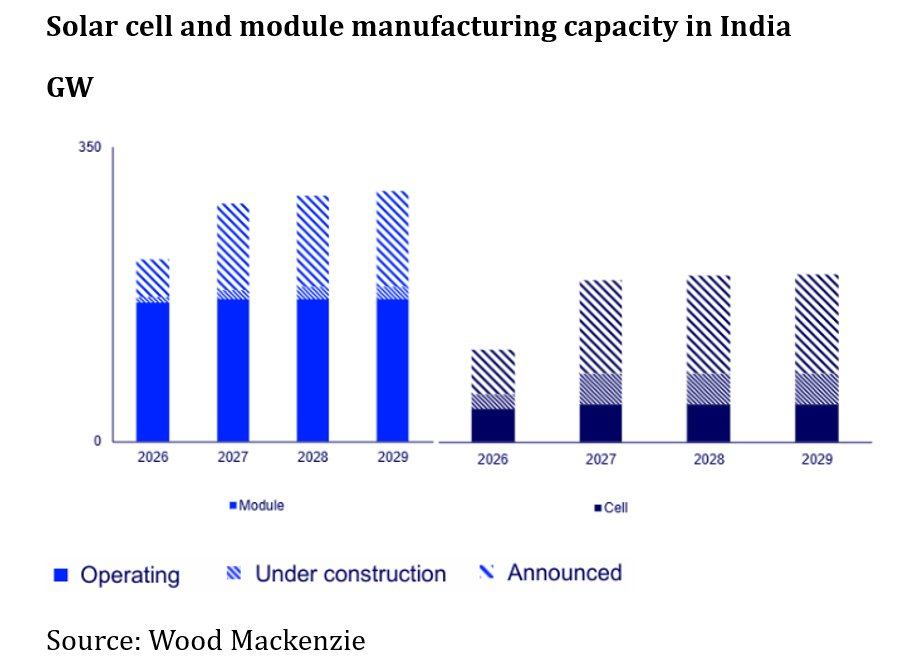
According to Wood Mackenzie data, delays in the 14 GW of new cell manufacturing capacity currently under construction could deepen import dependence and push prices beyond current expectations. An additional 130 GW of cell capacity is expected to come online by 2029, requiring a 49% compound annual growth rate from the 88 GW baseline once all capacity is built out in 2026.
Even as new cell capacity comes online, Wood Mackenzie expects underutilization to keep supply below demand in 2027. Cell production is projected to reach 29 GW next year, still 21 GW short of the 50 GW average annual module demand. As a result, system prices are expected to decline only 3% from Q4 2026 to Q4 2027.
Mathew Thomas, Research Analyst at Wood Mackenzie, stated that prices are expected to stabilize by 2029 as more cell capacity comes online, but this transition requires policy consistency and timely execution by manufacturers. The rollout of ALMM-II may mirror the multiple exemption patterns seen with ALMM-I, but the impact should be more manageable given that suppliers, developers, and policymakers are better prepared. MNRE plans to implement ALMM-III in June 2028, extending the mandate to solar wafers, indicating that India's domestic content requirements will continue to rise.
Related Products

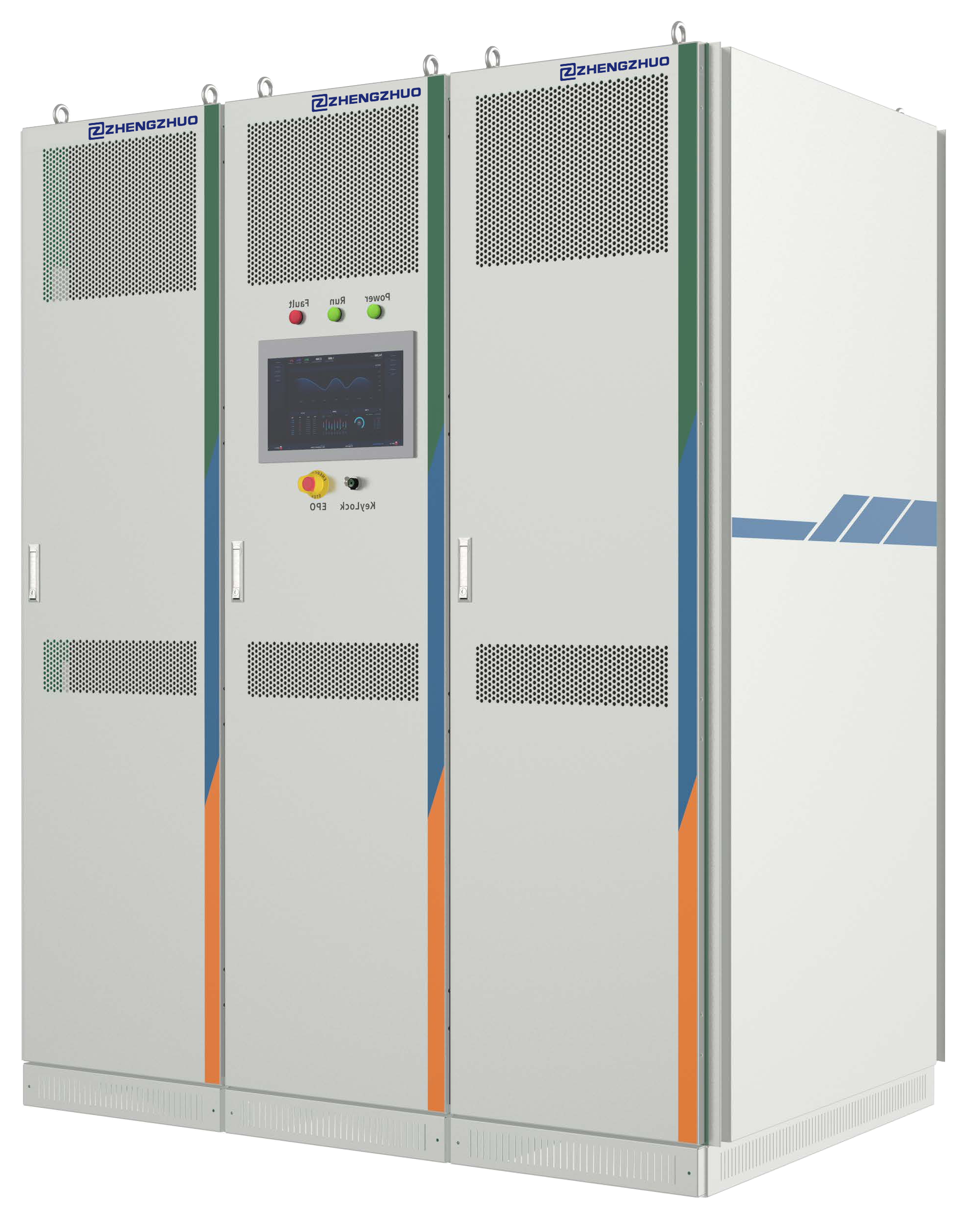
IGBT Hydrogen Production Power Supply - High Power Air Cooling
Beijing Zhengzhuo Engineering Technology Co., Ltd.
40.5kV-1100kV Gas Insulated Metal-Enclosed Switchgear (GIS)
Henan Pinggao Electric Co., Ltd.

Hydrogen production and hydrogenation charging refueling gas integrated energy station
Shenzhen Kohodo Hydrogen Energy Co., Ltd.
Manufacturer Direct Sales Tesla New Energy Electric Vehicle Universal DC 180kW Dual-gun Charging Pile Commercial Fast Charger
Anhui Haidira Electric Technology Co., Ltd.