RoRo ships not enough? Containers to the rescue! China's auto exports get a "two-lane highway"
en.Wedoany.com Reported - Since the beginning of this year, China's passenger vehicle export scale has witnessed explosive growth. In stark contrast to the continuously surging demand for finished vehicle exports, the global supply of professional car carrier (RoRo) shipping capacity is severely insufficient. RoRo charter rates, second-hand vessel prices, and newbuilding costs have all surged in tandem, with spot capacity becoming extremely scarce. A large number of automakers have been forced to divert cargo to container ships for export transportation. Containerized transport of finished vehicles is no longer a short-term emergency measure but has ushered in sustained structural dividends, while the global shipping market has simultaneously seen a wave of RoRo newbuilding orders, with Chinese shipyards becoming the core beneficiaries of this round of shipbuilding contracts.
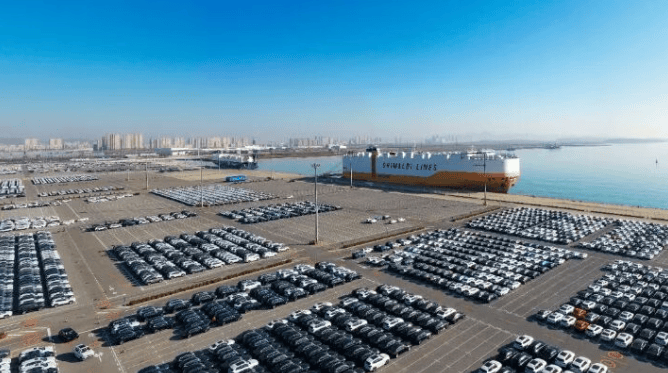
Passenger vehicle export volume continues to rise
RoRo capacity shortage highlights structural weakness
Since 2026, China's passenger vehicle export scale has continued to grow. According to data from the China Association of Automobile Manufacturers, passenger vehicle exports reached 4.432 million units in the first six months, a year-on-year increase of 71.7%; in June, passenger vehicle exports grew rapidly, reaching 905,000 units, up 11.7% month-on-month and 80.2% year-on-year. Within the overall finished vehicle export picture, new energy vehicles have become the core driver of incremental growth. In the first half of the year, new energy vehicle exports reached 2.355 million units, a year-on-year increase of 1.2 times; in June, new energy vehicles maintained steady growth, with sales accounting for 58.5% of total new vehicle sales; the share of domestic sales of new energy vehicles increased month by month, while exports grew by more than 1.5 times year-on-year.
However, global supply of professional car carrier capacity is struggling to meet robust export demand. According to data from VesselsValue, affected by the RoRo capacity shortage, the one-year time charter index for 6,500 CEU RoRo vessels has risen approximately 45% since the beginning of this year. Industry insiders analyze that, based on export data, the current capacity crunch is a structural long-term contradiction rather than short-term cyclical market fluctuations. The industry's spot capacity crunch has already escalated to the point of constraining automakers' contract fulfillment. Short-term time charters in the market have essentially been fully booked, and one-year long-term charter rates continue to climb. Domestic finished vehicle manufacturers have been forced to adjust transportation plans, diverting some export vehicles to container ships to ensure overseas orders are delivered on schedule. A senior analyst at shipping consultancy Dynamar pointed out that before the COVID-19 pandemic, RoRo operators had already proactively reduced fleet sizes and optimized capacity structures, leaving the industry's overall capacity in a reasonably configured state. This also means that when automotive export demand surges, there is no idle surplus RoRo capacity in the market to absorb new cargo flows, so freight rates naturally rise rapidly.
Multiple market transaction data points directly confirm the rising asset value of RoRo vessels. In the newbuilding market, the 7,060 CEU "Rotorua Lake," owned by Eastern Pacific Shipping, was completed and delivered at China Merchants Jinling Shipyard in April this year, with a charter agreement finalized in May. The charterer is SAIC Anji Logistics, with a daily charter rate as high as US$90,000, a 70% premium over the one-year time charter benchmark for 6,500 CEU vessels. In the second-hand market, two older 6,500 CEU RoRo vessels were both signed by COSCO Shipping for 34-month long-term charters at a daily rate of US$40,000.
Regarding future capacity supply and freight rate trends, VesselsValue analysts have given a clear assessment: the current RoRo capacity gap in China is an objective reality that cannot match the continuously expanding automotive export demand. This supply-demand dynamic will continue to support RoRo charter rates and vessel asset prices remaining at elevated levels over the long term. Currently, approximately 1 million Chinese vehicles have been diverted to container ships for export due to insufficient RoRo capacity. Over the next two years, after a large number of newly built RoRo vessels are delivered in batches, finished vehicle transport demand will only then return to professional RoRo vessels on a large scale, which will stabilize the operating revenues of RoRo operators and shipowners. The Dynamar senior analyst also believes the RoRo supply-demand imbalance cycle will last longer.
Finished vehicle export demand continues to expand
Unlocking incremental growth space for container transport
With long-term insufficient RoRo capacity supply and soaring space prices, the overflow of finished vehicle transport demand has fully flowed into the container shipping track. Containerized transport of finished vehicles has transformed from a temporary emergency measure into a normalized trade model, and the industry is ushering in a rare structural growth window.
Dynamar estimates that in 2026, a record 2 million vehicles will be transported globally by vessels other than RoRo ships, with the vast majority of this incremental volume handled by container ships, as China's finished vehicle exports continue to exceed RoRo capacity limits. China's total light vehicle exports in 2026 are expected to reach 10 million units, but the overall capacity of the global RoRo fleet will only increase by 7.6% year-on-year. New RoRo capacity will also be delivered gradually throughout the year, making it impossible to fill the huge capacity gap in the short term. The natural mismatch between cargo demand and professional RoRo vessel supply cannot be quickly reconciled, forcing Chinese automotive exporters to continuously increase their use of container liner services, relying on stable sailing schedules and extensive global coverage of container routes to complete finished vehicle export transportation.
Facing the RoRo capacity bottleneck, China's container shipping market is making every effort to absorb the overflow transport demand. COSCO Shipping Holdings continues to deepen its full-chain automotive transport services with its integrated "container shipping + ports + related logistics" capabilities, recently successfully opening a new corridor for parallel vehicle exports to Canada and completing two full supply chain business operations. COSCO Shipping Holdings' subsidiary Hainan COSCO Container Lines has continued to expand its import vehicle devanning business, having devanned over 2,000 units cumulatively this year, providing customers with customized "end-to-end" solutions from overseas shipment to domestic port arrival. COSCO Shipping Specialized Carriers, through its independently developed "foldable frame for finished vehicles," has converted pulp carriers into vehicle transport vessels, achieving two-way cargo matching with vehicles transported on outbound voyages and pulp on return voyages.
Beyond the large central state-owned shipping platforms, practical containerized finished vehicle transport projects continue to be implemented at multiple coastal ports across China. In January 2026, a container ship carrying 300 new energy vehicles produced in Wuhan departed from Xiamen Ocean Gate Terminal bound for Poland, achieving "one container to the end" for cross-regional rail-sea intermodal transport of new energy vehicles, with no need for secondary unpacking and reloading after cargo was loaded into containers at inland factories. In the same month, 36 containers loaded with 108 new energy vehicles produced in Chongqing were shipped from Guangzhou Nansha Port to the Middle East, leveraging a cross-regional maritime collaborative supervision mechanism to streamline customs clearance procedures and ensure the normalized operation of containerized new energy vehicle transport. Multiple automakers have simultaneously adopted diversified logistics strategies to hedge against delivery pressure caused by tight RoRo space. SAIC Anji Logistics, on the one hand, has secured long-term capacity by chartering ocean-going RoRo vessels at premium rates, and on the other hand, continues to expand containerized finished vehicle export channels. Leapmotor, in July 2026, began batch-shipping vehicles to Brazil using flat racks combined with container ships, leveraging a solution of loading three finished vehicles per flat rack to alleviate the shortage of RoRo space on South American ocean routes. The Hefei Municipal Transportation Bureau has promoted the efficient operation of five RoRo vessels, ensuring the normal operation of direct RoRo routes from Hefei to Shanghai and Taicang, while also optimizing container route layouts to achieve five weekly sailings from Hefei to Shanghai Yangshan Port and daily sailings to Waigaoqiao, building efficient export channels for new energy vehicle companies such as Volkswagen, BYD, and JAC.
Domestic shipyards dominate RoRo orders
Supply-demand mismatch unlikely to ease in the short term
Against the backdrop of sustained global RoRo capacity tightness and the large-scale diversion of China's automotive exports to container shipping, the domestic market is forming a multi-layered capacity response strategy. On the one hand, efforts are being accelerated to build proprietary RoRo fleets and lock in long-term capacity contracts; on the other hand, container loading technologies are being continuously optimized, and multi-purpose vessels such as pulp carriers are being expanded as supplementary capacity. At the same time, ports are improving supporting infrastructure such as dedicated RoRo berths and finished vehicle warehousing to unblock logistics bottlenecks in automotive exports. At the policy level, shipping companies are also being encouraged to flexibly employ diversified transport modes to ensure export stability and mitigate supply chain risks arising from over-reliance on professional RoRo vessels.
A group of companies deeply tied to China's automotive export cargo sources is accelerating RoRo newbuilding orders, with the main players broadly falling into three categories: automakers' in-house logistics platforms, domestic RoRo shipping companies, and international liner groups entering the sector.
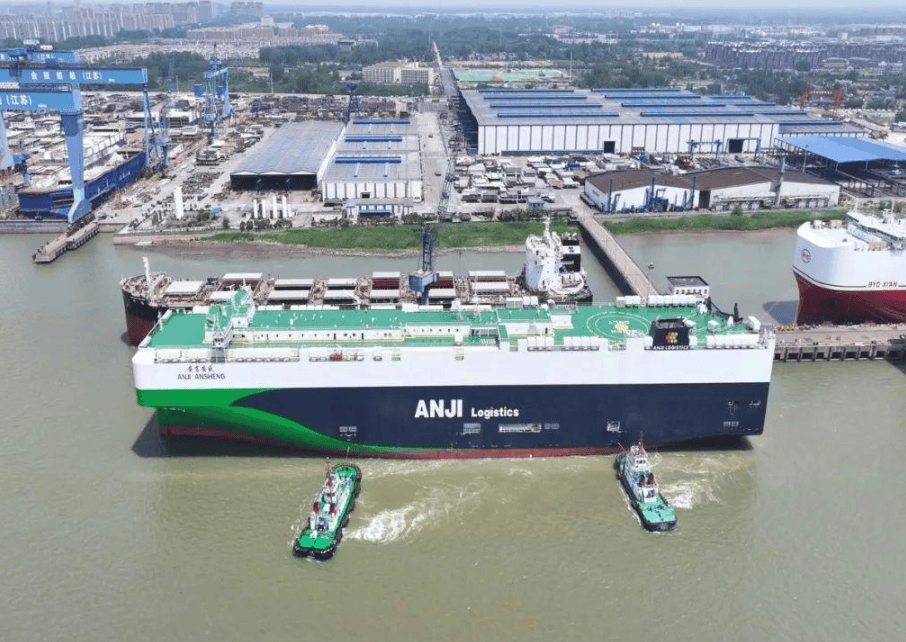
SAIC Anji Logistics continues to expand its proprietary fleet. In 2023, it placed orders for 4 and 3 methanol-ready RoRo vessels of 8,900 CEU at China Merchants Jinling Shipyard and CSSC's Jiangnan Shipyard, respectively, to lock in capacity on core routes to Europe, South America, and Southeast Asia. BYD has also actively advanced the construction of its dedicated RoRo fleet, ordering 2 vessels of 7,000 CEU at Guangzhou Shipyard International and 4 vessels of 9,200 CEU at China Merchants Jinling Shipyard in 2023, with all deliveries completed within 2025. BYD hopes to secure export space for its own new energy vehicles through these self-built vessels.
China Merchants RoRo and COSCO Shipping Specialized Carriers continue to expand RoRo capacity while signing long-term capacity cooperation agreements with leading automakers. In June 2026, China Merchants RoRo signed a strategic cooperation agreement on international car carrier capacity with Anji International Logistics (Shanghai) Co., Ltd., a subsidiary of SAIC Anji Logistics, focusing on core international automotive RoRo business and deepening capacity-sharing cooperation. As a global leader in specialized vessels, COSCO Shipping Specialized Carriers, through its subsidiary COSCO Shipping Car Carrier, is building a foreign-trade RoRo fleet of leading scale in China and continuously expanding professional RoRo capacity, with the fleet expected to grow from 25 to 30 vessels in 2026. Du Xiaotian, Deputy General Manager of COSCO Shipping Car Carrier, stated that the company is proactively serving the automotive export needs of the Guangdong-Hong Kong-Macao Greater Bay Area, using Xiaomo Port as a new fulcrum. Phase I of Xiaomo Port already has an annual vehicle transport capacity of 300,000 units, and Phase II officially commenced construction in January 2025, with annual capacity expected to exceed 1 million vehicles after commissioning in 2028, primarily paving an export "fast lane" for automakers such as BYD.
MSC's Global Car Carriers (GCC), as a representative of container liner companies entering the sector, signed contracts in July 2026 with three Chinese shipyards for 12 LNG dual-fuel RoRo vessels. These newbuildings will completely reshape GCC's fleet structure. The company currently operates 20 vessels in service, and with the addition of these 12 newbuildings pending delivery, its total fleet—operating plus on order—will reach 32 vessels. Upon completion of all deliveries, Panamax and larger RoRo vessels will become the mainstay of its fleet. In addition, international RoRo operators such as Eastern Pacific Shipping and Switzerland's Sallaum Lines have also placed newbuilding orders at Chinese shipyards, targeting China's continuously growing export cargo volumes.
This wave of RoRo orders has significantly benefited Chinese shipyards with mature construction capabilities, with Chinese shipbuilders capturing the vast majority of global new RoRo orders over the past two years. According to data from Clarksons, as of mid-July 2026, of the 37 new RoRo vessels on order globally, 35 were placed with Chinese shipyards, accounting for nearly 95% of the market share.
It is worth noting that this year, Chinese automakers have barely placed any new ship orders at any shipyard. Industry insiders analyze that the problem of empty return voyages caused by one-way transportation may be a major factor constraining automakers from expanding their fleets. Under the current trade pattern, a large number of vessels depart from China fully loaded with finished vehicles bound for Europe, Latin America, the Middle East, and other markets, but lack comparable volumes of automotive import cargo on return voyages. Most RoRo vessels are forced to return empty, directly depressing annual vessel earnings. Compared with container ships, which can carry various industrial goods and raw materials in both directions to form round-trip cargo flows, the inherent imbalance of RoRo route cargo flows is a prominent shortcoming.
Even with current charter rates at historically relatively high levels, many prudent small and medium-sized shipowners remain concerned that, with a large number of new vessels being delivered in concentrated batches between 2026 and 2028, improved capacity supply combined with one-way transport cost pressures will cause charter rates to fall rapidly and significantly extend investment payback periods. They are therefore exercising restraint in newbuilding orders and are unwilling to blindly follow the trend of large-scale fleet expansion.
Meanwhile, container routes offer broader global coverage and denser sailing frequencies, making them suitable for automakers with small-to-medium batch orders or those newly exploring overseas markets. Combined with China's continuous optimization of finished vehicle container loading solutions and the growing maturity of supporting lashing equipment, transport safety continues to improve. Under the combined effect of multiple factors, containerized transport of vehicles will not remain merely a phased emergency measure but will coexist with RoRo transport over the long term, forming a complementary pattern and becoming a long-standing new normal in China's automotive export logistics system.
The explosive growth of China's automotive exports in 2026 is reshaping the global finished vehicle maritime logistics landscape. In the short term, container ships, converted specialized vessels, and river-sea intermodal transport supported by coordinated ports together form a diversified supplementary capacity channel, absorbing overflow finished vehicle export volumes on the order of millions of vehicles annually. From a medium-to-long-term perspective, a global RoRo shipbuilding boom is underway, with Chinese shipyards securing the vast majority of newbuilding orders, and automakers and shipping companies continuing to expand their proprietary RoRo fleets. However, constrained by multiple factors including construction cycles, one-way cargo flows, and shipowners' investment willingness, the RoRo capacity gap will be difficult to close quickly. The finished vehicle maritime transport market has officially entered a new phase of "dual-track parallel operation, with RoRo as the mainstay and container shipping as a long-term complement." This logistics pattern not only supports Chinese independent brands in continuously capturing global automotive market share but also drives the coordinated upgrading of China's shipping, shipbuilding, and port industry chains, helping China's automotive industry and maritime transport industry achieve high-quality internationalization in tandem.
Related Products


Industrial and Commercial Point-Type Gas Detector
Jinan Benan Technology Development Co., Ltd.
"Shunyi 1600" Deep-submerging Bottom-sitting Multi-functional Wind Power Engineering Vessel
Zhengli Offshore Engineering Co., Ltd.
ERW Welded Pipe (Black Pipe and Hot-dip Galvanized Steel Pipe)
Handan Zhengda Steel Pipe Co., Ltd.
![IVECO Cash-in-Transit [DMT5048XYCL3-AM] - Chongqing Dima Industry Co., Ltd](https://img.wedoany.com/2026/0911/20260911030157582.png)
NTE150 Electric Drive Mining Dump Truck
Inner Mongolia North Heavy Industries Group Co., Ltd.

Wheel and Track Technology Business
Beijing Research & Design Institute of Rubber Industry Co., Ltd.