2026 Fastmarkets launches low-carbon copper premium at $315-411/t
en.Wedoany.com Reported - Members of the International Copper Association (ICA) have committed to achieving net-zero Scope 1 (direct emissions from sources owned or controlled by the company) and Scope 2 (indirect emissions from purchased electricity, steam, heating, and cooling) emissions by 2050, while also working to reduce Scope 3 (indirect emissions occurring in the company's value chain) emissions. Fastmarkets forecasts that the global refined copper market will see a deficit of approximately 150,000 tonnes in 2026, expanding to over 300,000 tonnes by 2027; refined copper consumption is expected to rise from 28.2 million tonnes in 2026 to approximately 30.9 million tonnes by 2028.
Copper demand is expected to increase, driven by investment growth in power grids, renewable energy, electric vehicles, and data centers, as well as efforts by governments and companies to reduce emissions in industrial supply chains. Against this backdrop, producers—particularly those in Europe—are increasingly publishing product carbon footprints, obtaining independent verification, and developing low-carbon copper products. Consumers are also paying greater attention to emissions associated with the materials they purchase. However, there is currently no universally accepted definition of low-carbon copper, raising questions about how emissions should be measured, compared, and reflected in pricing.
Different producers may adopt varying calculation methods, system boundaries, and methodologies when reporting carbon footprints, meaning that two products marketed as low-carbon may reflect different production processes, accounting frameworks, and sustainability credentials. Publicly disclosed product footprints range from below 1 tonne of CO2 equivalent per tonne of copper to approximately 1.5 tonnes of CO2 equivalent. Austria's Montanwerke Brixlegg reports approximately 0.63 tonnes of CO2 equivalent per tonne of copper, Aurubis reports approximately 1.289 tonnes, and Boliden approximately 1.5 tonnes, based on life-cycle emissions including Scopes 1, 2, and 3.
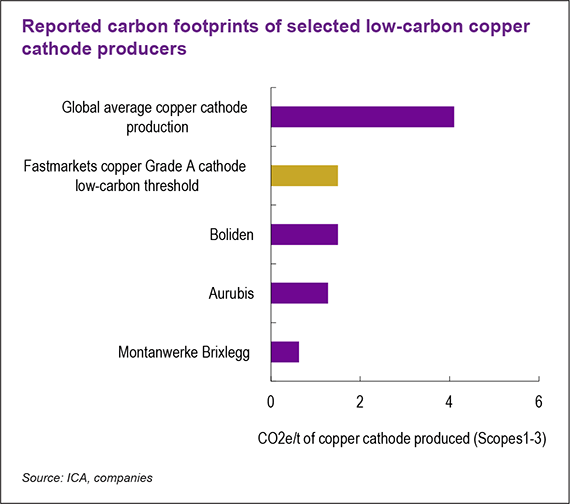
The differences are influenced by factors such as recycled content, access to renewable electricity, production technology, and emission allocation methods. Aurubis and Boliden use a mass balance approach for their low-carbon copper products, while Montanwerke Brixlegg produces cathodes through a scrap-based secondary process without using mass balance. Market participants indicate that these differences mean emissions data are not always directly comparable. According to SMS Group, secondary copper production can reduce emissions by approximately 2.1 tonnes of CO2 equivalent per tonne of copper compared with primary production. Life-cycle assessments, environmental product declarations, and The Copper Mark certification are becoming tools for enhancing transparency and comparability.
Further emissions reductions are not straightforward. Boliden says challenges include the availability of electric mining equipment and the high cost of alternative smelting technologies, highlighting the investment required to decarbonize the copper value chain.
A growing number of producers are offering products with certified emissions data, while traders are marketing low-carbon supply chains and sustainability-focused sourcing options. One example occurred in February 2026, when Trafigura completed what it described as the first sale of low-carbon copper anode, shipping material from the Kamoa-Kakula operation in the Democratic Republic of Congo (DRC) via the Lobito Atlantic Railway corridor to European refiner Aurubis.
According to Aurubis, the strongest interest currently comes from the automotive, energy, and data center sectors. "Despite economic and geopolitical challenges, decarbonization remains a strategically important topic for many of our customers," an Aurubis spokesperson told Fastmarkets. "They are looking for materials that can reduce emissions within their own value chains and help them achieve their sustainability goals." Aurubis says its cathodes generate emissions that are more than 40% below the global average for copper cathode production and contain approximately 45% recycled material. Boliden also says customer interest continues to grow despite broader economic and geopolitical uncertainty.
NKT, one of Europe's largest cable manufacturers, shares this view. "While we see macroeconomic pressures and geopolitical developments shifting priorities in certain parts of the market, we continue to see steady progress across the value chain in developing and commercializing low-carbon solutions," Jimmy Hermansson, Senior Vice President of Group Procurement at NKT, told Fastmarkets. He added that investment decisions are facing greater scrutiny and are increasingly dependent on stronger downstream demand signals to support broader adoption.
Another recurring theme is the distinction between recycled content and carbon intensity. While recycled content is often easier to communicate and quantify, some producers argue that carbon footprint should ultimately become the more important metric for measuring sustainability. "Across the market, particularly in Europe, we continue to see more low-carbon and high-recycled-content solutions being developed and brought to customers," Hermansson said. "Demand for these products remains, but customers are increasingly focused on cost and competitiveness."
The emergence of premiums for low-carbon products indicates that emissions reductions carry commercial value, although reaching agreement on exactly why buyers pay remains difficult. Some transactions appear to reward lower emissions intensity, while others may reflect recycled content, supply chain transparency, certification, or independently verified environmental data. As a result, premiums can vary significantly depending on customer requirements and contract structures. Market participants told Fastmarkets that while inquiries have increased in recent years, purchasing activity has not always kept pace, and willingness to pay is inconsistent.
Fastmarkets launched its copper grade A cathode low-carbon composite premium (FCA Europe) on August 18, 2026, assessing cathodes with a maximum carbon footprint of 1.5 tonnes of CO2 equivalent per tonne of copper across Scopes 1, 2, and 3, aiming to bring transparency to an opaque market. The assessment was set at $315-411 per tonne on Tuesday, August 18, combining the cathode premium and the low-carbon premium for material offered by European producers. Reported quotes ranged from $315-411 (€355) per tonne for both spot and long-term contracts. On the same day, Fastmarkets' copper cathode premium (delivered Germany) was assessed at $270-300 per tonne, with a spread of $45-111 per tonne between the two assessments, including freight.
The most important question facing the market may not be how large current demand is, but rather how procurement requirements will evolve over the next decade. Many industrial consumers have committed to supply chain decarbonization targets. BMW told Fastmarkets that copper is included in its material-related decarbonization requirements and that it continues to monitor developments in low-carbon copper production. Beyond automotive applications, some of the strongest demand signals come from power infrastructure. NKT says grid operators, particularly in Northern and Western Europe, are among the most active adopters of low-carbon materials, driven by growing sustainability requirements and public procurement policies. "Public procurement requirements and sustainability criteria are playing an important role in accelerating demand for low-carbon and circular materials," Hermansson said. Renewable energy projects, data centers, and digital infrastructure will also drive demand, with Aurubis highlighting growing interest from energy and data center customers.
Although the low-carbon copper market remains small compared with the broader cathode market, producers are developing verification and carbon accounting frameworks, while buyers are expanding sustainability requirements. However, questions surrounding definitions, verification, liquidity, and willingness to pay remain. The pace at which buyers adopt low-carbon copper, and the extent to which they are willing to pay for it, will likely determine how the market develops.
Related Products


Industrial and Commercial Point-Type Gas Detector
Jinan Benan Technology Development Co., Ltd.
New Environmentally Friendly Green Potassium Salt Collector
Chonfar Engineering and Technology Co., Ltd.
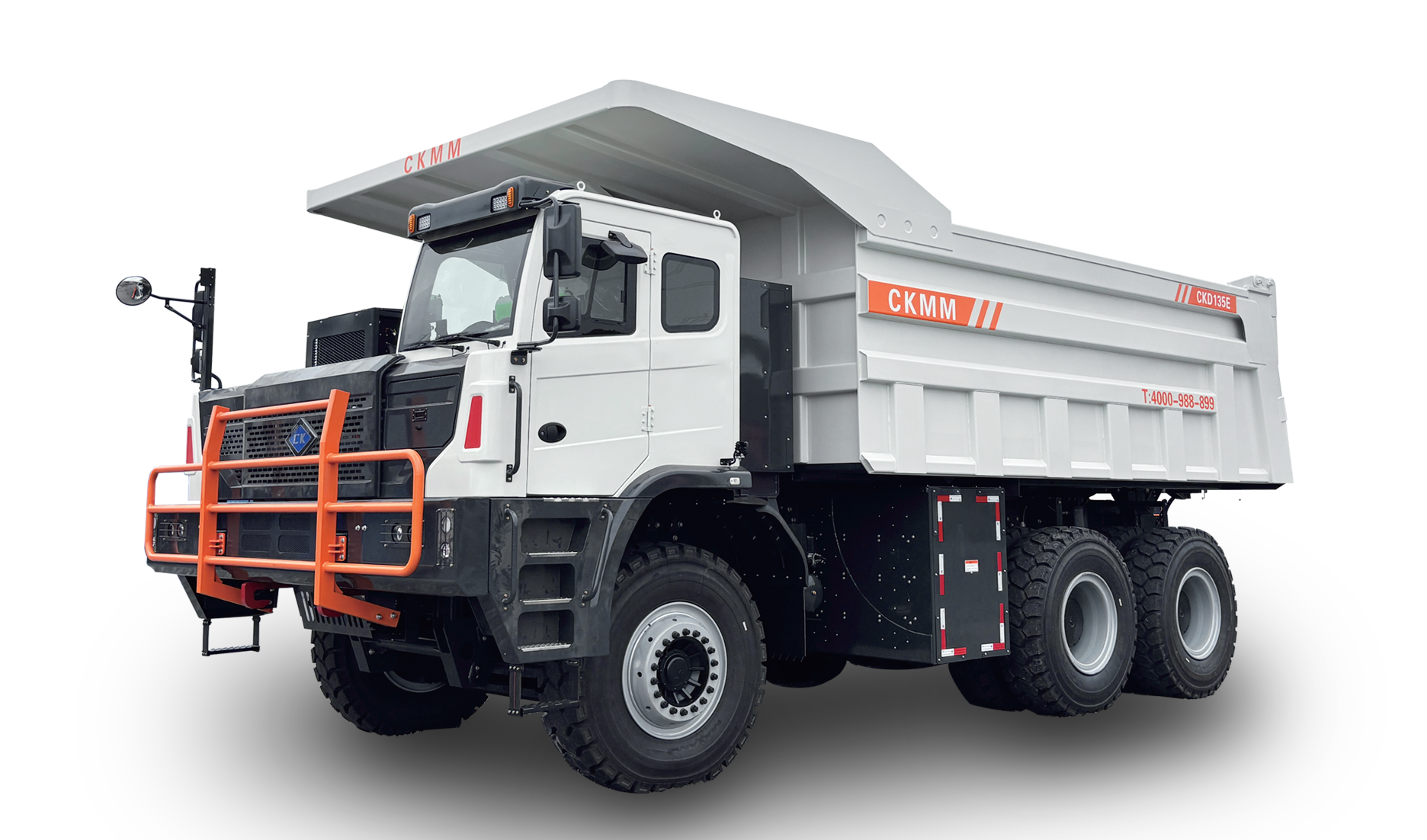
CKD135E Pure Electric Wide-body Dump Truck
Jiangsu Changkuang Engineering Machinery Co. Ltd.
High-temperature Equal Wall Thickness High-power Screw Drilling Tool
Orient Energy & Technologies Co., Ltd.
Integrated Excavation and Anchoring Machine (EJM Series)
China Railway Construction Heavy Industry Corporation Limited
Linyi Steel Investment Special Steel 2.7 Million Tons per Year High-quality Special Steel Project
Capital Engineering & Research Incorporation Limited