en.Wedoany.com Reported - On August 13, the Australian federal government and the New South Wales state government announced a total of A$2.5 billion (approximately US$1.76 billion) in ten-year support for the Tomago Aluminium smelter, helping Australia's largest aluminium smelter continue operations after its existing electricity supply contract expires at the end of 2028.
The government support package will commence in 2029, with funding shared between the Australian federal government and the New South Wales state government. Under the agreement, Tomago Aluminium will enter into a ten-year power purchase agreement covering the period through 2038, and will source 100% renewable electricity from 2033. The company's existing electricity contract expires on December 31, 2028.
Tomago Aluminium will also invest A$1.1 billion in the smelter between now and 2038, primarily for capital upgrades and major maintenance, including A$100 million for decarbonisation projects. The smelter will also continue participating in demand response for the New South Wales grid, reducing electricity load during periods of power system stress. Australian Industry Minister Tim Ayres said the associated electricity arrangements will drive approximately 3 gigawatts of new generation supply.
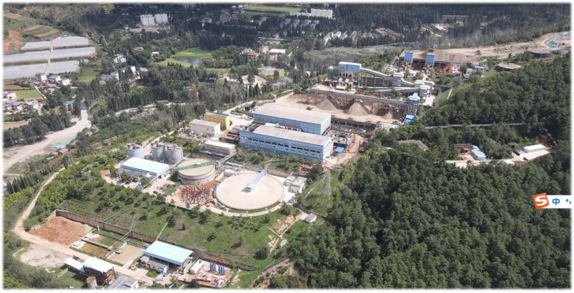
The Tomago smelter is located approximately 13 kilometres west of Newcastle in New South Wales, with a maximum annual aluminium output of around 590,000 tonnes, accounting for nearly 40% of Australia's annual primary aluminium production. The smelter requires approximately 950 megawatts of continuous electricity, representing about 12% of New South Wales' electricity demand, making it the state's largest single electricity-consuming facility.
Tomago Aluminium is owned 51.55% by Rio Tinto, 36.05% by Gove Aluminium Finance, and 12.4% by Norsk Hydro. The smelter employs approximately 1,000 staff and 200 full-time equivalent contractors, and supports around 5,000 indirect jobs in the Hunter region supply chain.
In October 2025, Tomago Aluminium stated it was considering ceasing operations due to the failure to secure an affordable electricity solution beyond 2028. In December of the same year, the Australian federal government and the New South Wales state government proposed a long-term fixed-price electricity support pathway. This agreement further confirms government funding, corporate investment, power purchase duration, and renewable energy supply arrangements.
According to data disclosed by Rio Tinto, once the Tomago smelter fully transitions to renewable energy from 2033, it will reduce approximately 7.1 million tonnes of Scope 1 and Scope 2 operational carbon emissions annually. The new ten-year power purchase arrangement will take effect after the existing contract expires at the end of 2028.
Project Extension:
Australia Tomago Aluminium A$1.1 Billion Long-Term Upgrade Project Tracker
I. Project Identity
Project Name: Tomago Aluminium Long-Term Operations, Equipment Upgrade and Decarbonisation Project
Country: Australia
State/Region: New South Wales, Hunter Region
City: Tomago, near Newcastle
Industry: Primary aluminium smelting, industrial energy efficiency, energy management
Project Owner: Tomago Aluminium
Major Shareholders:
Rio Tinto: 51.55%
Gove Aluminium Finance: 36.05%
Norsk Hydro: 12.4%
Project Nature: Life extension of existing aluminium smelter, critical equipment upgrades, major maintenance, demand response and decarbonisation retrofit
Information Date: As of August 13, 2026
Lead Rating: Grade A follow-up procurement lead to be tracked
Comprehensive Score: 93/100
II. Core Project Indicators
| Indicator | Details |
|---|---|
| Corporate investment | Approximately A$1.1 billion |
| Equipment and major maintenance | Approximately A$1 billion |
| Demand response and decarbonisation | Approximately A$100 million |
| Government support | Approximately A$2.5 billion ten-year support package, equivalent to approximately US$1.76 billion |
| Primary aluminium capacity | Approximately 590,000 tonnes/year |
| Electricity load | Approximately 950MW |
| Annual electricity consumption | Approximately 8.5TWh |
| Electrolytic cell scale | 3 potlines, approximately 840 electrolytic cells |
| New power purchase agreement | 2029–2038 |
| Key implementation window | 2026–2028 |
III. Current Project Stage
The Australian federal government, the New South Wales state government and Tomago Aluminium have reached a support arrangement for the smelter's long-term operations. Tomago plans to invest approximately A$1.1 billion, of which:
Approximately A$1 billion will be used for critical plant and equipment upgrades, major maintenance, asset life extension and production efficiency improvements;
Approximately A$100 million will be used for demand response capabilities and decarbonisation projects;
The new ten-year power purchase arrangement will take effect after the existing electricity contract expires at the end of 2028.
What has been disclosed to date is the long-term investment and energy security framework; specific engineering packages, equipment lists, tender schedules, EPC contractors or awarded suppliers have not yet been disclosed.
Nature Assessment: This is not an equipment procurement announcement, but it constitutes a follow-up procurement lead with relatively high certainty.
IV. Key Business Opportunities for Chinese Suppliers
1. Critical Equipment Upgrades for the Aluminium Smelter
Tomago operates 3 potlines with approximately 840 electrolytic cells. Long-term operation and asset life extension may generate the following demand:
(1) Electrolytic cell shells and structural components
(2) Busbars and flexible connection components
(3) Cathodes, anodes and conductive materials
(4) Electrolytic cell insulation materials
(5) Anode changing equipment
(6) Crust breaking and feeding equipment for electrolytic cells
(7) Multi-functional overhead cranes and specialised lifting tools
(8) Molten aluminium transfer equipment
(9) Online monitoring systems for electrolytic cells
(10) Cell voltage, temperature and current monitoring devices
(11) Potline control and stable operation systems
Opportunity Characteristics: Entry difficulty for individual equipment items is relatively high; suitable for suppliers with large aluminium smelter track records, compliance with Australian standards, and the ability to provide local after-sales service.
2. Rectification, Electrical and High-Voltage Systems
The smelter has a continuous load of approximately 950MW, making the power system one of the key focus areas for subsequent upgrades.
Potential equipment includes:
(1) High-power rectifier transformers
(2) Rectifier units and spare parts
(3) Power transformers up to 330kV
(4) GIS/AIS high-voltage switchgear
(5) Relay protection and automation systems
(6) Reactive power compensation devices
(7) Harmonic treatment and filtering equipment
(8) DC power supply systems
(9) Busbar temperature and condition monitoring
(10) High-voltage cables and accessories
(11) Power quality monitoring equipment
(12) Intelligent substation inspection equipment
Chinese suppliers' competitive advantages are mainly concentrated in transformers, high-voltage switchgear, reactive power compensation, filtering devices, cables and digital monitoring equipment.
3. Major Maintenance and Asset Life Extension
The approximately A$1 billion investment includes major maintenance and asset life extension, which may generate MRO and spare parts demand spanning several years:
(1) Industrial pumps, valves and actuators
(2) Air compressors and compressed air systems
(3) Industrial fans and energy-efficient motors
(4) Gearboxes, couplings and bearings
(5) Hydraulic and pneumatic equipment
(6) Industrial seals
(7) Refractory materials
(8) Furnace linings and insulation materials
(9) Industrial piping and pipe fittings
(10) Heat exchangers
(11) Lifting and material handling equipment
(12) Vibration, temperature, oil and wear monitoring systems
These products are more suitable for Chinese medium-sized equipment companies to enter than core electrolysis equipment, but safety, quality, insurance and local service requirements must be met.
4. Demand Response and Energy Management
Tomago plans to invest approximately A$100 million to develop demand response and decarbonisation capabilities. Potential demand includes:
(1) Plant energy management system (EMS)
(2) SCADA system upgrades
(3) Fast load regulation systems
(4) Electrolysis load coordination and control systems
(5) Smart meters and sub-metering systems
(6) Electricity demand forecasting software
(7) Energy optimisation and dispatch platforms
(8) Edge controllers
(9) Communication interfaces with grid dispatch centres
(10) Industrial cybersecurity equipment
(11) Electricity trading and load response platforms
(12) Backup power and critical load protection systems
This is a direction worth close tracking for Chinese automation, energy digitalisation and power control companies.
5. Energy Storage and On-Site Integrated Energy
Tomago has previously expressed interest in battery energy storage, wind power, solar PV, pumped hydro, behind-the-meter power supply and demand response solutions. The site also has developable land and 330kV grid connection conditions.
Potential equipment includes:
(1) Battery energy storage systems
(2) Energy storage battery containers
(3) PCS power conversion systems
(4) BMS and EMS
(5) Energy storage step-up transformers
(6) Energy storage fire protection systems
(7) Liquid cooling and thermal management systems
(8) PV modules
(9) String or central inverters
(10) PV mounting structures and tracking systems
(11) Wind turbine related equipment
(12) Collector lines and substation equipment
(13) Microgrid control systems
Note: Such equipment may not necessarily be procured directly by Tomago; it is more likely to be procured by Australian renewable energy developers, independent power producers, energy storage investors or EPC contractors.
6. Anode Baking and Industrial Furnace Energy Efficiency
The Tomago site has gas-fired anode baking furnaces, which may involve:
(1) Anode baking furnace combustion systems
(2) Energy-efficient burners
(3) Furnace temperature control systems
(4) Refractory materials and furnace linings
(5) Flue gas waste heat recovery equipment
(6) Combustion optimisation systems
(7) Industrial furnace fans
(8) Natural gas metering and control equipment
(9) Low-NOx combustion equipment
(10) Furnace condition monitoring systems
7. Environmental Protection and Emission Control
Potential retrofit directions include:
(1) Dry flue gas treatment systems
(2) Fluoride adsorption and recovery equipment
(3) Baghouse dust collectors
(4) High-temperature filter bags
(5) Continuous emission monitoring systems (CEMS)
(6) Online dust monitoring equipment
(7) Flue gas fans
(8) Solid waste and scrap processing equipment
(9) Industrial wastewater treatment systems
(10) Environmental data management platforms
8. Digitalisation, Intelligent Operations & Maintenance and Safety
Potential equipment and services include:
(1) DCS, PLC and industrial control systems
(2) Equipment condition monitoring platforms
(3) Predictive maintenance systems
(4) Machine vision inspection equipment
(5) Infrared thermal imaging systems
(6) Unmanned inspection robots
(7) Digital twin platforms
(8) Industrial wireless sensors
(9) Personnel positioning systems
(10) Gas, dust and high-temperature environment monitoring
(11) Smart safety helmets and personal protective equipment
V. Procurement Pathway Assessment
| Opportunity Type | Likely Procurement Entity | Entry Approach for Chinese Suppliers |
|---|---|---|
| On-site critical equipment upgrades | Tomago Aluminium | Apply as qualified supplier, partner with Australian local engineering service providers |
| Major maintenance and spare parts | Tomago and its maintenance contractors | Enter through approved contractors and maintenance service providers |
| Automation and demand response | Tomago, system integrators | Joint bidding with Australian automation integrators |
| Energy storage and renewable energy | Developers, IPPs, EPC | Become equipment supplier to developers or EPC contractors |
| High-voltage and grid connection works | Tomago, grid companies, EPC | Partner with Australian-licensed electrical contractors |
| Environmental and energy efficiency retrofits | Tomago, environmental EPC | Enter via equipment packages or specialised subcontracting |
| Digital operations & maintenance | Tomago, technology integrators | Provide pilots, software platforms or sensing equipment |
VI. Prioritised Development Targets by Tier
Tier 1: Project Owner
Tomago Aluminium
Procurement department
Engineering and projects department
Equipment maintenance department
Electrical and energy management department
Environment and decarbonisation department
Tier 2: Shareholders and Technical Systems
Rio Tinto
Norsk Hydro
Gove Aluminium Finance related management entities
Shareholders may influence technical standards, supplier qualification, equipment selection and group procurement policies.
Tier 3: On-Site Technical Demand Units
Potroom managers
Rectification and substation managers
Anode baking managers
Cast house managers
Maintenance and reliability management team
Energy and demand response team
Environmental, health and safety management team
Tier 4: Australian Local Contractors
Tomago's existing approved suppliers
Major maintenance contractors
Electrical engineering contractors
Automation system integrators
Environmental engineering companies
Lifting and mechanical service providers
Tier 5: Renewable Energy and Power Project Participants
Renewable energy developers
Independent power producers
Energy storage project investors
Transmission and distribution companies
Renewable energy EPC companies
Electricity trading and demand response service providers
Tier 6: Local Partners for Chinese Suppliers
Australian agents
Local after-sales service providers
Technical certification bodies
Installation and commissioning contractors
Spare parts warehousing service providers
VII. Market Entry Strategy for Chinese Suppliers
It is recommended to adopt an "equipment export + Australian local service" model rather than simply quoting directly from China.
Priority Actions:
Prepare English-language corporate qualifications, Australian project case studies and aluminium industry track records.
Clearly identify compliance with AS/NZS, IEC and mining and industrial safety standards.
Identify Australian local installation, commissioning and after-sales partners.
Enter the supply chain through Tomago's supplier registration and contractor management processes.
Prioritise contact with on-site technical demand departments or existing approved contractors.
For energy storage, renewable energy and grid connection equipment, focus on developing project developers and EPC contractors rather than only contacting Tomago.
Prepare spare parts inventory, fault response times and long-term maintenance plans.
For high-voltage, lifting, fire protection and pressure equipment, confirm Australian certification and licensing requirements in advance.
VIII. Key Supplier Qualification Considerations
Tomago's supplier evaluation may cover:
Environment, health and safety management
Corporate social responsibility
Personnel and technical resources
Production facilities and equipment capabilities
Quality management systems
Commercial terms
Communication and project management capabilities
Continuous improvement capabilities
Technical and R&D capabilities
Insurance and Australian local compliance
Procurement necessity justification from on-site business departments
Submitting only a general product catalogue is usually insufficient to enter the supplier system. More effective materials are English-language technical proposals addressing specific equipment issues, application case studies from similar aluminium smelters, and Australian local delivery plans.
IX. Project Timeline
September 2022 – June 2023: Tomago conducts market consultation for long-term electricity supply.
October 2025: Long-term operational and electricity cost risks for the smelter become more apparent.
December 2025: Government advances the formation of a long-term operational support pathway.
August 13, 2026: Government, Tomago and relevant parties announce the final support arrangement and investment framework.
2026–2028: Key period to track engineering package breakdowns, maintenance schedules, equipment enquiries, and entry of EPC and integrator firms.
December 31, 2028: Existing electricity contract expires.
2029: New long-term power purchase arrangement commences.
2033: Progress towards the 100% renewable electricity supply target.
2038: End of the ten-year new power purchase arrangement coverage period.
X. Key Signals to Monitor Next
When the following information emerges, the lead may enter the substantive procurement stage:
Tomago posts recruitment for capital project manager or engineering positions;
Changes in supplier registration categories;
Commencement of equipment upgrade feasibility studies or front-end engineering design;
Confirmation of major maintenance outage windows;
Disclosure of EPC, PMC or system integrator shortlists;
Enquiries for electrolysis, rectification, substation or cast house equipment;
Launch of energy storage and demand response pilot projects;
Submission of environmental retrofit permits or construction applications;
Renewable energy developers and PPA supply projects materialise;
Commencement of 330kV grid connection, transmission expansion or substation projects.