Fitzroy Minerals Plans 5,514m Diamond Drilling at Caballos Copper Porphyry Project, Chile, for September 2026
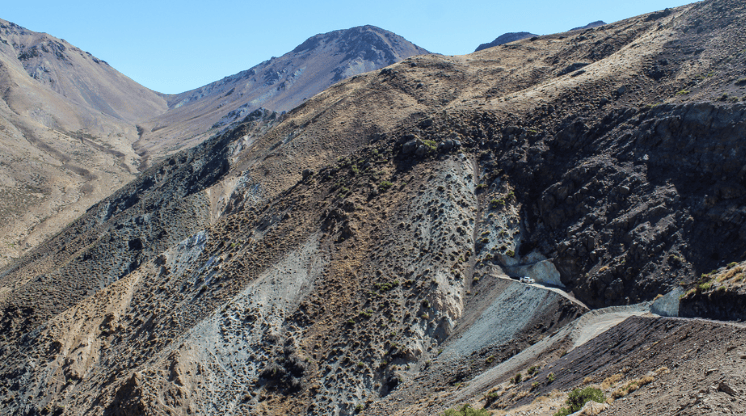
en.Wedoany.com Reported - Fitzroy Minerals (TSXV: FTZ, OTCQX: FTZFF, FSE: C3Y) holds an 18,000-hectare mineral tenure at the Caballos copper porphyry project in Chile's Valparaiso Region and has defined a diamond drilling program: five holes totaling 5,514 meters are planned to test anomalies identified by ground induced polarization surveys, with drilling scheduled to begin in September 2026. The project is located 70 km south of the Los Pelambres mine and 100 km north of the Los Bronces mine; the two neighboring operations host a combined approximately 80 million tonnes of contained copper, placing this early-stage exploration target within a producing mining belt rather than in a remote frontier area. Caballos is a copper-molybdenum-gold-rhenium target with sulfide mineralization observed from surface, and currently has no mineral resource estimate.
Ground geophysical surveys were completed by Southernrock Geophysics S.A. using pole-dipole induced polarization and magnetotelluric methods, acquiring deep ground IP data with chargeability and resistivity measurements, followed by 2D and 3D inversions. The pole-dipole component has an exploration depth of approximately 1,500 meters, while the magnetotelluric component has a nominal depth of 3,000 meters. The survey covered four lines totaling 18.4 line-kilometers, with all lines crossing the regional Pocuro Fault Zone (PFZ); phase tensor analysis indicates that the principal structural trends are roughly north-south or southwest-northeast, potentially extending to depths of several kilometers, with the north-south trend consistent with the fault zone. The aerial survey coverage extends well beyond the ground program, with lines positioned over conductive anomalies identified by a helicopter-borne survey conducted in early 2026; this ground campaign therefore more closely resembles a test of a candidate target list than a new target discovery—every anomaly now scheduled for drilling was selected from the list before the first IP electrode was laid out.
Both 2D and 3D inversion models confirmed five anomalies, labeled C1, C2-A, C2-B, C3, and C4. The drilling program covers four targets: the Chincolco Creek mineralization extension, C2-B, C3, and C4; C1 and C2-A, although confirmed in both inversion models, received no planned drill holes or meterage and have no further attribute descriptions beyond model confirmation—the clearest target prioritization signal in the program. The five holes totaling 5,514 meters are allocated as follows: 1,900 meters eastward into C2-B; 1,500 meters westward into C3, sharing a second, shorter hole with Chincolco Creek; 1,250 meters westward into C4; 514 meters eastward intersecting both C3 and Chincolco Creek; and 350 meters westward into Chincolco Creek. Previous drilling at Caballos encountered mineralized breccia containing porphyry clasts, and the company has integrated this geological information with both geophysical datasets to form a unified, updated geological interpretation. The allocation of meterage across the anomalies is Fitzroy's clearest statement to date of its target preferences and capital deployment priorities.
The longest hole in the program (1,900 meters) heads east into the C2-B anomaly, the only anomaly whose cross-section displays classic porphyry system geometry. On the northern line, the C2-B chargeability anomaly extends more than 3 kilometers (east-west) along the southern margin of a ring structure; a distinct horizontal break at approximately 2,000 meters elevation is interpreted as the base of the unmineralized, younger volcaniclastic Farellones Formation, below which two major chargeability anomalies bracket a zone of moderate chargeability. This arrangement is a common feature of porphyry copper deposits—in the classic porphyry model, the moderate chargeability zone between two pyritic shells is the primary locus of copper mineralization. The adjacent southern line shows broadly similar anomalies at greater depth, suggesting the main chargeability feature may plunge toward the south-southeast. Fitzroy Minerals President and CEO Merlin Marr-Johnson commented: "The largest IP anomaly, C2-B, is consistent with classic porphyry characteristics, consisting of a core enveloped by a strongly conductive and strongly chargeable (pyritic?) shell." Directing the program's only longest hole at this geometrically defined target indicates that the porphyry model itself, rather than already-drilled grades, is the primary basis for this decision.
C3 and C4 are shallower targets than C2-B, with correspondingly lower planned meterage of 1,500 meters and 1,250 meters respectively, compared to 1,900 meters for C2-B. C4 is a large, shallow anomaly approximately 1 km wide and 1 km deep on one of the two southern lines, and broader with slightly less vertical thickness on the other line, situated directly beneath the Farellones Formation contact; whether its moderate resistivity signature reflects vein density or silica/gypsum content cannot yet be confirmed. The anomaly lies near the intersection of the north-south Pocuro Fault Zone and a cross-cutting east-west structure hosting the Alicahue River. C3 is a chargeability anomaly rising obliquely toward surface, near the 2025 Chincolco Creek drilling location, which the company believes may be related to the fault zone and the sulfide mineralization encountered in previous drilling. The 2025 Chincolco Creek drilling returned a 200-meter intersection from 66 meters depth grading 0.46% copper, 591 ppm molybdenum, and 0.07 g/t gold, including 42 meters at 1.20% copper, 1,764 ppm molybdenum, and 0.23 g/t gold; the true thickness of the intersection is estimated at approximately 75% of the drilled length. Using assumed recoveries of 85% for copper, 90% for molybdenum, and 50% for gold, and three-year trailing average prices of $3.99/lb copper, $21.37/lb molybdenum, and $2,043/oz gold, the 200-meter intersection has a copper-equivalent grade of 0.81%. Metallurgical testing has not yet been completed at the project. As these intersections predate the current survey, they constitute background information. Mineralization was intersected from surface, and the C3 anomaly may extend this known mineralization along strike and at depth; the 350-meter hole requires relatively limited capital and represents a low-cost verification method, and the combination of two short extension holes with three deeper test holes gives the program coverage across outcomes with widely varying probabilities.
The most thoroughly confirmed mineralization at the Caballos project produces one of the weakest geophysical responses. The abundant sulfide mineralization encountered in the Chincolco Creek drilling was not accompanied by a strong conductive anomaly, possibly because the mineralization is disseminated and rich in quartz and gypsum veins; the area shows only a weak anomaly extending southward and at depth along the projected trend of the fault zone. The survey contractor described the project's IP response zones as "possibly" related to disseminated sulfide mineralization, without confirmatory language. Marr-Johnson likewise kept the interpretation at the probabilistic level: "In the geological context of Caballos, the probability that chargeability corresponds to sulfide mineralization is extremely high—the contractor, Southernrock Geophysics, shares this view." Geophysical surveys are not conclusive, results remain at an early interpretive stage, and discovery of minerals is not guaranteed. Because strong mineralization can produce weak signals, whether drilling prioritization based on geophysical response will correspond to copper grades remains to be tested by the upcoming program.
The drilling budget, measured in meters, totals approximately 5,500 meters. As of May 2026, the company held cash reserves of C$25 million; management set company-wide monthly expenditures at approximately C$1.4 million in late June 2026, providing a reference point for assessing the scale of the 5,514-meter program's draw on available cash. Cash flow to fund the drilling is planned to come from the not-yet-in-production Buen Retiro Heap Leach operation. Marr-Johnson stated: "The plan is to use future cash flow from the Buen Retiro Heap Leach operation to fund non-dilutive exploration drilling." The first holes are scheduled to begin in September 2026.
In terms of target prioritization, C1 and C2-A were both confirmed in the two inversion models but received no planned meterage; meanwhile, the site of confirmed sulfide mineralization produced only a weak signal. This round of drilling therefore ranks targets by geophysical response, and whether this corresponds to copper grades remains to be validated by drilling. The Caballos project has no mineral resource estimate and no metallurgical test work has been completed.
Related Products



Industrial and Commercial Point-Type Gas Detector
Jinan Benan Technology Development Co., Ltd.
Hydraulic Plate and Frame Filter Press
Guangdong Leimeng Intelligent Equipment Group Co., Ltd.
New Environmentally Friendly Green Potassium Salt Collector
Chonfar Engineering and Technology Co., Ltd.

Mine Explosion-proof and Intrinsically Safe Industrial Ethernet Ring Network (10 Gigabit/Gigabit)
Chongqing Mas Sci&Tech Co., Ltd.