Modi: India's Semicon 2.0 Capex Expanded to $13.5 Billion
en.Wedoany.com Reported - Indian Prime Minister Narendra Modi said on Thursday at the opening ceremony of Semicon India 2026 in New Delhi that, against the backdrop of intensifying global supply chain turbulence, India is striving to become a reliable global manufacturing hub for the semiconductor industry by expanding policy support and advancing infrastructure construction.
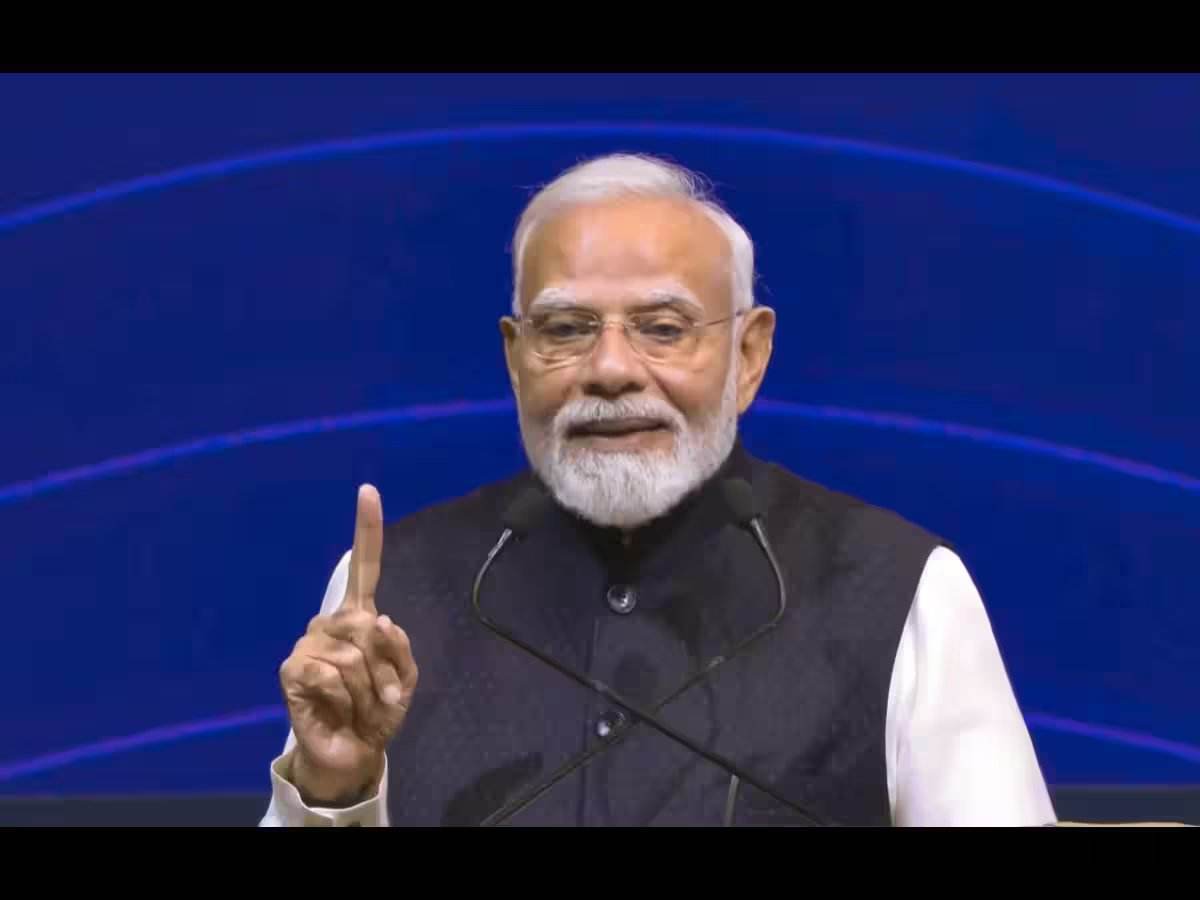
In his address, Modi said that two new packaging plants in Mohali and Surat have begun commercial production, marking further progress in India's domestic manufacturing ecosystem. He stated that in the face of supply chain challenges, the world needs new and reliable manufacturing bases, and India is continuously preparing to meet this need.
In terms of funding arrangements, the capital expenditure scale of the Semicon 2.0 program has been expanded to $13.5 billion, while the first phase of the India Semiconductor Mission (ISM) has allocated approximately $8 billion. Under the Semicon 2.0 framework, international companies can directly collaborate with Indian domestic startups, Indian chip design firms, and entities owned by Overseas Citizens of India (OCI).
Modi stated that the government prioritizes promoting the development of fabless companies, domestic intellectual property creation, compound semiconductor manufacturing, silicon photonics, and AI-enabled infrastructure construction to build a complete industrial ecosystem. India is also advancing supply chain reforms to attract global equipment suppliers, chemical manufacturers, industrial gas suppliers, and raw material companies, going beyond the 12 projects already approved by the government.
In terms of talent reserves, more than 70,000 engineering students have received specialized training for the semiconductor industry, and the government now plans to train 100,000 students.
Addressing technological challenges, Modi noted that the surge in AI demand has shifted focus from transistor density to packaging, thermal management, and power delivery. Over the past two years, the global semiconductor market has grown by more than 20%, mainly driven by demand generated by AI. He said this means that the current challenges in the AI field lie not only inside the chip but also in everything happening around the chip.
To meet the rising electricity and energy security needs of AI data centers, India is vigorously expanding its domestic power grid and clean energy infrastructure. Modi emphasized that over the past 10 years, India's solar installed capacity has increased from about 2 GW to more than 160 GW, while the transmission network continues to expand, the nuclear power sector has been deregulated, and small modular reactors are under development to ensure uninterrupted power supply for high-tech manufacturing plants.
Anku Jain, Managing Director of MediaTek India, said that India's contribution to the global fabless chip design talent pool has laid a solid foundation for enhancing semiconductor technology capabilities. India Semiconductor Mission 2.0 further strengthens this direction by encouraging the construction of a more integrated ecosystem, focusing on chip design, R&D, intellectual property, and talent. These developments help India deepen its role in the global semiconductor landscape and create new opportunities for technological innovation.
Related Products


TWP16 P-Band Tropospheric Wind Profile Radar
China Huayun Meteorological Technology Group Co., Ltd.

20 Inch 1600*900 Full HD 60Hz TFT LED Monitor with VGA and DP Interfaces for Desktop Computers-Business Use
Guangzhou Zanying Optoelectronics Technology Co., Ltd.
Multi-function Marine Monitoring Low-altitude Detection Radar Sea-air Boundary Ocean Dynamic Environment Measurement
Chengdu Dixin Technology Co., Ltd.
Automatic Aiming Laser Remote Obstacle Removal Robot
Pinggao Group Weihai High-Voltage Apparatus Co., Ltd.
Flat Portable Satellite Terminal 0.35m Aperture Manual Portable Terminal
China Starwin Science & Technology Co., Ltd.

Comprehensive Mining Automation Control System
Beijing Tianma Intelligent Control Technology Co., Ltd.

MUX Series Communication Interface Device for Security and Stability Control System
Nanjing NR Electric Co., Ltd.