Bituminous coal-based activated carbon from the University of the Witwatersrand in South Africa achieves a specific surface area of 1925 m²/g
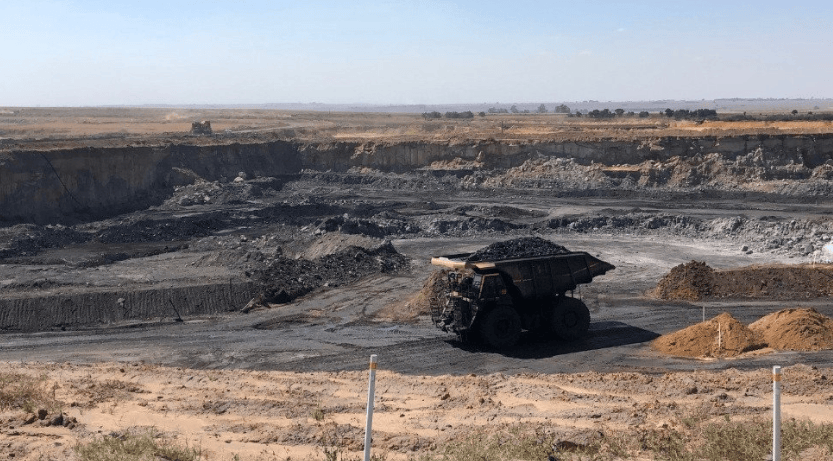
en.Wedoany.com Reported - Research from the School of Chemical and Metallurgical Engineering at the University of the Witwatersrand (Wits) shows that South African coal, beyond its use as a fuel, has potential as a feedstock for high-specific-surface-area activated carbon and porous carbon, gas storage adsorbents, energy storage electrode materials, and carbon-ceramic composite materials.
Professor Samson Bada, a senior researcher at the school, said the team used three South African coal-based materials to produce activated carbons with Brunauer-Emmett-Teller (BET) specific surface areas of approximately 1485 m²/g to 1925 m²/g. Among them, coal slurry measured about 1485 m²/g, discard coal 1826 m²/g, and run-of-mine (RoM) coal 1925 m²/g. Bada noted that the same study also identified potential applications for high-specific-surface-area activated carbon in water treatment, dye removal, air and gas purification, liquid- and gas-phase separation, metal extraction, and gas storage.
The team experimentally demonstrated one gas storage application: coal-based activated carbon adsorbed up to 162.7 cm³/g of methane, with methane adsorption increasing as specific surface area increased. Recently, nitrogen-doped nanoporous carbon prepared from South African run-of-mine (RoM) coal as a supercapacitor electrode achieved a specific capacitance of 169 farads per gram and an energy density of 23.5 watt-hours per kilogramme.
Bada said these laboratory results are promising for applications requiring rapid energy storage and release, but full cells still need to be developed and scaled up before comparison with commercial devices. He added that the team has also developed coal-based ceramic and structural composite materials, and that this work is advancing from laboratory optimisation to prototype and pilot-scale validation.
In addition to the University of the Witwatersrand's findings, Bada noted that international research has demonstrated a broader range of coal-based products, including carbon fibres and carbon foams. These products are used in the United States for automotive body manufacturing, presenting potential future opportunities for South Africa; however, these products have not yet been validated through local research at the University of the Witwatersrand.
Emeritus Professor Rosemary Falcon, director of the coal advocacy organisation FFF Carbon, pointed out that beyond the electricity dimension, coal has other often-overlooked applications. She explained that, in addition to hydrogen, the carbon in coal is essential for reducing iron and metals such as manganese, silicon, and aluminium. FFF Carbon chairman Tumi Kgomo added that solar photovoltaic cells are also made from coal-based materials, because coal is used in the silicon smelting process.
Paul den Hoed, honorary senior lecturer at the School of Chemical and Metallurgical Engineering at the University of the Witwatersrand, added that the carbon in coal is equally indispensable as a reducing agent for metal oxides such as chromium; because of the position of these oxides on the Ellingham diagram, they cannot be reduced with hydrogen. Therefore, den Hoed suggested that higher-quality coal should be reserved for metallurgical uses, while lower-grade coal should be used for power generation employing fluidised circulation bed-type boilers and other valuable applications.
Bada said the University of the Witwatersrand's desk study shows that international progress on products such as coal-based carbon fibres and building materials has already provided useful and profitable pathways that South Africa can evaluate and adapt. But he warned that the key is not to try to commercialise all possible coal-based products simultaneously, but rather to identify a small number of products for which South African coal or coal waste has technical and economic advantages.
After completing this screening, he said, the "most promising" technologies should undergo pilot-scale demonstration, followed by market-oriented construction after completing techno-economic and life-cycle assessments with manufacturing partners. In addition, he stressed the need to strengthen collaboration among universities, the coal industry, product manufacturers, and government.
Related Products

Nitrogen Export, Nitrogen Manufacturer, High-purity Nitrogen Supplier
Foshan Yuexin Industrial Gas Co., Ltd.
Bidirectional Metal Hard Sealed Seawater Butterfly Valve
Henan Quanshun Flow Control Science & Technology Co., Ltd.


Industrial and Commercial Point-Type Gas Detector
Jinan Benan Technology Development Co., Ltd.
CAP1400 main feedwater flow nozzle flowmeter.
Jiangsu Hongda Instrument Technology Co., LTD.
High Thermal Conductivity Encapsulating Resin
Nantong BESALL Sealing Technology Company.,Limited
Steel Plates for Chemical Pressure Equipment
Gansu JISCO Group Hongxing Iron and Steel Co., Ltd.