Ghana Launches 4.1 Million Cedi Aninkroma Agricultural Water Project
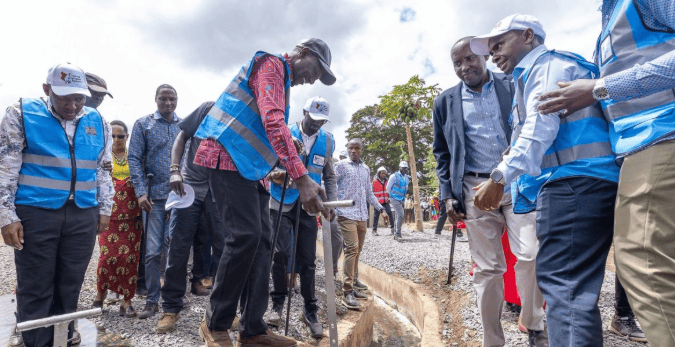
en.Wedoany.com Reported - On October 5, Ghana's Minister of Food and Agriculture Eric Opoku presided over the groundbreaking ceremony for an inland valley agricultural water project in Aninkroma, Atwima Nwabiagya North District, Ashanti Region. The project involves an investment of approximately 4.1 million Ghanaian cedis, with a planned construction period of 16 months. It is being implemented by the Ministry of Food and Agriculture and local government through the Food Systems Resilience Programme (FSRP), with the goal of providing year-round stable agricultural water supply to local farmers participating in the project.

The project is located in Aninkroma near Barekese. Its construction content revolves around inland valley water resource development and agricultural water regulation, with a focus on serving rice cultivation and other agricultural production. The FSRP has incorporated the project into its agricultural production and water resource management infrastructure system, supporting local farmers in expanding year-round cultivation cycles by improving water supply conditions between the dry and rainy seasons.
The Aninkroma project is part of Ghana's ongoing inland valley development program. The FSRP has previously completed preliminary feasibility studies for 20 floodplain and inland valley projects, covering approximately 7,000 hectares of land; at the same time, it has allocated approximately US$50 million in funding for the national agricultural water sector, for inland valley development as well as the rehabilitation and modernization of existing irrigation systems.
The FSRP is also advancing the construction or rehabilitation of irrigation facilities at Kpong, Tanoso, Vea, and Weta. Among them, a US$22.5 million rehabilitation and modernization contract has been signed for the Kpong irrigation system, covering approximately 1,000 hectares of farmland; the other three dams and irrigation systems are undergoing feasibility studies, engineering design, environmental and social impact assessments, and dam safety evaluations, covering approximately 2,000 hectares.
The inland valley development model adopted by Ghana's agricultural sector typically centers on low-cost water management facilities, including land leveling, field bunds, small embankments, irrigation and drainage channels, and field water level control structures, used to store and regulate water during the rice growing season and to drain excess accumulated water. Ghana's previously implemented inland valley rice projects have applied this engineering model in multiple agricultural zones.
The Food Systems Resilience Programme is implemented by the Government of Ghana with support from the World Bank, and agricultural water is one of its infrastructure investment directions. In addition to new inland valley works, the program also covers the rehabilitation of existing irrigation systems, engineering design, water resource management, and the development of irrigation policy and management systems.
Related Products


Industrial and Commercial Point-Type Gas Detector
Jinan Benan Technology Development Co., Ltd.
714CD Series C-Band Weather Radar
Chengdu Zhongdian Jinjiang Information Industry Co., Ltd.


4HS-8 High-efficiency Peanut Inverted-laying Harvester
Hebei Yongfa Hongtian Agricultural Machinery Manufacturing Co., Ltd.