DARPA Advances Autonomous Operation of Space Nuclear Reactors
en.Wedoany.com Reported - On October 29, the U.S. Defense Advanced Research Projects Agency (DARPA) announced that, under the framework of the Fat Cat program, it has awarded an Other Transaction Agreement (OTA) to space nuclear power startup Space Nuclear Power Corporation (SpaceNukes). The project is managed by Tabitha Dodson, program manager in DARPA's Defense Sciences Office, and aims to develop autonomous operation technology for deep-space fission reactors capable of self-regulation without continuous human supervision.
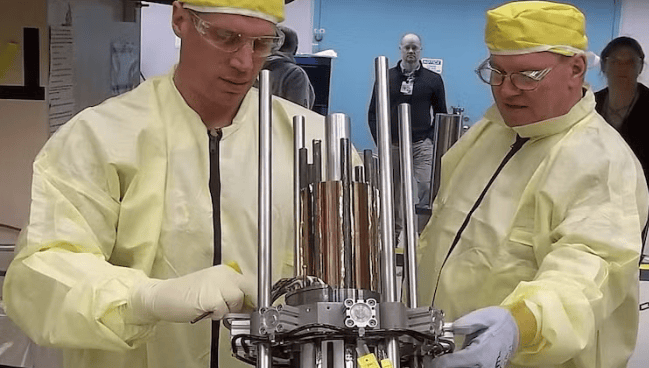
The project is led by the same engineering team that successfully conducted the 2018 Kilowatt Reactor Using Stirling Technology (KRUSTY) ground test. The team includes Chief Executive Officer Andy Phelps, Chief Technology Officer David Poston, Chief Operating Officer Patrick McClure, and Chief Engineer Marc Gibson. Component integration will be completed at SpaceNukes' facility in Medina, Ohio, and ultimately comprehensive live nuclear ground tests will be conducted on the newly designed hardware and autonomous software logic.
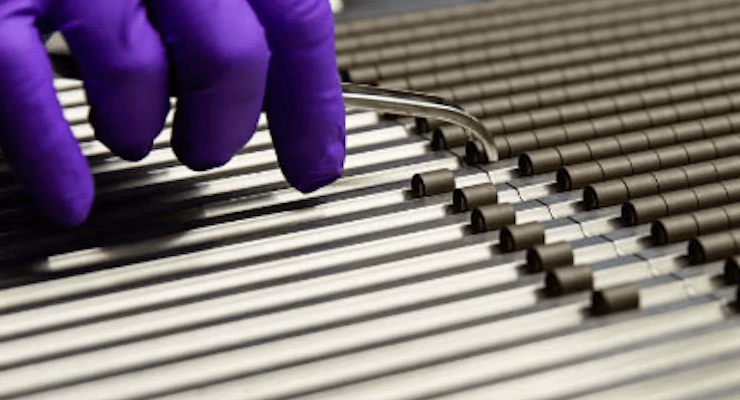
In terms of technical architecture, SpaceNukes has adopted the Kilopower technology solution licensed from Los Alamos National Laboratory (LANL). The reactor core consists of a molybdenum-alloyed uranium-235 solid casting, with multiple sealed sodium heat pipes arranged on the exterior. In the condensation and heat exchange stages, the core transfers high temperatures through passive heat pipes to Sunpower high-efficiency Stirling engines to drive reciprocating piston power generation; the new agreement further introduces active control rods and dynamic power management mechanisms on the basis of the previous purely passive regulation to cope with extreme operational transients.
The core motivation for introducing an autonomous controller lies in addressing the speed-of-light communication latency challenges faced by deep-space exploration and orbital platforms. Since one-way radio transmission between Earth and Mars or outer planets can take from several minutes to several hours, ground control stations cannot provide timely intervention in the event of serious faults such as voltage drops or thermal peaks. The onboard autonomous nuclear controller uses integrated software to monitor internal temperature, neutron flux, and mechanical stress at millisecond intervals, and can directly perform physical transient calculations locally and command active control rod adjustments or redistribute engine loads.
In the 2018 KRUSTY ground test, the prototype successfully achieved 28 hours of continuous full-power operation at the Nevada National Security Site (NNSS), with core operating temperatures reaching 800 to 880 degrees Celsius, and demonstrated exceptionally excellent physical self-stability when simulating loss of cooling and 175% extreme thermal load changes. The Fat Cat program will further promote the deep coupling of this high inherent safety with intelligent software logic, achieving a leap from passive physical response to highly sensitive autonomous decision-making.
As future deep-space exploration missions continue to expand toward the outer solar system and orbital facilities' demand for continuous and reliable power grows, breakthroughs in autonomous operation technology for space nuclear reactors will completely eliminate humanity's dependence on remote control. The collaboration between SpaceNukes and DARPA not only marks a demonstrative commercialization and engineering step for U.S. space nuclear power, but also provides a high-survivability zero-carbon energy foundation for next-generation deep-space probes and national security space assets.
Related Products

Modular Multifunctional Water Supply and Drainage Vehicle (18T)
Changsha Dewater Machinery Technology Co., Ltd.
Forest and Grassland Heat Source Infrared Monitor
China Huayun Meteorological Technology Group Co., Ltd.

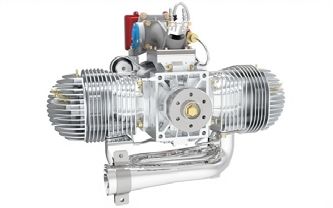
Aero Piston Engine - FF600 Two-Stroke Opposed Two-Cylinder Engine
China Times Prospect Science & Technology Co., Ltd.

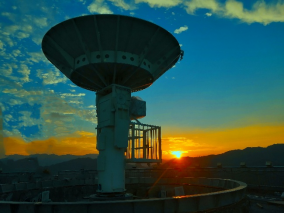
714CD Series C-Band Weather Radar
Chengdu Zhongdian Jinjiang Information Industry Co., Ltd.