University of Manchester Develops Two Technetium-99 Contamination Treatment Technologies
en.Wedoany.com Reported - On November 5, the University of Manchester in the United Kingdom released the results of two studies on the treatment of technetium-99 radioactive contamination, using iron-doped layered double hydroxide and bisphosphonate ligand-assisted phosphate mineral fixation technologies, respectively, to achieve the capture and stabilization of radioactive technetium. Among them, the mineral fixation technology for liquid radioactive waste achieved a technetium removal rate of more than 99% in experiments, and the other technology for contaminated groundwater achieved a technetium complex removal rate of up to 99%. The research results were published in the journal Environmental Science & Technology.
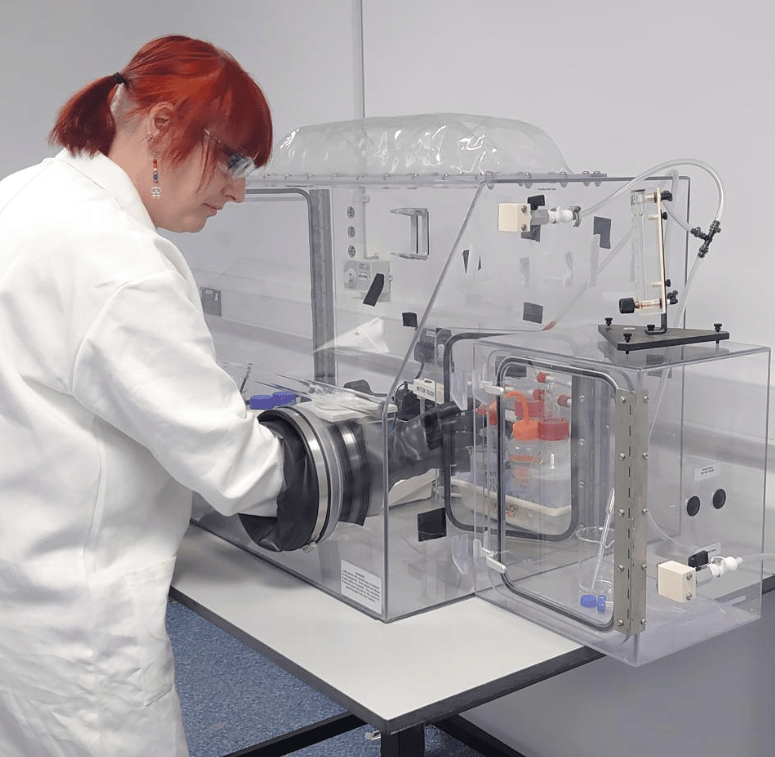
The first study was carried out by a team from the Department of Earth and Environmental Sciences at the University of Manchester. The researchers used iron(II)-doped nickel-aluminum layered double hydroxide (LDH) to reduce pertechnetate in solution during mineral formation and to immobilize the resulting low-mobility technetium(IV) within the mineral structure. The experiments achieved nearly complete removal of pertechnetate under two initial activity concentration conditions, 9.6 Bq/mL and 2.9 kBq/mL.
The research team used the B18 beamline at Diamond Light Source in the United Kingdom and the Stanford Synchrotron Radiation Lightsource in the United States to conduct X-ray absorption analysis, and combined X-ray diffraction, infrared spectroscopy, and electron microscopy techniques to study the reaction process. The experiments showed that amorphous aluminum hydroxide formed when the solution pH rose to 4–6 promoted the initial reduction and immobilization of technetium; when the pH further rose to 6–9, iron and nickel hydrolyzed to form layered double hydroxide and incorporated technetium(IV) into the newly formed mineral structure. The study obtained experimental evidence for the first time that technetium enters the octahedral layers of this type of mineral.
The second study was carried out by the University of Manchester in collaboration with the Nuclear Medicine Department of Christie Hospital in the United Kingdom and the Pacific Northwest National Laboratory in the United States. The researchers used methylene diphosphonate (MDP), which is applied in nuclear medicine, to make reduced technetium-99 form a soluble complex, and then used hydroxyapatite for adsorption and mineral fixation. Under simulated groundwater conditions at a nuclear-contaminated site, laboratory batch tests achieved a technetium complex removal rate of up to 99%.
The research team also conducted column flow experiments with sediment and synthetic groundwater systems, using technetium-99m radioactive tracers and gamma imaging technology to verify the immobilization effect of this method on technetium under flowing groundwater conditions. The experiments further found that Shewanella can produce complexes formed by technetium(IV) and MDP through biological reduction processes, providing an experimental basis for in-situ contamination remediation technologies that combine microbial action and calcium phosphate mineral fixation.
Researchers at the University of Manchester are evaluating the application potential of layered double hydroxide technology in the decommissioning of legacy nuclear facilities and the treatment of radioactive liquid waste through the Game Changers innovation partnership program at the Sellafield nuclear facility in the United Kingdom. The current validation results of the two studies cover laboratory reaction systems, mineral structure analysis, and simulated groundwater flow experiments.
Related Products



Hydrogen Production Technology: Hydrogen Purification by Pressure Swing Adsorption
Chengdu Yizhi Technology Co., Ltd.

PCS-901 Series Ultra (Extra) High-voltage Transmission Line Complete Protection Device
Nanjing NR Electric Co., Ltd.
IGBT Hydrogen Production Power Supply - High Power Air Cooling
Beijing Zhengzhuo Engineering Technology Co., Ltd.