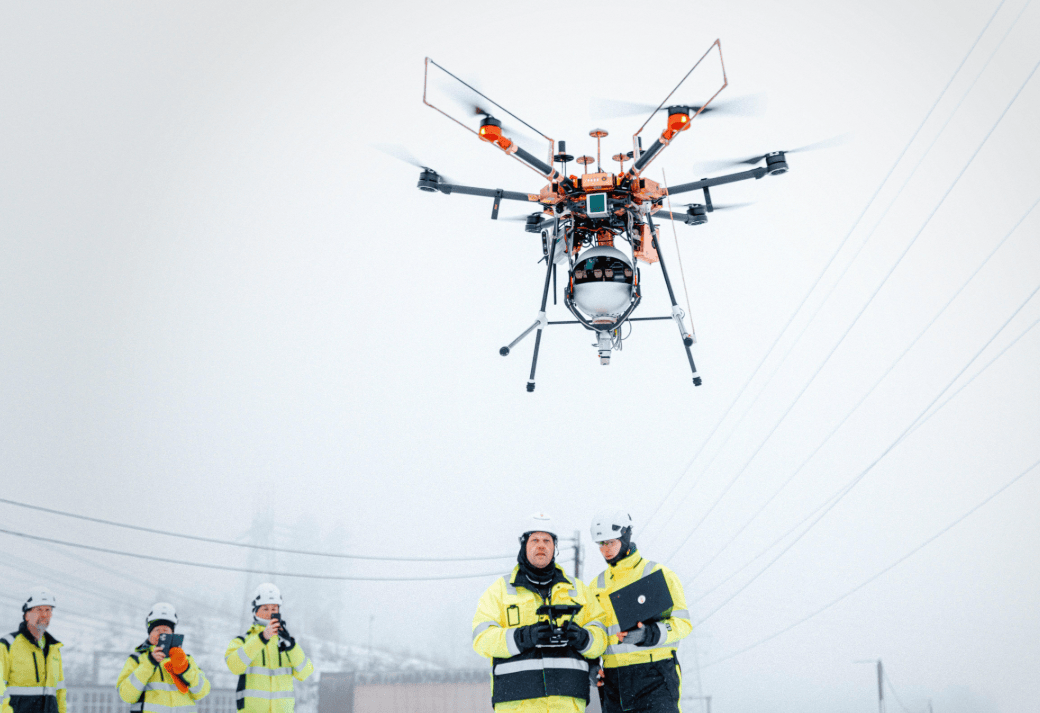
IEA's "Modernising Grids in the Age of Electricity" Reveals New Directions for Global Grid Investment
en.Wedoany.com Reported - On September 21, 2026, the International Energy Agency (IEA) released the report "Modernising Grids in the Age of Electricity," noting that the contradiction between continuously growing global electricity demand and lengthening grid construction cycles is widening. By 2035, the world will need to add or replace approximately 25 million kilometers of power lines, and grid capacity must increase by at least 30%. At the same time, technologies such as dynamic capacity assessment, network topology optimization, and advanced power flow control are expected to enable existing grids to accommodate up to an additional 330 GW of generation, energy storage, and electricity load. Global grid investment is taking shape as a development pattern in which new infrastructure construction and digital upgrading of existing networks proceed in parallel.
I. The pace of grid construction is becoming the primary constraint on global power development
Over the past decade, global electricity demand has grown at roughly twice the rate of total energy demand. Industrial electrification, building cooling, electric vehicles, and data centers continue to increase electricity demand, while new generation sources such as wind and solar power have changed the power flow distribution of traditional power systems.
The IEA estimates that by 2035, global grid capacity will need to increase by at least 30%, corresponding to approximately 25 million kilometers of new or replaced power lines. Of this incremental demand, about three-quarters comes from emerging markets and developing economies.
This distribution of demand reflects two different tasks facing global grid construction.
Emerging markets need to expand transmission and distribution network coverage to meet the needs of industrial development, population growth, and new generation integration. Advanced economies need to renovate long-operating existing facilities, improve transmission corridor utilization, and adapt to distributed energy resources, large data centers, and other new loads.
Growth in grid investment scale does not necessarily mean that power supply capacity can increase in tandem. The difference in implementation cycles between generation construction and transmission projects is creating new project development bottlenecks.
According to IEA statistics, in 2025 at least 1,700 GW of renewable energy projects in relatively advanced stages of development and 600 GW of utility-scale battery storage projects worldwide were waiting for grid connection. The two categories combined reached 2,300 GW, indicating that generation and storage development progress has exceeded the grid hosting capacity in some regions.
The economic impact of grid congestion has already become evident. In 2024, U.S. grid congestion costs reached USD 12 billion, and the European Union's reached EUR 4.3 billion, with Germany accounting for more than half of the EU total. In the same year, EU renewable energy curtailment exceeded 10 TWh, and India's solar curtailment in 2025 reached 2.3 TWh.
Congestion costs, project connection queues, and curtailment volumes reflect different system problems. Congestion costs measure the economic burden brought by network constraints, connection queues reflect the grid integration barriers for new projects, and curtailment volumes reflect the underutilization of available generation capacity during certain periods. The three types of indicators cannot be directly added together, but together they constitute the economic basis for grid modernization investment.
For the engineering construction market, new grid investment remains the foundation for meeting long-term growth demand. The IEA's "Electricity 2026" report estimates that to meet electricity demand growth through 2030, global annual grid investment needs to increase by about 50% from the current level of approximately USD 400 billion.
This investment demand involves transmission lines, transformers, substations, power electronic equipment, and supporting construction works. However, construction cycles and investment recovery mechanisms determine that new funding cannot immediately translate into grid transmission capacity.
II. 330 GW of potential hosting capacity changes the technology choices for grid investment
An important conclusion of this IEA report is that existing grids still have transmission capacity that can be unlocked through technological upgrades.
The report estimates that three categories of technologies—dynamic capacity assessment, network topology optimization, and advanced power flow control—if deployed under suitable conditions, could enable existing global networks to accommodate up to an additional 330 GW of generation, energy storage, and electricity load.
If equivalent hosting capacity were to be achieved entirely through new grid construction, an estimated USD 100 billion of investment would be required.
This does not mean that adopting digital technologies can directly save USD 100 billion, nor does it mean that the 330 GW represents projects that have already obtained grid connection permits. This figure reflects the global potential effect of a specific technology combination, and the actual unlocked capacity depends on line conditions, system stability, weather, and other network constraints.
The mechanisms of the three technology categories differ significantly.
Dynamic capacity assessment adjusts the permissible load of lines or transformers based on real-time meteorological, conductor temperature, current, and equipment status data. Traditional static capacity settings typically use conservative conditions, while actual operating environments may allow equipment to safely carry higher loads.
Network topology optimization guides power flows around congested lines by adjusting switch states and network connection configurations, utilizing other underutilized transmission paths.
Advanced power flow control uses controllable power equipment to regulate power distribution across different lines, enabling underutilized corridors in the network to carry more transmission tasks.
Existing applications have already provided some measured evidence.
Dynamic capacity assessment technology deployed in the United States achieves approximately USD 64 million in annual congestion cost avoidance; advanced power flow control applications in the United Kingdom have added more than 2 GW of transmission capacity; and digital twin technology has reduced the time required for network expansion option analysis by 70% in relevant applications.
These results demonstrate that grid modernization can generate economic benefits by improving equipment utilization, shortening engineering decision-making time, and reducing operational constraints, but the benefit metrics, applicable conditions, and implementation scope of different technologies are not the same.
Grid investment therefore forms two parallel categories of demand: one is new transmission and transformation capacity, and the other is improving the efficiency of existing assets through monitoring, communications, control, and software systems.
The latter typically has a shorter implementation cycle than new line construction, and some technologies can be deployed within months. This gives them value in alleviating near-term connection pressure and also creates new technology supply areas for grid equipment manufacturers and system integrators.
III. Digital upgrading of distribution networks may form a more dispersed equipment procurement market
The IEA's 2026 survey of 25 grid operators shows significant differences in the degree of digitalization between transmission and distribution networks. The surveyed organizations include 11 transmission operators and 14 distribution operators, covering Europe, North America, South America, East Asia, Southeast Asia, and Oceania.
In the survey, 60% of distribution operators lack remote control capability for at least half of their networks. Some distribution lines still rely on manual switching operations, and equipment status data is difficult to fully integrate into unified management systems.
This gap is directly related to the asset structure of distribution networks.
Transmission systems mainly consist of larger-scale, more standardized facilities, with relatively mature real-time monitoring and automation systems. Distribution systems, by contrast, have a vast number of distribution transformers, switches, feeders, and low-voltage networks, with widely distributed equipment and significant differences in construction eras and communication interfaces.
With the integration of distributed solar PV, electric vehicles, and user-side energy storage, the traditional one-way transmission model is shifting to bidirectional power flow, and distribution networks require more refined voltage management, equipment status monitoring, and load control.
The IEA points out that the value of smart meters, distribution automation, and distributed energy management systems depends on whether monitoring data can enter actual operational decision-making. Simply increasing the number of meters or sensors cannot automatically improve grid hosting capacity.
Distribution network modernization thus forms three interconnected construction layers.
The first is equipment sensing capability, including smart meters, distribution transformer status monitoring, feeder sensors, and fault detection equipment. The second is communications and data integration, aggregating equipment data from different manufacturers and different eras into a unified platform. The third is operational control capability, enabling operators to coordinate network operations through distribution management systems, advanced distribution management systems, and distributed energy resource management systems.
For equipment suppliers, the procurement demand for distribution network upgrade projects may be more dispersed, and the value of a single equipment item typically cannot represent the commercial value of the entire system. Equipment compatibility, communication protocols, platform interfaces, operational reliability, and ongoing maintenance capability will affect suppliers' opportunities to enter operators' procurement systems.
In addition, grid asset renewal cycles are long. The report notes that the service life of some major power equipment exceeds 40 years, and control and protection systems are typically updated every 15 to 20 years.
The IEA believes that incorporating digital functions into normal equipment replacement cycles is typically more cost-effective than implementing separate retrofits after construction.
This means that future procurement of transformers, switchgear, and substations may place greater emphasis on monitoring interfaces, remote control functions, data compatibility, and subsequent upgrade capability, in addition to traditional electrical performance indicators.
IV. AI applications will prioritize grid planning, inspection, and operations and maintenance
Artificial intelligence is an important research subject of this report, but the commercial maturity of different application scenarios varies significantly.
The IEA survey shows that among surveyed grid operators, 70% have widely used AI for maintenance-related work, while only 23% have widely used AI in real-time operations.
This difference reflects that the technical threshold for AI to enter power systems depends not only on model computing capability but is also constrained by operational safety, explainability, verification procedures, and liability systems.
Grid planning and equipment maintenance typically allow engineers to review model outputs. AI can conduct predictions based on historical load, meteorological data, equipment status, and line operation records, assisting engineers in identifying equipment failure risks, evaluating network expansion options, and scheduling maintenance tasks.
Real-time control directly affects system safety. If a model outputs incorrect switching operations, power flow adjustments, or fault handling recommendations, it may expand the impact of an accident. Therefore, related systems must have more stringent verification, human oversight, and fault fallback mechanisms.
The practical applications cited by the IEA already cover multiple countries.
France's transmission operator RTE uses AI for power system fault scenario screening, with safety assessment speed approximately 20 times that of manual analysis.
The UK's electricity system operator NESO applies solar generation forecasting technology, and the related application is estimated to save approximately GBP 30 million per year in reserve costs.
The California Independent System Operator (CAISO) in the United States has reduced the processing time for some outage information from hours to minutes through automation technology.
These cases involve different business processes, and their efficiency improvements cannot be directly converted into cost reduction ratios for the entire grid system, but they demonstrate that AI has already generated measurable operational benefits in specific business areas.
For grid software developers and system integrators, near-term market demand is more likely to concentrate on load forecasting, renewable energy power forecasting, equipment status diagnostics, drone inspection data analysis, network modeling, and grid planning support systems.
The commercialization of real-time autonomous AI control requires meeting higher-level safety requirements, and its adoption speed may be significantly slower than planning and O&M applications.
V. The main barriers to grid technology upgrading are shifting toward institutional and operational capabilities
The IEA points out that some grid modernization technologies already have commercial application conditions, but significant barriers remain in moving from individual demonstration projects to routine deployment.
Its 2026 survey of 25 transmission and distribution operators shows that large-scale application of grid digitalization technologies is still constrained by factors such as organizational capability, data quality, technology trust, and regulatory frameworks.
Among them, 64% of surveyed operators listed insufficient skills and organizational readiness as a major barrier, 60% identified issues with data availability and quality, another 60% listed technology trust as a deployment barrier, and 56% believed that existing regulatory frameworks limit technology application.
These survey results reflect the actual difficulties of surveyed operators in the technology deployment process, but the sample size is limited and cannot directly represent all grid operators worldwide.
Regulatory mechanisms are one of the important factors affecting technology deployment.
Traditional grid investment systems typically form mature cost accounting and investment recovery mechanisms around transmission lines, substations, and other fixed asset construction. Although some digital solutions can alleviate grid congestion, they may lack regulatory recognition and cost recovery channels as clear as those for new infrastructure.
For operators, whether a technology can reduce system costs, whether it can obtain regulatory approval, enter investment plans, and form actual procurement are different decision-making stages.
The IEA recommends that regulatory mechanisms should evaluate different technology options based on actual network needs, enabling new line construction, digital upgrading, and operational optimization to be compared on a cost-benefit basis under the same objectives.
Measurable evaluation indicators include unlocked hosting capacity, reduced congestion costs, improved supply reliability, and reduced equipment outage time.
Data infrastructure also affects technology diffusion.
Monitoring equipment, control platforms, and operational software from different manufacturers may use different data structures and communication interfaces. The lack of unified data management and interoperability mechanisms increases system integration costs and limits the applicable scope of AI models.
As grid operations become increasingly dependent on software and data, the importance of cybersecurity, model verification, access management, and supply chain control of critical systems also increases accordingly.
This is gradually extending the procurement evaluation of grid modernization projects beyond simple equipment price comparison to reliability, system compatibility, full life-cycle maintenance capability, and information security assurance.
VI. Global grid modernization will form differentiated regional markets
Differences in grid asset age, construction funding, regulatory systems, and electricity demand growth structures determine that regions will not adopt completely identical modernization paths.
Europe and North America: existing grid upgrading and congestion management proceed in parallel
Europe and North America have a large number of long-operating transmission and distribution facilities. At the same time, industrial electricity use, data centers, and new renewable energy projects are creating new pressure on existing networks.
Actual deployment of dynamic line rating technology is currently highly concentrated in these two regions, with about three-quarters of related deployments located in Europe and North America.
These markets have relatively mature grid monitoring systems and engineering technology foundations, enabling the integration of new sensors, advanced power flow control equipment, and operational optimization software into existing facilities.
Their commercial demand mainly comes from aging equipment replacement, congestion management, transmission capacity improvement, and grid automation system retrofits.
Asia: new capacity additions and digital construction advance in parallel
Some Asian economies continue to advance large-scale transmission and transformation projects while expanding smart metering, distribution automation, and grid data system deployment.
According to the Singapore SP Group Smart Grid Index study cited by the IEA, smart grid maturity in the Asia-Pacific region is improving, with advanced metering and supply reliability improvement being important driving factors.
China and other Asian markets differ in grid asset scale, manufacturing capability, and digital application foundations, and the overall regional trend cannot be regarded as a uniform development level for all countries.
For equipment manufacturers, opportunities in Asian markets include both new transmission and transformation projects and distribution automation, power communications, digital substations, and distributed energy integration management.
Africa and other emerging markets: grid coverage capability remains the basic investment direction
Emerging markets and developing economies are expected to account for about three-quarters of the global grid capacity incremental demand through 2035.
Compared with Europe and North America, the primary task in some emerging markets remains expanding grid coverage, improving supply reliability, and strengthening basic equipment monitoring capability.
The IEA points out that these markets need to prioritize improving feeder and transformer status monitoring, equipment asset registration, communication networks, and operational data management.
Grid digitalization does not necessarily need to wait for highly complex AI systems to mature. Smart metering, basic automation, remote monitoring, and equipment data management can enter investment plans first.
However, project advancement speed still depends on utility financial capability, electricity pricing mechanisms, regulatory reform, and financing conditions. Concessional loans, technical assistance, and project preparation funding provided by international financial institutions may have an important impact on related construction.
VII. Grid modernization is forming five categories of industrial equipment and engineering service demand
From an industry chain perspective, the technology upgrades covered by the IEA report can be further mapped to five categories of procurement demand. These demands are industry analysis based on the report's technology pathways, not equipment orders that have been awarded or confirmed for procurement.
Grid monitoring and measurement equipment
Dynamic line rating, transformer status monitoring, and distribution network visualization require temperature sensors, meteorological monitoring equipment, current measurement devices, phasor measurement units, and related data acquisition systems.
Potential buyers are mainly transmission and distribution operators and system integrators undertaking grid upgrade projects.
The trigger condition for this type of demand is that operators need to obtain more precise equipment operation data or plan to unlock existing network capacity through dynamic capacity assessment.
Compared with traditional measurement equipment, related products need to meet higher requirements for data real-time performance, communication reliability, and environmental adaptability. Long-term operating accuracy, data interface standards, and compatibility with existing control platforms will affect their engineering application scope.
Power electronics and power flow control equipment
Advanced power flow control requires controllable power electronic devices, related control systems, and supporting engineering implementation capability. Grid voltage and stability management may also involve static var compensators, static synchronous compensators, and other control equipment.
Their commercial applications mainly target networks with severe congestion, uneven load distribution across different transmission paths, or stability constraints.
Suppliers need to demonstrate that equipment can operate in coordination with existing protection and control systems and meet grid operators' safety and reliability requirements.
As the share of renewable energy increases, grid power flow variations and voltage control requirements will become more complex. However, the actual market size of equipment depends on specific network constraints and the technology solutions adopted by operators, and procurement quantities cannot be directly extrapolated from global new power installation scale.
Distribution automation and communication systems
Distribution network status monitoring and remote control upgrades will involve smart switches, remote terminal units, distribution automation controllers, industrial communication equipment, and data transmission systems.
Compared with large transmission projects, such retrofits often include more dispersed equipment and on-site installation tasks.
Suppliers' delivery capability depends not only on equipment manufacturing but also on on-site commissioning, interface adaptation, communication network construction, and long-term maintenance services.
For manufacturing enterprises with distribution equipment, industrial communications, and automation control technologies, digital upgrading of distribution networks may expand demand for complete equipment sets and system integration delivery.
The actual release speed of this market is affected by operators' investment budgets, automation retrofit plans, and communication infrastructure conditions.
Grid management software and digital platforms
SCADA, EMS, ADMS, DERMS, and digital twin platforms provide the technical foundation for operators to integrate data, conduct planning analysis, and implement network optimization.
This market involves grid software suppliers, communications companies, engineering consulting firms, and data platform service providers.
The key to commercial competition will include system interoperability, data quality, software verification, operational safety, and compatibility with existing equipment.
Unlike primary electrical equipment, software system procurement also involves platform deployment, data migration, interface development, personnel training, and subsequent version upgrades.
Therefore, grid digitalization projects may generate ongoing technical service demand rather than one-time procurement only at the time of initial system construction.
Grid retrofit engineering and full life-cycle services
Upgrading aging lines and substations requires on-site surveys, engineering design, equipment replacement, system commissioning, and operation and maintenance.
For EPC contractors, grid modernization projects may generate delivery demand combining traditional electrical engineering with digital system integration.
Engineering firms capable of simultaneously undertaking primary equipment retrofits, secondary system upgrades, and communication integration may be better suited to participate in comprehensive grid modernization projects, but specific contracting boundaries are still determined by the owner's procurement model.
Engineering implementation must also consider the requirements for keeping existing grids in operation without interruption, equipment replacement windows, protection system coordination, and on-site safety management.
These constraints may increase the complexity of engineering design and construction organization and also place higher demands on contractors' system commissioning and project management capabilities.
VIII. Grid industry competition in the next two years will depend on whether technologies can enter routine procurement
The core change revealed by the IEA report is that grid investment evaluation criteria are extending from simply expanding physical transmission capacity to improving the utilization efficiency of existing assets.
Traditional transmission and transformation projects will still bear the main task of new capacity construction. Digital technologies can shorten connection cycles, reduce congestion costs, and improve the operating capability of existing facilities under certain network constraints.
The relative economics of the two paths depend on actual network conditions.
For regions that need to significantly increase power transmission distance, new lines and substations remain irreplaceable. For networks with local congestion, uneven equipment utilization, or insufficient monitoring capability, technological retrofits may provide lower-cost, faster-to-implement solutions.
In the next 12 to 24 months, market variables worth continuous attention include the cost recovery rules of national grid regulators for digital investment, whether operators incorporate dynamic capacity assessment and power flow control into routine procurement, the scale of distribution automation retrofits, and the verification mechanisms for AI systems moving from pilots to production operations.
Among these, regulatory mechanisms have a direct impact on equipment procurement. If operators can obtain clear investment recovery arrangements through digital retrofits, related technologies will more easily move from demonstration projects into annual capital expenditure plans.
If regulatory systems still mainly support traditional fixed asset expansion, some technologies that can improve network utilization efficiency may continue to remain at the small-scale application stage.
The competitive conditions facing equipment suppliers will also change.
Traditional transmission and transformation equipment procurement mainly focuses on rated capacity, electrical performance, price, delivery cycle, and operational reliability. Digital upgrade projects also require evaluation of real-time data quality, communication standards, software compatibility, information security, and long-term service capability.
For engineering contractors, project delivery may gradually expand from single line or substation construction to coordinated implementation of electrical equipment, communication networks, digital platforms, and operational control systems.
The 330 GW of potential hosting capacity proposed by the IEA provides a quantifiable market basis for technology upgrading, but its actual realization scale is still constrained by physical network conditions, regulatory systems, and operational capability.
Global annual grid investment growth, equipment renewal demand, and digital retrofitting of existing networks will jointly affect the order structure of the future grid industry.
Traditional transmission and transformation equipment, monitoring sensors, controllable power electronics, communication systems, and digital services are jointly forming the technology supply system for grid construction and retrofit projects.
The industrial value of global grid modernization is reflected not only in the engineering scale of new lines and substations but also in the equipment renewal, system integration, and operational service demand generated by existing network upgrades.
Sources
1. IEA, "Modernising Grids in the Age of Electricity"
Publication date: September 21, 2026.
Original report:
https://www.iea.org/reports/modernising-grids-in-the-age-of-electricity
Executive summary:
https://www.iea.org/reports/modernising-grids-in-the-age-of-electricity/executive-summary
2. IEA, "The Need for Modern Grids"
Year: 2026.
https://www.iea.org/reports/modernising-grids-in-the-age-of-electricity/the-need-for-modern-grids
3. IEA, "Monitoring and Control Systems"
Year: 2026.
https://www.iea.org/reports/modernising-grids-in-the-age-of-electricity/monitoring-and-control-systems
4. IEA, "Grid-enhancing Technologies"
Year: 2026.
https://www.iea.org/reports/modernising-grids-in-the-age-of-electricity/grid-enhancing-technologies
5. IEA, "AI-enhanced Solutions"
Year: 2026.
https://www.iea.org/reports/modernising-grids-in-the-age-of-electricity/ai-enhanced-solutions
6. IEA, "Electricity 2026"
Year: 2026.
https://www.iea.org/reports/electricity-2026/executive-summary
Related Products
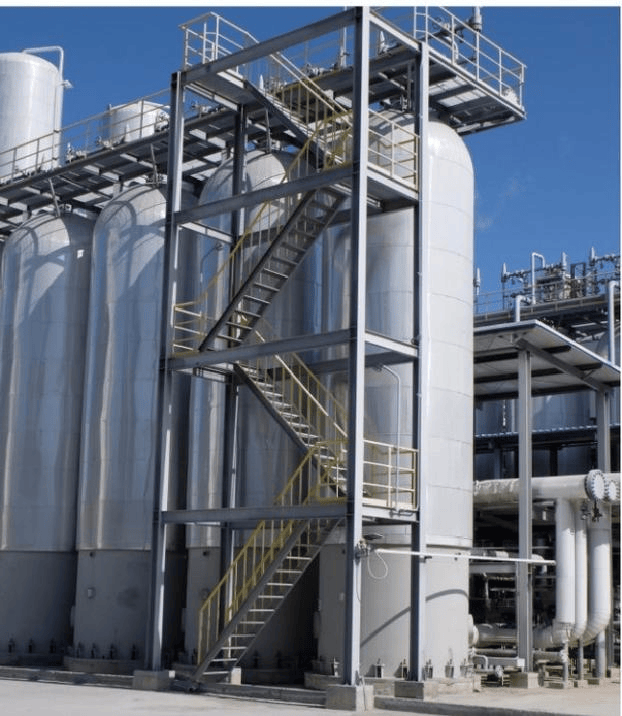

Hydrogen Production Technology: Hydrogen Purification by Pressure Swing Adsorption
Chengdu Yizhi Technology Co., Ltd.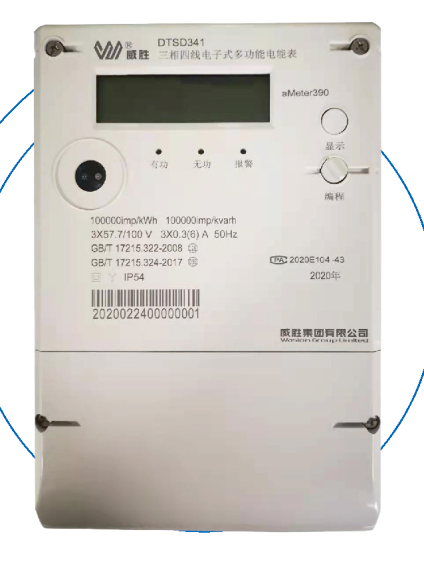
Overseas IEC Gateway Energy Meter - DTSD341/DSSD331-aMeter390
Wasion Group Limited Co., Ltd.
Forest and Grassland Heat Source Infrared Monitor
China Huayun Meteorological Technology Group Co., Ltd.
0.66kV Power Supply Instrument Transformer
Guangdong Sihui Instrument Transformer Works Co., Ltd.
Ultrasonic Wind Speed and Direction Instrument
Kingmach Measurement & Monitoring Technology Co., Ltd.
NISELA Series Environmentally Friendly Gas-Insulated Ring Main Unit
XJ DELISHIER ELECTRIC CO., LTD.