Flexicon Corporation (USA) Launches Integrated Automated Bulk Bag Conditioning, Bag Piercing, and Conveying System
en.Wedoany.com Reported - On November 20, Flexicon, a U.S.-based manufacturer of bulk material handling equipment, launched an integrated automated bulk bag conditioning, bag piercing, and conveying system that combines a hydraulic conditioning device, a bulk bag piercing and discharge device, and a flexible screw conveyor into a single material handling process. The system is primarily designed to handle powders and bulk materials that have become compacted or agglomerated during storage or transport. Through powered roller conveying, photoelectric sensing, and automatic sequence control, the system reduces equipment cycle intervals and manual intervention, improving the ability to continuously feed agglomerated materials from bulk bags to downstream production lines.
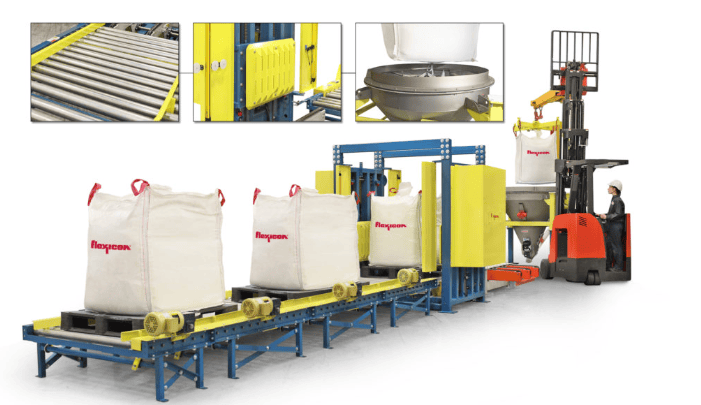
The system consists of a BLOCK-BUSTER hydraulic bulk bag conditioner, a bulk bag piercing device, a material hopper, an accumulation conveyor, and a flexible screw conveyor. Bulk bags containing agglomerated material are first placed on the powered roller conveyor line, and the conveying mechanism feeds them one by one into the conditioning equipment. The equipment applies pressure from both sides of the bulk bag via hydraulically driven steel pressure plates, loosening the compacted material inside the bag and restoring its flowability.
The conditioning mechanism employs a multi-height, staged processing approach, with the hydraulic pressure plates adjustable to three positions along the height of the bulk bag to apply pressure to different zones. The control system can be configured for multiple conditioning cycles based on material characteristics, ensuring thorough treatment of agglomerated materials. Compared with methods that rely solely on vibration or pneumatic flow-assist devices to handle agglomerated materials, hydraulic pressure plates apply mechanical pressure directly to the bag body, making them suitable for materials that have formed large lumps and are difficult to handle with conventional discharge-assist devices.
After conditioning is complete, the bulk bag enters the accumulation conveyor. Photoelectric sensors mounted on the equipment frame detect the bag position and automatically control the powered roller conveyor to start, feeding the next bag into the processing station. Through this sequence control method, the system reduces the waiting time between processing consecutive bags and maintains a continuous equipment feeding rhythm.
The loosened bulk bag is transferred by forklift or in-plant lifting equipment to above the piercing device. As the bulk bag descends into the hopper, multiple sets of piercing blades installed inside the hopper penetrate the bottom of the bag, allowing the material to discharge directly into the hopper. The piercing location features a rubber membrane sealing structure that reduces the risk of material leaking from the interface between the bag and the hopper during discharge. The sides and bottom of the hopper are also equipped with pneumatic and mechanical flow-assist devices to reduce the possibility of material re-bridging, accumulation, or blockage.
The material then enters the flexible screw conveyor. This equipment uses a steel screw rotating inside a polymer outer tube to convey material, handling both free-flowing powders and granules as well as materials prone to compaction, agglomeration, or adhesion. The drive motor is located at the discharge end of the conveyor, isolating the material conveying path from bearings and sealing components and reducing the opportunity for material to contact mechanical drive parts. The equipment can convey material to downstream processing equipment in a relatively enclosed manner, reducing dust emissions during transfer.
The newly launched system focuses on addressing the challenges of restoring flowability and achieving continuous discharge after bulk material storage and transport. Chemical raw materials, food ingredients, and mineral processing materials are prone to compaction and agglomeration under prolonged storage, humidity changes, or transport vibration, resulting in reduced bulk bag discharge rates and even requiring manual intervention for cleaning. By combining hydraulic conditioning, mechanical bag piercing, and screw conveying, the system reduces transfer steps between standalone pieces of equipment and improves the continuity of material supply at the front end of production lines.