"Tianyi No. 1" of China Railway Major Bridge Engineering Group Completes Erection of 140 Box Girders for Hangzhou Bay Railway Bridge
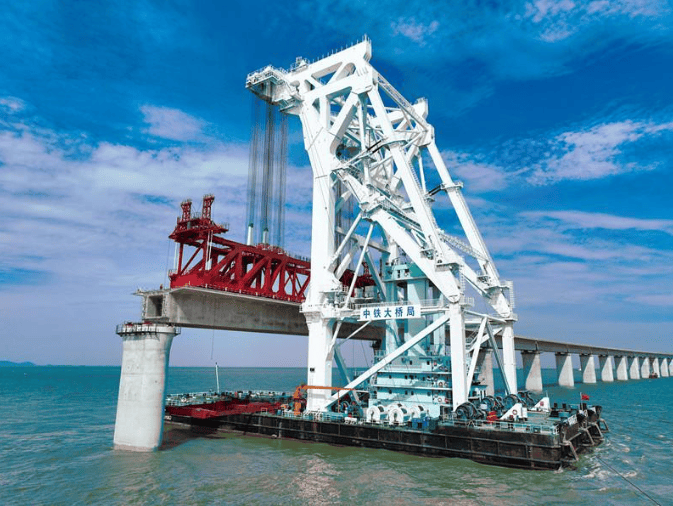
en.Wedoany.com Reported - On November 26, the 3,600-tonne integrated transport and erection vessel "Tianyi No. 1," independently developed by China Railway Major Bridge Engineering Group, completed the erection of 140 box girders for the Hangzhou Bay Cross-Sea Railway Bridge and cast off to leave the Hangzhou Bay waters. The vessel has previously participated in projects including the Hangzhou Bay Cross-Sea Highway Bridge, the Hong Kong-Zhuhai-Macao Bridge, the Padma Bridge in Bangladesh, and the Shenzhen-Zhongshan Link. This time, through its shallow-draft hull, retractable boom, and onboard intelligent monitoring system, it completed the erection of large high-speed railway box girders under conditions of strong tides, shallow shoals, and restricted navigation.
The Hangzhou Bay Cross-Sea Railway Bridge is a key controlling project of the Nantong-Ningbo High-Speed Railway, with a total length of 29.2 kilometers and a design speed of 350 kilometers per hour. The bridge site is located in Hangzhou Bay, one of the world's three major strong-tide bays, where the maximum tidal range is nearly 9 meters, the maximum flow velocity reaches 5.3 meters per second, there are approximately 180 days per year with winds of Force 6 or above, and the annual effective offshore construction window is about 200 days. The complex tidal, water depth, and wind-wave conditions place high demands on the load-bearing capacity, vessel stability, and construction organization of large offshore girder erection equipment.
Among these challenges, the approximately 5-kilometer shallow-water area between the North Channel Bridge and the Central Channel Bridge is a key difficulty for offshore girder erection. At low tide, the water depth in this area is only 1 to 4 meters, while conventional offshore crane vessels of 3,000 tonnes or more generally have a draft exceeding 6 meters, making it difficult for them to enter the working waters. To adapt to this construction environment, "Tianyi No. 1" adopts a domestically pioneered monohull structure and all-electric propulsion, with a total length of 93.4 meters, a molded breadth of 40 meters, a full-load draft of only 4.2 meters, and a maximum lifting capacity of 3,600 tonnes. It can independently complete girder picking, transport, and erection operations without the need for additional girder-picking vessels and transport vessels.
To address the navigation restrictions for large crane vessels passing beneath the existing Hangzhou Bay Cross-Sea Highway Bridge, the project team also carried out special modifications to the original boom of "Tianyi No. 1," converting the 84-meter-high fixed boom into a retractable and resettable structure. When the boom is lowered, the navigation height is reduced to approximately 42 meters, enabling the vessel to pass beneath the Hangzhou Bay Cross-Sea Highway Bridge, which has a navigable clearance of approximately 47 meters, on its way to typhoon shelter anchorages. The combination of the shallow-draft hull and the retractable boom enables the vessel to adapt to sea areas with large variations in water depth and overhead navigable clearance restrictions.
"Tianyi No. 1" adopts an integrated operation mode of girder picking, transport, and erection. The construction team formulated an operation process of picking girders at low flat tide, transporting during the rising tide, and lowering girders at flat tide based on tidal variations, and arranged construction in combination with real-time tidal forecasts and girder production plans. Since the precast box girders correspond one-to-one with the pier positions, the team also adopted a skip-span erection method, directly erecting girders when the substructure at the target pier position is ready and the tidal window permits, thereby reducing the impact of construction delays at preceding pier positions on the overall girder production, transport, and erection schedule.
The intelligent monitoring system provides data support for precise offshore girder erection. A total of 85 sets of intelligent sensors are installed on the hull, boom, and lifting equipment, enabling second-level feedback and monitoring of more than 10 categories of data, including vessel attitude, structural stress and deformation, and lifting movements. The construction team, combined with digital twin technology, carries out dynamic monitoring of vessel operation and lifting status, and adjusts the operation process based on monitoring data, controlling the positioning error of box girders to the millimeter level.
Related Products

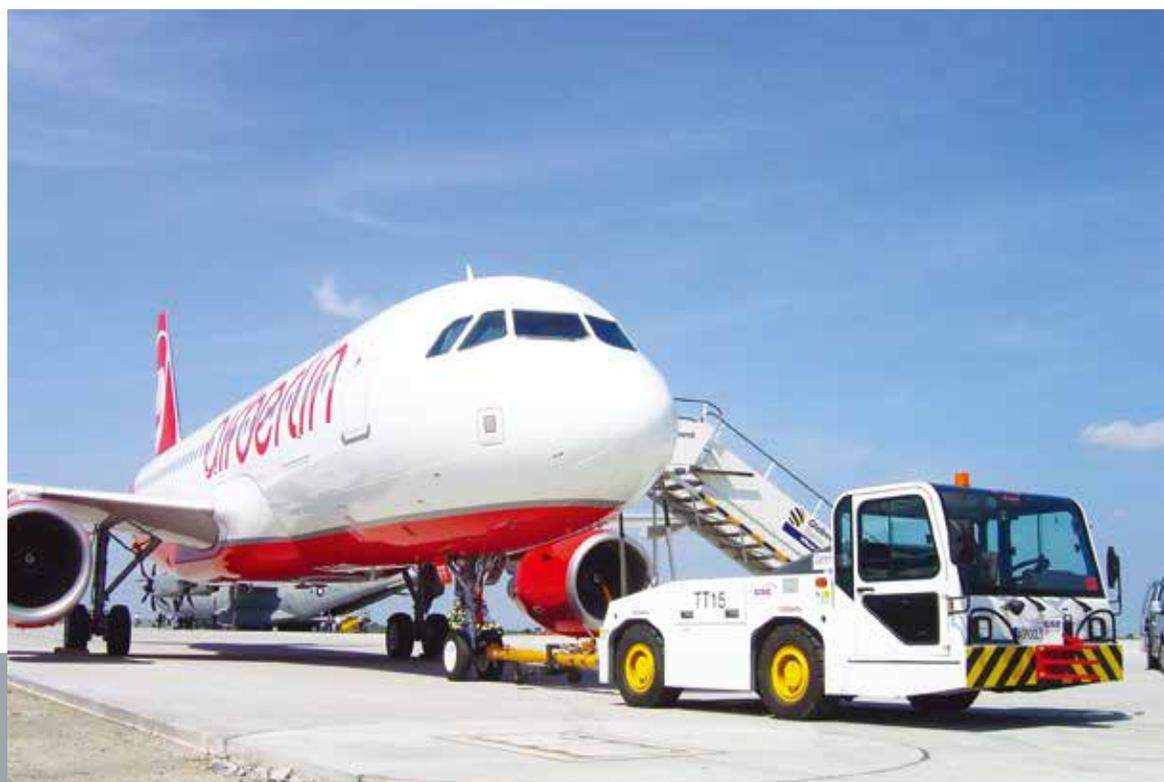
WGQY Series Aircraft Tow Tractor-WGQY15, WGQY27
Weihai Guangtai Airport Equipment Co., Ltd.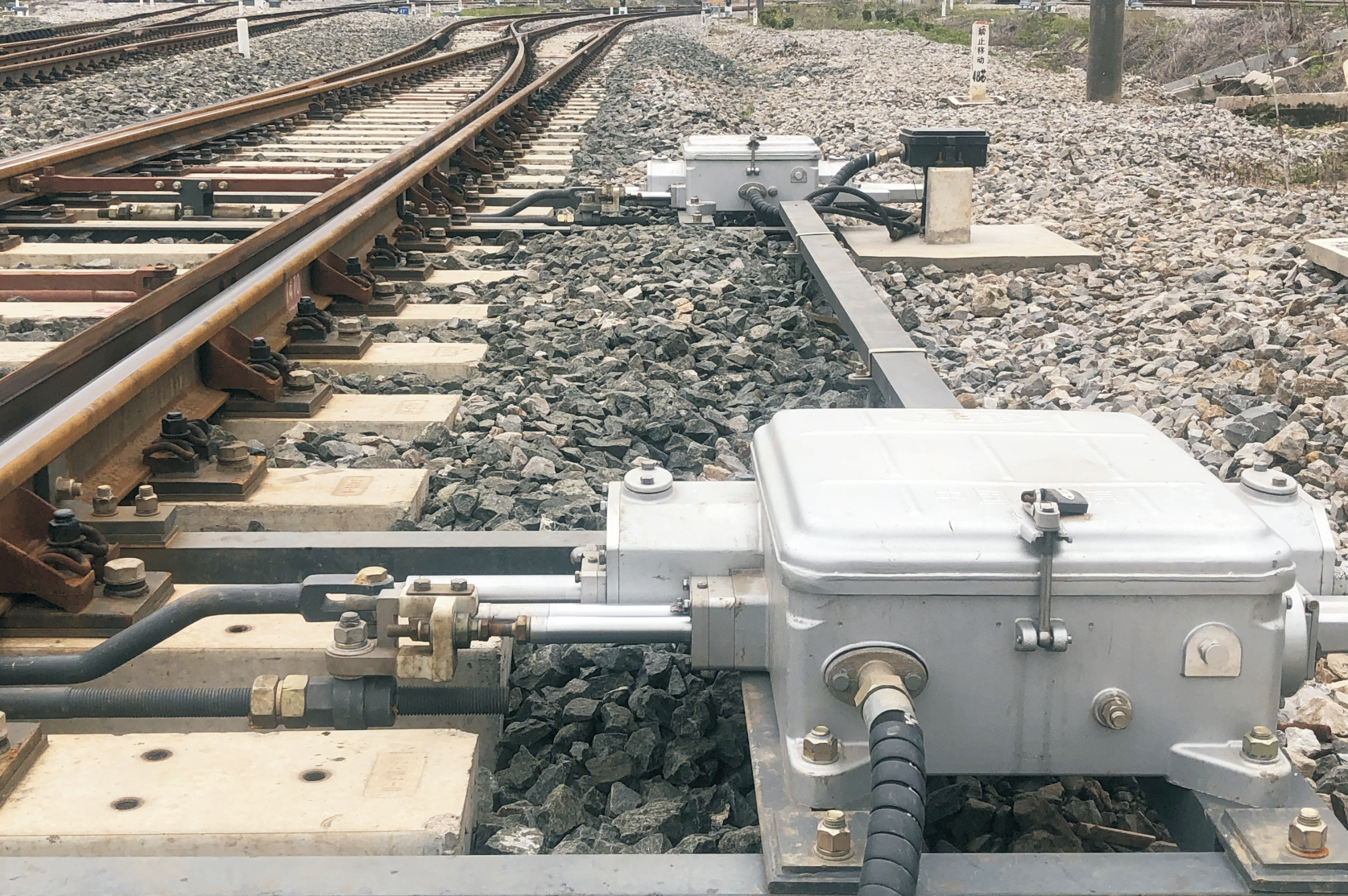
ZY(J)7(M) Sealed Type Electro-Hydraulic Turnout Machine
TAIYUAN CR JINGFENG EQUIPMENT TECHNOLOGY CO., LTD.
Industrial and Commercial Point-Type Gas Detector
Jinan Benan Technology Development Co., Ltd.


Wheel and Track Technology Business
Beijing Research & Design Institute of Rubber Industry Co., Ltd.