Wedoany.com Report-Sept. 29, During the World Atomic Week forum in Moscow, held from September 25–28, 2025, President Vladimir Putin emphasized the role of peaceful nuclear technologies in fostering international collaboration. Speaking on the event’s opening day, he highlighted the growing global demand for nuclear energy, particularly in the Global South and East, where countries are advancing their technological and industrial capabilities.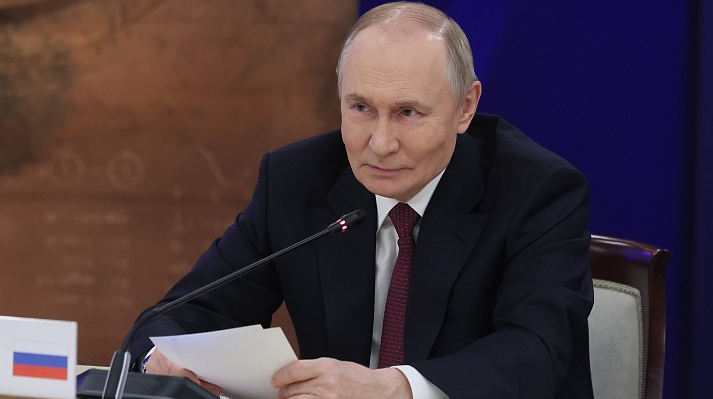
“We view peaceful nuclear technologies as a foundation for broad international cooperation and for bringing states closer together,” Putin stated. He underscored Russia’s commitment to supporting these nations by helping them develop independent nuclear industries, including personnel training and establishing centers of excellence, while rejecting dependency on Russian technology.
Putin addressed the financing of nuclear projects, noting, “It is clear that the construction of nuclear power plants requires significant resources, which means the risks and benefits must be balanced among the main participants in such projects—states, investors, and consumers.” He highlighted the BRICS New Development Bank’s readiness, confirmed earlier in 2025, to finance nuclear initiatives, signaling a collaborative approach to funding.
To address long-term sustainability, Putin announced plans for Russia to launch the world’s first nuclear energy system with a closed fuel cycle in Tomsk by 2030. This system aims to reuse 95% of spent nuclear fuel, reducing uranium demand and radioactive waste. “The growth in demand for peaceful nuclear energy will be driven largely by countries in the Global South and East,” he said, citing projections of increased nuclear capacity needs.
The forum, marking the 80th anniversary of Russia’s nuclear industry, saw several agreements. Rosatom, Russia’s state nuclear corporation, signed a deal with the Beijing Research Institute of Uranium Geology to share expertise on high-level radioactive waste disposal testing at the Beishan Underground Research Laboratory. Rosatom also agreed with Ethiopia’s Electric Power Corporation to form a working group for a nuclear power plant feasibility study. Additionally, a contract with Belarus ensured a balanced nuclear fuel cycle, with Russian companies reprocessing used fuel for Belarusian use.
Further collaborations included a memorandum between Rosatom and Myanmar’s Yangon Technological University for joint educational programs and research on advanced nuclear facilities. Kyrgyzstan’s Deputy Minister of Energy, Altynbek Rysbekov, noted ongoing work with Rosatom to identify suitable locations and capacities for a nuclear power plant. These initiatives reflect Russia’s focus on advancing global nuclear technology through cooperative partnerships.