Wedoany.com Report-Nov. 24, The Urban Nature Project at London’s Natural History Museum has received the Gold Prize at the 2025 Wood Awards as the United Kingdom’s outstanding new timber building. Designed by Feilden Fowles in collaboration with J&L Gibbons, the project transformed five acres of previously underused gardens into an immersive journey through geological time.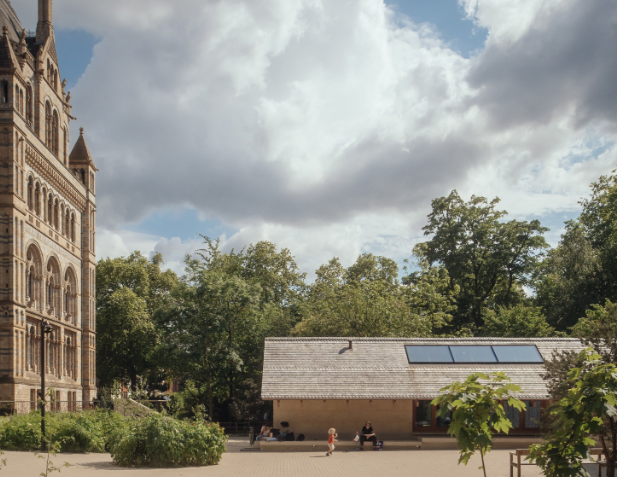
Central to the scheme are two new timber-and-stone structures: the Garden Kitchen café and the Nature Activity Centre. Both buildings employ low-carbon, sustainable construction methods and integrate sensitively with the museum’s historic grounds.
The café features a Douglas fir glulam frame paired with masonry walls, crowned by a distinctive stepped roof incorporating a glazed lantern and natural ventilation panels. The adjacent education pavilion takes the form of a contemporary barn, with an asymmetrical pitched roof covered in Western Red Cedar shingles that extend outward to form protective overhangs and facilitate rainwater collection.
Jim Greaves, principal of Hopkins Architects and lead Buildings judge, stated: “transformed the approach to the Natural History Museum, creating a journey through geological time with the creation of a series of outdoor living galleries.” He praised the timber structures as calm, elegant additions that complement Alfred Waterhouse’s Victorian architecture while demonstrating “environmental sensitivity and timber detailing…using simple, economic joinery to create legible, highly refined buildings that are at one with their setting.”
The judging panel inspected all 20 shortlisted projects in person before selecting the winner at the awards ceremony held at Carpenters’ Hall, London.
David Hopkins, chief executive of Timber Development UK, noted that the winning entry powerfully illustrates the country’s continuing excellence in timber construction. By placing sustainable forestry, responsible material choices, and skilled craftsmanship within one of the nation’s most visited cultural institutions, the project serves both educational and environmental purposes.
Completed structures now support youth learning programmes, scientific research, and public engagement with biodiversity, while providing practical examples of efficient, expressive timber architecture in an urban heritage context. The Urban Nature Project demonstrates how contemporary low-carbon design can enhance historic settings and contribute to broader environmental awareness.