Wedoany.com Report on Jan 31st, Decarbonizing Australia's heavy industry is one of the key challenges of the energy transition. Sectors such as steel and alumina play vital roles in the economy but face significant difficulties in reducing emissions. These industries are characterized by high emissions, technological complexity, and substantial capital requirements, making it difficult for individual companies to achieve substantial progress on their own.
ARENA is addressing this challenge by fostering cross-industry collaboration. Beyond providing project funding, the agency is working to create conditions for cooperation in hard-to-abate sectors, enabling companies to share risks, pool expertise, and coordinate learning processes.
Initiatives such as the NeoSmelt project and the Australian Alumina Working Group demonstrate that structured collaboration can accelerate technological learning, reduce implementation risks, and advance emerging decarbonization technologies towards practical application.
Collaboration becomes particularly critical in hard-to-abate sectors. Industries like steel, alumina refining, cement, and chemicals form the backbone of modern economies, yet their production processes are emission-intensive and technologically challenging to decarbonize. Demand for these materials is expected to continue growing alongside economic development and increased investment in clean energy technologies.
The challenges stem from project scale, financial risk, and technological complexity. Many emerging technologies require pilot validation, significant capital investment, and interdisciplinary expertise. For most companies, pursuing such projects independently is too slow, too costly, or simply unfeasible. Collaborative approaches help distribute risks, accelerate learning curves, and drive innovative solutions from concept to demonstration and deployment.
ARENA plays a crucial role in facilitating industry collaboration, especially for decarbonization projects that are large-scale, high-cost, and complex. The NeoSmelt project is a prime example, where a joint venture of several companies is exploring low-emission ironmaking from Pilbara ores, supported by $19.8 million in ARENA funding for Front-End Engineering Design (FEED).
ARENA's support enables companies from mining, steelmaking, and energy sectors to collaborate around a shared goal. This collaboration requires not only financial backing but also trust, clear governance structures, and confidence in knowledge-sharing mechanisms. The NeoSmelt project established a clear operating framework, including an Operating Committee and Technical and IP Subcommittees, ensuring transparency, accountability, and role clarity.
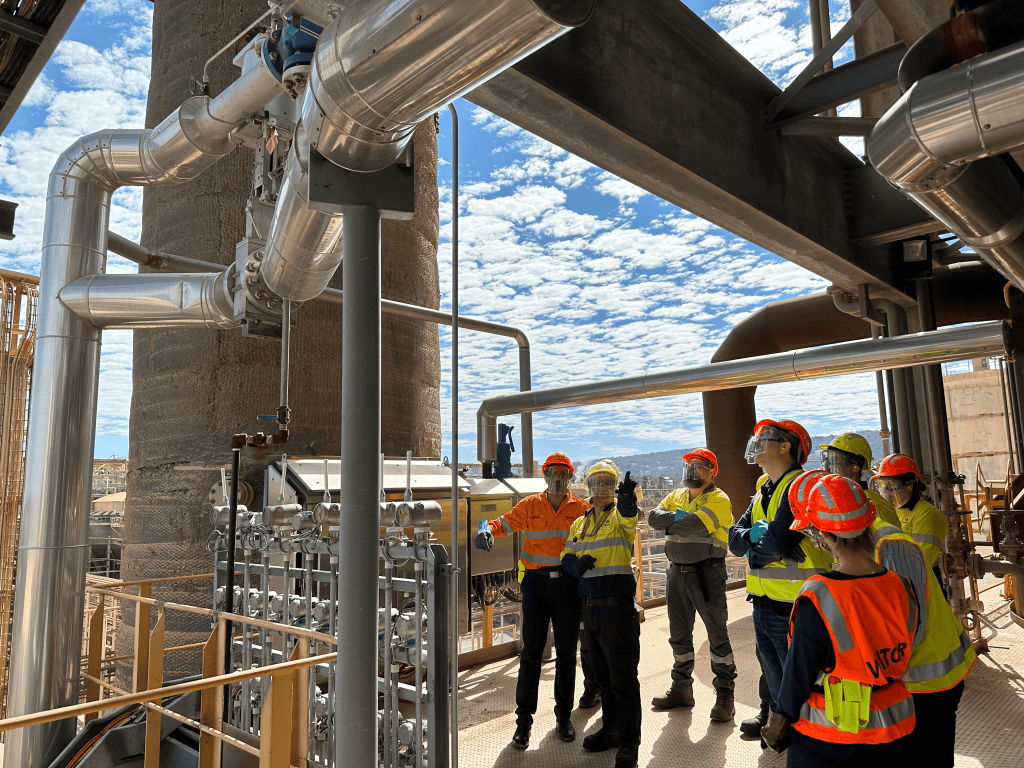
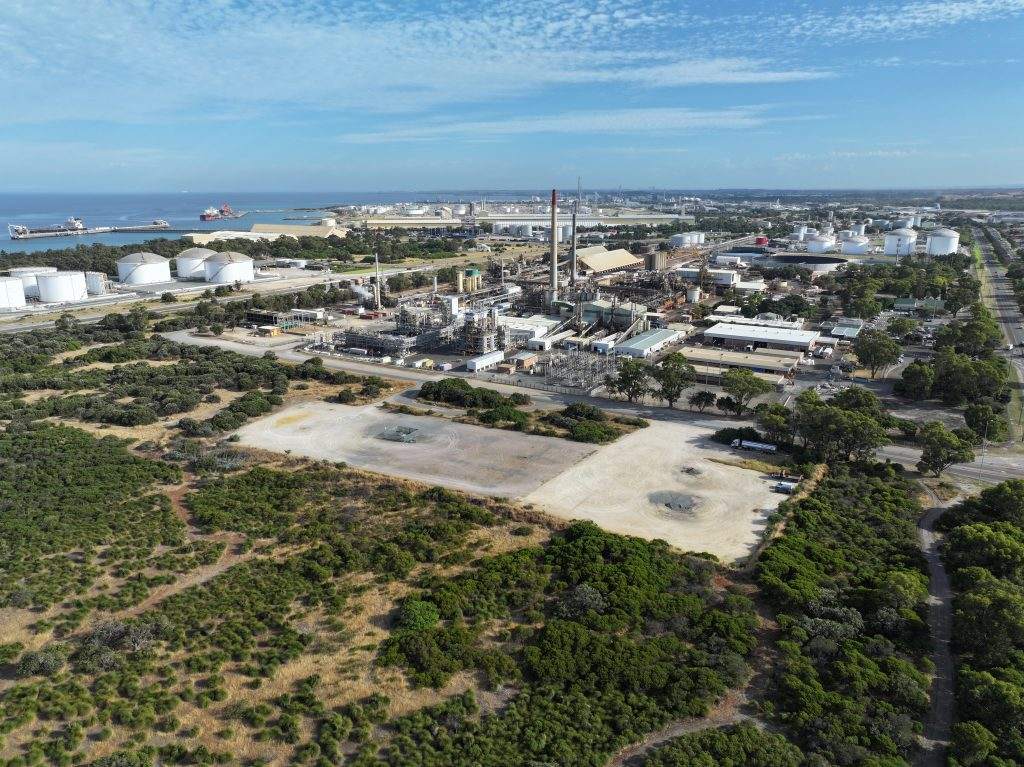
A similar approach is being applied in the alumina refining sector. Through the Australian Alumina Working Group convened by ARENA, the country's three refineries jointly developed a decarbonization roadmap, establishing a shared evidence base and consensus on viable pathways. ARENA continues to facilitate working group meetings, promoting knowledge exchange and maintaining collaborative momentum. The latest meeting in October 2025 included a site visit to Alcoa's Pinjarra refinery, where participants observed electric calciner technology in action.
Australia possesses the resources, industrial capability, and expertise to drive decarbonization in global supply chains. Realizing this potential requires scaled-up collaboration across industries, government, and research institutions, particularly in hard-to-abate sectors where the risks and costs of transition exceed what any single player can bear.
Initiatives like NeoSmelt and the Australian Alumina Working Group showcase what collaborative practice looks like in concrete terms. Whether through project consortia or structured industry working groups, these models bring industry players together around shared challenges, accelerate technological learning, and help move innovative technologies from concept to real-world deployment.
Achieving the energy transition cannot rely solely on advancing individual projects. It requires well-designed, well-governed partnerships that share risks, knowledge, and objectives. Public institutions can create enabling conditions for such collaborations to endure and deliver systemic change.